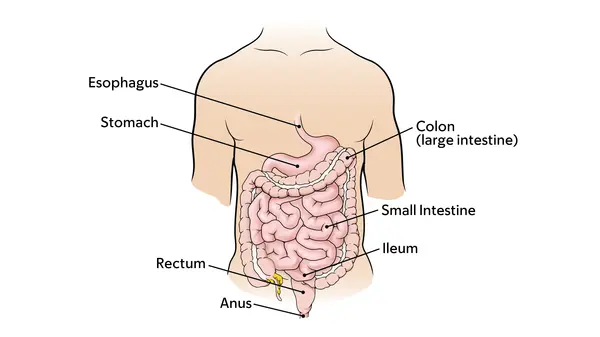
Screening Guidelines: Colorectal Cancer

Colorectal cancer is the second most common cause of cancer death among men and women in the United States. It is estimated that in 2010 there will be approximately 143,000 new cases of colorectal cancer and about 51,000 deaths from the disease. The average American has approximately a six percent chance of developing colorectal cancer within his or her lifetime.

Routine screening of symptom-free men and women will lead to a reduction in the number of colorectal cancer cases and the number of deaths from colorectal cancer. The removal of precancerous lesions (polyps) during colonoscopy, a screening method described below, has been shown to significantly reduce the chance of developing colorectal cancer. In these guidelines, we review current recommendations for colorectal screening in the average-risk individual.

Colorectal Cancer Risk Types

Individuals aged 50 years or older are defined as average risk if they have the following:

  • No symptoms
  • No history of colorectal cancer or adenomatous polyps (benign growths that arise from the lining of the colon or rectum)
  • No history of inflammatory bowel disease (ulcerative colitis or Crohn's colitis)
  • No family history of colorectal cancer or adenomatous polyps

Individuals are defined as high risk if they have one of the following:

  • A first-degree relative (parent or sibling) who had cancer or a premalignant lesion (known as an adenomatous polyp) in the colon before the age of 60.
  • A family history of familial adenomatous polyposis (FAP). A rare form of hereditary colon cancer, familial adenomatous polyposis is a condition in which family members develop hundreds or thousands of polyps in the colon at a very early age. These individuals will almost always go on to develop colon cancer by age 40.
  • A family history of hereditary nonpolyposis colorectal cancer (HNPCC), a syndrome caused by mutations in specific genes that accounts for approximately five percent of all colorectal cancer diagnoses.
  • A long history (more than eight years) of inflammatory bowel disease (ulcerative colitis or Crohn's colitis.)

Colorectal Cancer Screening Tests

Fecal Occult Blood Test (FOBT)

The fecal occult blood test chemically checks stool for hidden, or occult, blood, which in certain cases may be a sign of colorectal cancer or a premalignant polyp. If blood is found, a colonoscopy is often performed.

Flexible Sigmoidoscopy

Flexible sigmoidoscopy is a procedure in which a doctor uses a small, flexible tube with a camera to examine the inside of the rectum and the lower part of the colon, known as the sigmoid colon. The procedure also allows the collection of tissue samples (known as a biopsy) for microscopic examination. If a premalignant polyp is detected during sigmoidoscopy, the patient should have a colonoscopy to screen the remainder of the colon.

Colonoscopy

This examination allows the doctor to inspect the rectum and the entire colon, using a flexible tube with a camera. It is inserted into the rectum while the patient lies on his or her side. Patients usually receive a sedative during this procedure to ensure their comfort. This examination allows the detection of cancers in the early stages, before they give signs or produce symptoms. Polyps or other growths that are found during these examinations are usually removed at the time and sent to a laboratory for examination. Studies have shown that the removal of premalignant tumors during colonoscopy significantly reduces the development of colorectal cancer.

Computed Tomographic Colonography (CTC), or “Virtual Colonoscopy”

Computed Tomographic Colonography (CTC), known commonly as virtual colonoscopy, is a new technique that uses CT scans to create a 3-D image that can be used to evaluate the bowel. At this time, it is still a research tool and is not used as a standard screening test. This technique does not allow a biopsy to be performed or the removal of polyps. Therefore, when an abnormal finding is detected, the patient needs to undergo a colonoscopy.

Double Contrast Barium Enema (DCBE)

Double Contrast Barium Enema (DCBE) is a x-ray procedure that uses a chalky liquid known as barium as a contrast agent to visualize the interior of the colon and rectum. Studies have shown DCBE to be less sensitive than colonoscopy in detecting lesions and polyps. It is rarely used for screening.

Our Colorectal Cancer Screening Guidelines

Routine screening for colorectal cancer is recommended for average risk individuals with no symptoms starting at age 50. And our doctors recommend colonoscopy every 10 years as the preferred colorectal cancer screening modality.

Individuals who are at increased risk for colorectal cancer due to a personal or family history of colorectal cancer or adenomatous polyps, or a personal history of long-standing inflammatory bowel disease, may be recommended to undergo screening/surveillance colonoscopy starting at an earlier age and/or at more frequent intervals. Individuals with multiple family members affected with colorectal cancer and/or a family member affected with early-age-onset colorectal cancer, i.e., before age 50, should discuss this issue with their physician as they may be at risk of underlying hereditary cancer predisposition syndrome, and if so should be referred for consultation with the Clinical Genetics Service for further evaluation and individualized screening recommendations.

National screening recommendations for colonoscopy at ten-year intervals are targeted to average-risk individuals with no symptoms. Individuals with a history of a non-colorectal primary cancer or who have undergone prior cancer therapy may also be at increased risk for colorectal cancer and thus recommendations for shorter screening followup intervals (i.e. five to ten years) may be considered.