This information explains how to manage your blood glucose with your diet. It also explains how to manage cancer treatment side effects and your blood glucose at the same time.
About blood glucose and your diet
Glucose is a simple sugar. It is the main source of energy for cells and comes from the foods you eat. Many things can affect your blood glucose, such as:
- Stress.
- Medicine.
- Changes to your diet.
- Physical activity and exercise.
Some cancer treatments and their side effects can also make your blood glucose levels go up or down. Managing your blood glucose is an important part of your cancer care, and we’re here to help.
A big part of managing your blood glucose is understanding what to eat. This can feel overwhelming. A clinical dietitian nutritionist or diabetes educator can help you to create a plan that is best for you. They will base their recommendations on your health and health goals. If you’d like to talk with a clinical dietitian nutritionist or diabetes educator, ask your healthcare provider.
The best diet is personal and different for every person. Your ideal diet is based on your health, cancer treatment plan, blood glucose goals, and personal preferences. It’s also important to try to follow a well-balanced diet that gives you the nutrients your body needs.
About carbohydrates
There are 3 main types of nutrients:
- Carbohydrates, also called carbs.
- Fats.
- Proteins.
These main nutrients are sometimes called macronutrients or macros. Many foods have all three of these nutrients. Each of these nutrients can turn into glucose, but this process is much easier and faster with carbohydrates. This is why your body uses carbohydrates as its main source of energy.
The following table has examples of foods and drinks with carbohydrates and foods without carbohydrates.
| Foods with carbohydrates | Foods without carbohydrates |
|
|
How carbohydrates affect your blood glucose
It’s important to include carbohydrates in your diet. Your body breaks down carbohydrates into glucose. Glucose is then released into the bloodstream where your cells can use it for energy.
While carbohydrates give your body energy, they also affect your blood glucose levels. Not all carbohydrates raise your blood glucose the same way. Some raise your blood glucose levels very quickly, while others raise them more slowly (see Figure 1). This can make it hard to manage your blood glucose.

Eating too many carbohydrates can increase your risk of high blood sugar (hyperglycemia). It’s important to keep your blood glucose from getting too high or too low (hypoglycemia).
The amount of carbohydrates you need is different for each person. For example, if you have type 1 diabetes mellitus (T1DM), you must have carbohydrates in your diet. Your healthcare provider will work with you to figure out your blood glucose goals and carbohydrate needs.
Your healthcare provider or diabetes educator will set your blood glucose target numbers. Keeping your blood glucose near those target numbers is an important part of your treatment.
About dietary fiber
Fiber is a type of carbohydrate. It slows down how quickly your body absorbs sugar. This helps manage your blood glucose levels.
There are two different types of fiber:
- Soluble fiber breaks down in water to form a gel. It is easier for your body to digest. Soluble fiber helps control blood glucose levels by slowing down how fast your body uses carbohydrates.
- Insoluble fiber does not dissolve in water. Because of this, it can help move stool (poop) through your body.
Tips to help you manage your blood glucose with your diet
Manage your blood glucose with carbohydrates
Here are some ways to manage the amount of carbohydrates you have in your diet.
Plate method
To help control carbohydrate portions, it can be helpful to follow the plate method (see figure 2). To do this:
- Fill ½ your plate with non-starchy vegetables, such as spinach, broccoli, or peppers.
- Fill ¼ of your plate with lean proteins, such as chicken, turkey, or seafood, including shellfish.
- Fill ¼ of your plate with high fiber carbohydrates, such as brown rice, sweet potatoes, or quinoa.

Limit the amount of carbohydrates in your meals, when needed
If your blood glucose is high, having meals with fewer carbohydrates can help bring it back to your target range. Never stop eating all carbohydrates, especially if you take insulin. This can make your blood glucose go too low. Talk with your healthcare provider for more information.
Here are some ways to have less carbohydrates in your meals:
- Have 1 main source of carbohydrate in your meal instead of 2. For example, have either whole grain rice or beans instead of both.
- Have an open-faced sandwich on one slice of bread instead of two.
- Drink sugar-free, flavored water and sparkling water instead of fruit juice or soda. Fruit juice made with real fruit usually has a lot of sugar.
- Substitute or add more protein, such as an egg, to your breakfast instead of having more bread or fruit.
- Limit refined grains, such as boxed pastas or some cereals.
- Choose whole foods instead of processed foods when you can. For example, choose apples instead of applesauce.
For people taking diabetes medicine
If you take diabetes medicine, talk with your healthcare provider or diabetes educator before lowering the amount of carbohydrates you eat and drink. If you lower the amount of carbohydrates you eat by too much, you could be at risk for low blood glucose (hypoglycemia). To learn more, read About Hypoglycemia (Low Blood Sugar).
Counting carbohydrates to manage your blood glucose
Carbohydrate counting is when you plan and track meals that have a certain number of grams of carbohydrates per meal. Carbohydrate counting helps you manage your blood glucose levels with the food you eat. This type of meal plan is often recommended for people taking insulin.
When you’re counting carbohydrates, use the number in the “Total Carbohydrate” row in the Nutrition Facts label (see Figure 3). Aim for 45 to 60 grams total carbohydrate at each meal. If your endocrinologist or diabetes educator recommends a different amount, follow their instructions. See the “Sample menus” section at the end of this resource for ideas for meals that meet these carbohydrate goals.

During your treatment, your doctor may ask you to track or change the amount of carbohydrates in your diet. This is to help manage your blood glucose levels. Always talk with your clinical dietitian nutritionist, diabetes educator, or doctor before changing the amount of carbohydrates in your diet.
Difference between grams listed on Nutrition Facts labels
Sometimes both the serving size and the amount of carbohydrates in a serving can be measured in grams. But they are not the same.
- Grams (g) listed next to the “Serving Size” tells you the weight of the food item in grams. If you are using a food scale, you can use this information to measure the serving size (see Figure 4).
- Grams (g) listed next to “Total Carbohydrate” tells you the amount of carbohydrate in one serving of the food (see Figure 3).

Steps to carbohydrate counting
Step 1: Talk with your care team to decide the amount of carbohydrates you should have at each meal.
Step 2: Include foods in your meal that have carbohydrates. Use examples in the “About carbohydrates” section of this resource. Talk with a clinical dietitian nutritionist or diabetes educator to learn more.
Step 3: Calculate the grams of carbohydrates (per serving) for the food you’re eating. To do this, use the Nutrition Facts label to find the serving size and total grams of carbohydrates per serving (see Figure 4).
Step 4: Calculate the total amount of carbohydrates by adding the grams from each source of carbohydrate. For example, a serving of Cheerios and 1 cup of 1% milk has 41 grams of carbohydrates (see Figure 5).

Carbohydrates in 1 serving size (1 ½ cups or 32 g) of Cheerios = 29 g
Carbohydrates in 1 serving size (1 cup) of 1% low fat milk = 12 g
Total carbohydrates (29 g + 12 g) = 41 g
Step 5: Measure your foods to the serving size on the food label (see Figure 4). You can use a measuring cup or a kitchen scale. It’s important to measure your food initially so that you get used to what the serving size is. But after you become used to what the serving size looks like, it’s OK to estimate your measurements. They don’t need to be exact. Talk with your clinical dietitian nutritionist for more information about measuring your serving sizes.
What to do if you do not have a Nutrition Facts label
If a food does not have a Nutrition Facts label or you’re eating out, search for the carbohydrate information online. Some websites, such as www.CalorieKing.com and www.MyFitnessPal.com, also have mobile applications (apps) for your smartphone or tablet. Talk with a clinical dietitian nutritionist for more resources.
For people taking insulin
If you’re taking insulin, your healthcare provider can show you how to measure your insulin dose for each meal. Talk with your healthcare provider or diabetes educator for more information.
How to manage your blood glucose with fiber
Another way to manage your blood glucose is to choose carbohydrates that have more fiber and less sugar. Choose foods with more than 3 grams (g) of fiber per serving. These include foods such as foods such as oats, peas, beans, apples, citrus foods, and barley.
It’s important to eat high-fiber foods that have soluble fiber, such as:
- ¾ cup to 1 cup serving of multi-grain cereal.
- ½ cup of cooked beans or lentils.
- 3 cups of air popped popcorn.
- 1 medium potato or sweet potato.
It can be hard to only eat carbohydrates that are high in fiber. Try to switch out low-fiber foods with high-fiber foods as often as you can.
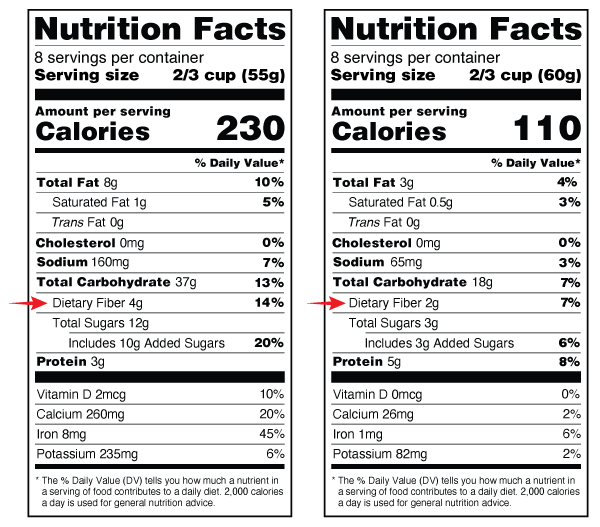
You can find the amount of fiber in packaged foods by reading the Nutrition Facts label. The Nutrition Facts label has information about the amount of certain nutrients in the food or drink. The amount of fiber is listed in the “Dietary Fiber” row (see Figure 6).
How to manage nutrition during cancer treatment
During cancer treatment, side effects can limit your ability to eat well. Side effects can include nausea (feeling like you’re going to throw up), taste changes, or appetite loss (not wanting to eat).
Being unable to eat can raise your risk for weight loss. It also raises your risk for malnutrition (when your body does not get all the nutrients it needs).
Read Eating Well During Your Cancer Treatment to learn more about general nutrition guidelines during cancer care.
If you’re having a hard time eating during treatment, talk with your healthcare providers and clinical dietitian nutritionist. You may need to change your diet to get the nutrients you need. Sometimes, they may want you to focus less on carbohydrate counting.
Eating small meals more often can make it easier to meet your nutrition goals. Your clinical dietitian nutritionist can help set your carbohydrate goals for each smaller meal. Focus on eating more protein and healthy fats. This will help you get the nutrients you need as you manage your blood glucose.
Here are some examples of foods with proteins and healthy fats:
- Nuts and nut butters.
- Seeds, such as pumpkin seeds or flax seeds.
- Avocados.
- Unsweetened (plain) yogurt and cheese.
- Lean protein, such as fish, chicken, eggs, and tofu.
- Olive oil and canola oil.
Diet changes can help. But you still may need medicine to manage side effects better. If you’re prescribed medicine, be sure to follow your care team’s instructions for taking them.
How to manage loss of appetite during cancer treatment
Appetite loss means you have less of a desire to eat. It’s a very common side effect of treatment. When you lose your appetite, you may want to eat comfort foods to feel better. This can make it harder to eat a well-balanced diet and manage your blood glucose levels.
Try these tips to help you get the most from your meals when you can’t eat much:
- Add more protein to your diet, such as chicken, fish, eggs, or tofu.
- Have a protein shake or nutritional supplement that’s high in protein and low in carbohydrates. Some are high-calorie, ready-made drinks that have vitamins and minerals added to them. Others are powders that you can mix into other foods or drinks. Most are also lactose-free. That means you can have them even if you’re lactose intolerant (have trouble digesting milk products). Talk with a clinical dietitian nutritionist for suggestions.
- Talk with your healthcare provider about your symptoms. They may give you a prescription for a medicine to help with your appetite.
It’s hard to manage your blood glucose while going through cancer treatment. Sometimes you need more than the right diet and exercise routine. If you’re having trouble managing your blood glucose, talk with your care team.
Sample menus
Your care team may tell you to aim for 45 to 60 grams of carbohydrates per meal. Follow your care team’s instructions. Do not eat more than 60 grams of carbohydrates at any meal.
Aim to have about the same mount of carbohydrates at each meal:
- 3 to 4 servings (45 to 60 grams) of carbohydrates for breakfast.
- 3 to 4 servings (45 to 60 grams) of carbohydrates for lunch.
- 3 to 4 servings (45 to 60 grams) of carbohydrates for dinner.
Below are sample menus with ideas for meals and snacks that meet these carbohydrate goals. These menus are meant to be examples. Each menu shows how many grams of carbohydrates are in each item.
| Meal Time | Sample menu 1 | Sample menu 2 |
Breakfast (based on 45 to 60 g carbohydrates)
| 1 small orange (15 g) ½ avocado (10 g) 2 scrambled eggs (0 g) 1 whole wheat English muffin (22 g) 1 teaspoon butter (0 g) 1 cup coffee (0 g) | 2 cups Cheerios (40 g) 1 cup 1% milk (12 g) 1 tablespoon peanut butter (0 g) 1 cup coffee (0 g) |
| Lunch (based on 45 to 60 g carbohydrates) | 4-ounce hamburger (0 g) 1 slice of American cheese (0 g) 1 slice lettuce, tomato (1 g) 1 hamburger bun (22 g) 1 small apple (15 g) 1 ounce salted hard pretzels (22 g) 1 cup water (0 g) | 4 oz. turkey (0 g) 1 slice lettuce, tomato (1 g) 2 slices rye bread (32 g) 1 ounce snack pack of baked Lays chips (24 g) 12 ounces seltzer with lime slice (0 g) |
| Dinner (based on 45 to 60 g carbohydrates) | 4 ounces baked chicken with breading (10 g) 1 white cup rice (44 g) 2 cups broccoli (0 g) 12 ounces seltzer (0 g) | 2 ounces cooked ziti pasta (44 g) ½ cup tomato basil sauce (10 g) 2 cups tossed salad (0 g) 1 cup mixed raw salad veggies (0 g) 1 tablespoon oil (0 g) 1 tablespoon vinegar (0 g) |
Learn about our Health Information Policy.