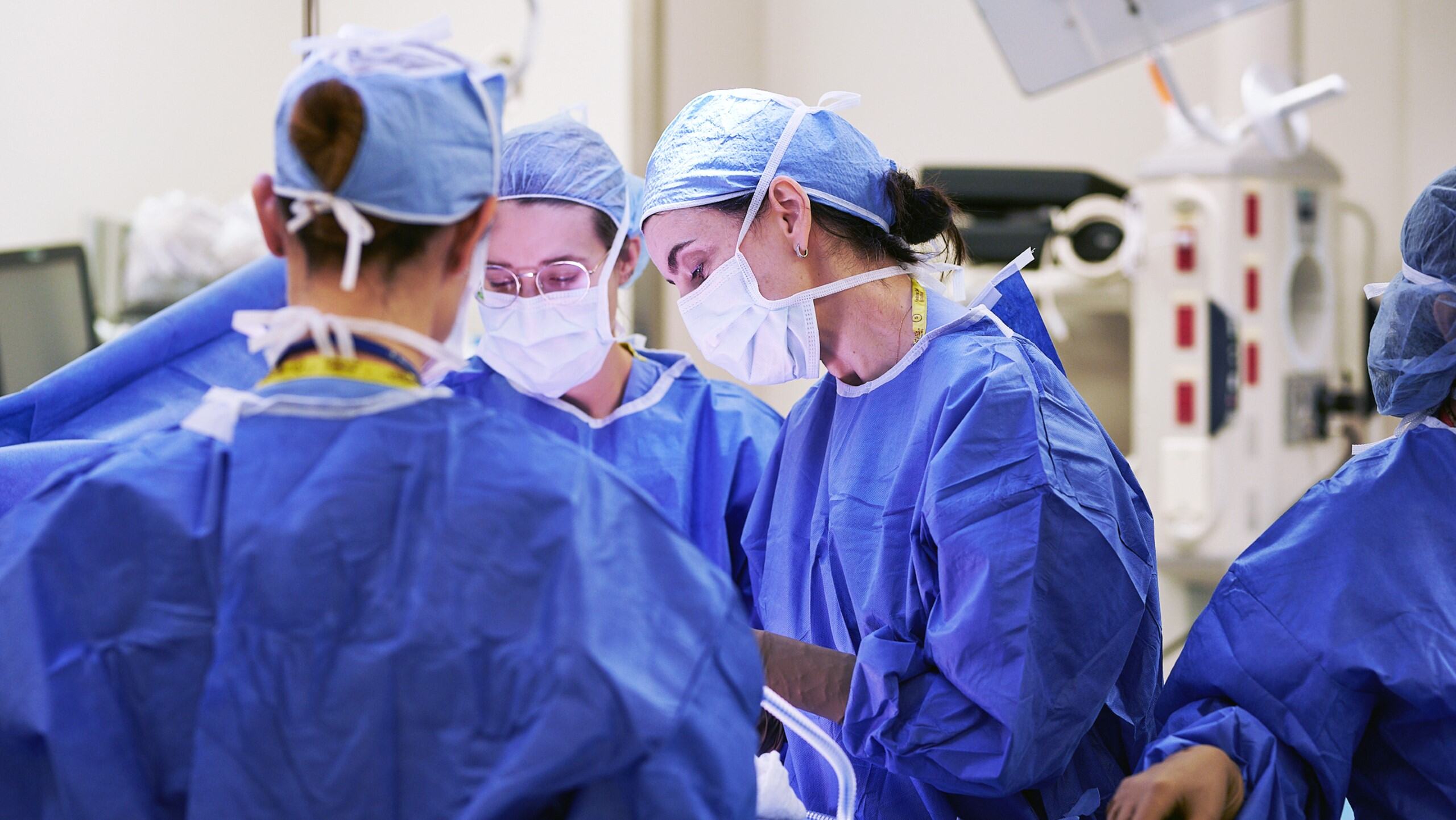
Cirugía de reconstrucción de mama después de una mastectomía

La cirugía de reconstrucción de mama puede ser una opción adecuada para usted. Pero necesita información antes de poder tomar una decisión. Quizás necesite una reconstrucción de mama después de una mastectomía o una reconstrucción de mama después de una mastectomía doble. Le explicamos todas las opciones para ayudarle a tomar esa decisión.

Los cirujanos de MSK realizan cerca de 3,000 procedimientos de reconstrucción de mama por año, uno de los números más altos del país.

Reseña

Es posible que se sienta abrumada por las difíciles decisiones sobre la reconstrucción de mama después de una mastectomía.

Enterarse de que tiene cáncer de mama puede ser abrumador. Es posible que ya se haya sometido a una mastectomía, una cirugía para extirpar una o ambas mamas.

Algunas personas sienten que la pérdida de las mamas es casi tan difícil como hacer frente al cáncer. La reconstrucción de mama reconstruye una o ambas mamas.

La reconstrucción de mama se puede realizar de varias maneras. Esta página ofrece información sobre esas opciones.

MSK marca la diferencia

Los expertos del Centro de Reconstrucción Avanzada de MSK le ayudan a verse lo mejor posible. Contamos con cirujanos especialistas en mamas que realizan mastectomías, cirujanos plásticos que reconstruyen mamas y expertos en tatuajes de pezones. Trabajan en colaboración con su oncólogo médico para planificar el tratamiento quirúrgico y la reconstrucción de mama que mejor se adapte a usted.

¿Qué es la reconstrucción de mama?

El objetivo de la reconstrucción de mama después de una mastectomía o mastectomía doble es reconstruir uno o ambos montículos mamarios. Si solo una mama está afectada, también se puede realizar una cirugía en la otra mama. Esto ayuda a que la mama reconstruida se vea más parecida a la mama natural.  

Hay dos formas de reconstruir la mama:

  • Usar un implante
  • Usar tejido de otra parte de su cuerpo. Esto se llama cirugía con colgajo o reconstrucción autóloga.

No es necesario someterse a una reconstrucción de mama después de una mastectomía o una mastectomía doble.

Algunas personas eligen someterse a una reconstrucción de mama meses o incluso años después. A menudo es posible retrasar la reconstrucción.

Hable con su médico sobre sus opciones para la reconstrucción de mama en el futuro. También puede optar por dejarse el pecho plano, sin reconstrucción, después de una mastectomía o mastectomía doble. 

Cirugía de reconstrucción de mama con implantes

Los implantes mamarios después de una mastectomía son la opción más común para la reconstrucción de mama. Están hechos de una cápsula de silicona rellena de solución salina (agua salada estéril) o silicona (gel). Vienen en muchos tamaños y formas.

Algunas personas se colocan implantes en ambas mamas, incluso si solo están teniendo una mastectomía unilateral (una mama). Esto ayuda a que ambas mamas se vean iguales. No siempre es fácil hacer coincidir un implante con la mama natural. 

Aquí hay algunas razones por las que podría querer los implantes mamarios:
  • Puede regresar a sus actividades normales más rápido que con la reconstrucción con colgajo
  • Quiere volver a las actividades normales tan pronto como sea posible
  • No tiene suficiente tejido corporal para la cirugía con colgajo
  • No desea cicatrices en otras partes del cuerpo 

¿Cuál es el proceso de reconstrucción de mama con implantes?

La reconstrucción de mama con implantes comienza con un implante temporal, llamado extensor de tejidos. El extensor de tejidos se llena con una pequeña cantidad de solución salina o aire. Su cirujano lo colocará debajo o encima del músculo del pecho durante su mastectomía.    

Los extensores de tejido tienen una válvula incorporada que permite que se llenen lentamente con solución salina. Comenzará aproximadamente 2 semanas después de la cirugía. Se necesitan entre 2 y 6 visitas ambulatorias para llenar el extensor. 

El siguiente paso es someterse a una cirugía ambulatoria para reemplazar el extensor de tejidos con un implante permanente. Pero primero, la piel debe cicatrizar. También debe haber terminado con los tratamientos contra el cáncer de mama, como la quimioterapia, la radioterapia o ambos.

MSK marca la diferencia

Nuestros cirujanos están altamente capacitados en todos los tipos de reconstrucción de mama. Realizan cerca de 3,000 procedimientos de reconstrucción de mama por año, uno de los números más altos del país. Realizan reconstrucciones complejas y cirugías en personas que no están satisfechas con su reconstrucción original.

¿Cuáles son los tipos de reconstrucción con implantes mamarios?

La reconstrucción con implantes mamarios es una opción que puede ayudarle a volver a su vida diaria habitual más rápidamente.

Hay 2 enfoques generales para esta cirugía. 

El método más común es con un extensor de tejidos. Con menos frecuencia, ofrecemos un implante permanente durante la cirugía de mastectomía. 

Aquí tiene más información sobre estas 2 opciones:

With tissue expanders, the process for breast implants will take months to finish. During this time, you can do many of your regular activities.

In general, you only need to stay 1 night at the hospital. Recovery can take anywhere from 4 to 6 weeks.

Direct-to-implant surgery is done at the same time as a mastectomy. Sometimes we can place a permanent implant during the mastectomy. There is no need for a tissue expander or a second surgery. 

This method is best for people who do not smoke, have small breasts, and want small implants.

In general, you only need to stay 1 night at the hospital. Recovery can take anywhere from 2 to 4 weeks.

An MSK physician assistant does a nipple tattoo procedure.

MSK experts have special training in adding tattoos of nipples and areolas after breast cancer surgery.

Reconstrucción con tejido autólogo

La reconstrucción utilizando su propio tejido se llama cirugía autóloga o cirugía de colgajo.

Con mayor frecuencia, el tejido es piel, grasa y, a veces, músculo. Es su propio tejido, por lo que obtiene una mama que se ve y se siente más natural que los implantes.

El cronograma de la cirugía y la recuperación es similar para todos los tipos de reconstrucción de mama autóloga. 

Tipos de reconstrucción con tejido autólogo:
DIEP flap (belly) surgery
We make a new breast by sculpting tissue from your lower abdomen (belly).
DIEP flap (belly) surgery

Your plastic surgeon will make an incision (cut) across your lower abdomen. They will move a flap of tissue with its blood vessels up to your chest. 

They make a new breast. They sculpt this tissue and connect the flap’s blood vessels to blood vessels in the chest.

Who it’s for 

DIEP flap is best for people who: 

  • Have extra belly tissue that can be used to make a breast
  • Do not want an implant
  • Want to avoid lifelong imaging to monitor the implant 
  • Are OK with taking longer to recover

Why it’s good

DIEP flap surgery is good for a few reasons. You get a flatter, tighter belly. It’s easy to hide the scar near the bikini line. It also ages in a more natural way, as you gain or lose weight.

What to think about

Here are some things that can keep you from getting DIEP flap reconstruction:

  • You have health conditions that do not make it safe to have a longer surgery
  • You have had blood clotting conditions
  • You smoke
  • You already had certain types of abdominal surgery 
DIEP flap (belly) surgery

Your plastic surgeon will make an incision (cut) across your lower abdomen. They will move a flap of tissue with its blood vessels up to your chest. 

They make a new breast. They sculpt this tissue and connect the flap’s blood vessels to blood vessels in the chest.

Who it’s for 

DIEP flap is best for people who: 

  • Have extra belly tissue that can be used to make a breast
  • Do not want an implant
  • Want to avoid lifelong imaging to monitor the implant 
  • Are OK with taking longer to recover

Why it’s good

DIEP flap surgery is good for a few reasons. You get a flatter, tighter belly. It’s easy to hide the scar near the bikini line. It also ages in a more natural way, as you gain or lose weight.

What to think about

Here are some things that can keep you from getting DIEP flap reconstruction:

  • You have health conditions that do not make it safe to have a longer surgery
  • You have had blood clotting conditions
  • You smoke
  • You already had certain types of abdominal surgery 
DUG, PAP, LTP (thigh), and GAP (butt) free-flap surgery
We make a new breast using tissue from your upper inner or outer thigh. The tissue is transplanted to your chest to sculpt a new breast.
DUG, PAP, LTP (thigh), and GAP (butt) free-flap surgery

To make a new breast, your plastic surgeon takes tissue and its blood supply and transplants it to your chest. This leaves a scar on either the:

  • Inner or outer thigh area
  • Upper thigh just below the crease in your buttocks (butt).

Most often, we do a thigh flap reconstruction because we can’t take tissue from the abdomen. 

More about DUG, PAP, LTP and GAP free-flap surgery:

Who it’s for

Thigh or buttocks free-flap procedures are best for people who:

  • Cannot have tissue taken from their abdomen
  • Do not want an implant in their body
  • Want to avoid lifelong imaging to monitor the implant 
  • Are OK with taking longer to recover

Why it’s good

The reconstructed breast:

  • Looks natural
  • Ages in a natural way
  • Adjusts to you losing or gaining weight

What to think about

This type of surgery is not right for everyone. Here are some of the things that can keep you from getting thigh or buttocks flap reconstruction:

  • You have health conditions that do not make it safe to have a longer surgery
  • You have had blood clotting conditions
  • You smoke
  • You already had certain types of abdominal surgery 


DUG, PAP, LTP (thigh), and GAP (butt) free-flap surgery

To make a new breast, your plastic surgeon takes tissue and its blood supply and transplants it to your chest. This leaves a scar on either the:

  • Inner or outer thigh area
  • Upper thigh just below the crease in your buttocks (butt).

Most often, we do a thigh flap reconstruction because we can’t take tissue from the abdomen. 

More about DUG, PAP, LTP and GAP free-flap surgery:

Who it’s for

Thigh or buttocks free-flap procedures are best for people who:

  • Cannot have tissue taken from their abdomen
  • Do not want an implant in their body
  • Want to avoid lifelong imaging to monitor the implant 
  • Are OK with taking longer to recover

Why it’s good

The reconstructed breast:

  • Looks natural
  • Ages in a natural way
  • Adjusts to you losing or gaining weight

What to think about

This type of surgery is not right for everyone. Here are some of the things that can keep you from getting thigh or buttocks flap reconstruction:

  • You have health conditions that do not make it safe to have a longer surgery
  • You have had blood clotting conditions
  • You smoke
  • You already had certain types of abdominal surgery 


Latissimus dorsi flap (back) surgery
We make a new breast using skin, fat, and muscle from your upper back.
Latissimus dorsi flap (back) surgery

Your plastic surgeon uses skin, fat, and muscle from your upper back. Keeping its blood supply attached, they pass the flap through a tunnel under your skin to your chest. They use it to sculpt a new breast. 

LD back flap reconstruction is most often done along with a small breast implant or tissue expander. That’s because the back skin and muscle may not be big enough for a full breast.

More about LD back flap surgery: 

Who it’s for

LD flap is best for people who:

  • Cannot have tissue taken from their abdomen
  • Are OK with taking longer to recover, compared to an implant
  • Have had radiation to their chest or breast
  • Had an implant breast reconstruction that did not work

Why it’s good

The reconstructed breast

  • Looks natural
  • Ages in a natural way
  • Adjusts to you losing or gaining weight

What to think about

This type of surgery is not right for everyone. Here are some of the things that can keep you from getting back flap reconstruction:

  • You have health conditions that do not make it safe to have a longer surgery
  • It’s a longer surgery
  • It takes longer to recover
  • You smoke
  • You have other scars on your body 
Latissimus dorsi flap (back) surgery

Your plastic surgeon uses skin, fat, and muscle from your upper back. Keeping its blood supply attached, they pass the flap through a tunnel under your skin to your chest. They use it to sculpt a new breast. 

LD back flap reconstruction is most often done along with a small breast implant or tissue expander. That’s because the back skin and muscle may not be big enough for a full breast.

More about LD back flap surgery: 

Who it’s for

LD flap is best for people who:

  • Cannot have tissue taken from their abdomen
  • Are OK with taking longer to recover, compared to an implant
  • Have had radiation to their chest or breast
  • Had an implant breast reconstruction that did not work

Why it’s good

The reconstructed breast

  • Looks natural
  • Ages in a natural way
  • Adjusts to you losing or gaining weight

What to think about

This type of surgery is not right for everyone. Here are some of the things that can keep you from getting back flap reconstruction:

  • You have health conditions that do not make it safe to have a longer surgery
  • It’s a longer surgery
  • It takes longer to recover
  • You smoke
  • You have other scars on your body 

Reconstrucción con tejido autólogo

La reconstrucción utilizando su propio tejido se llama cirugía autóloga o cirugía de colgajo.

Con mayor frecuencia, el tejido es piel, grasa y, a veces, músculo. Es su propio tejido, por lo que obtiene una mama que se ve y se siente más natural que los implantes.

El cronograma de la cirugía y la recuperación es similar para todos los tipos de reconstrucción de mama autóloga. 

Restoring nipple sensation

Sensory nerves let your body feel and respond to things like pressure or touch. Surgery can harm these nerves. Sensory nerves may be affected when your nipple and areola are preserved during a nipple-sparing mastectomy.

Nipple sensitization (SEN-suh-ty-ZAY-shuhn) is microsurgery to repair the nerves that go to your nipple. We connect a sensory nerve from your chest wall to your preserved nipple and areola.

Research studies show that nipples can feel more after neurotization. Over time, the nerves will grow toward the nipple and give you back feeling in the area. Sensation slowly gets better during   the first few years after the surgery. 

Flap neurotization

You may be having an autologous (aw-TAH-luh-gus) breast reconstruction. This surgery also is called a flap surgery, such as a DIEP flap reconstruction. It uses tissue transferred (moved) from another part of your body. Flap neurotization can restore feeling to this transferred tissue.

During your neurotization microsurgery, we take a sensory nerve from your chest. We connect it to a sensory nerve within the reconstructed flap. The nerves grow back into your rebuilt breast.

We can do flap neurotization after a nipple-sparing mastectomy or a skin-sparing mastectomy. Research studies show sensation improves in DIEP flaps after a flap neurotization. Over time, you’ll keep feeling more sensations.

Restoring more than how you look and feel

When you lose sensation, you’re less able to feel something touching you. But loss of sensation also causes other things, such as:

  • Numbness
  • Discomfort
  • Changes in sensation
  • A higher chance you cannot feel heat, cold, or an injury

When surgery restores your breast sensation, you can feel touch again. But this surgery can help in other ways, too. Research studies show people who had breast neurotization report they have better breast sensation, psychosocial well-being, and sexual well-being.

MSK le recomienda

Si la reconstrucción de mama no es la opción adecuada para usted, MSK puede recomendarle una prótesis mamaria. Esto es algo que se coloca en un sostén para que las mamas se vean más parejas. Las prótesis mamarias vienen en muchos tamaños, formas, tonos de piel y materiales.

Preguntas comunes

Preguntas comunes sobre la reconstrucción de mama después de una mastectomía

No. Research shows breast reconstruction does not:

  • Affect the chances breast cancer will come back in the breast or another location.
  • Cause a delay in diagnosing whether breast cancer came back.
  • Change treatment for breast cancer that comes back.

There’s always some risk the cancer could return, though.

  • Local recurrence is when it comes back in the same place as where you first had cancer.
  • Regional recurrence is when it comes back in nearby lymph nodes.
  • Distant recurrence is when it comes back in places farther away.

Your care team will talk with you about ways you can lower your risk for a breast cancer recurrence.

You must avoid strenuous activities, such as jogging and tennis, until your doctor tells you it’s safe.

Your physical therapist will give you written instructions on what exercises and movements you can do while you’re healing. Talk with your doctor or nurse before your start any other exercise. 

If you’re having discomfort, it can help to take some pain medicine 30 minutes before starting exercise.

Do not have sex for at least 1 or 2 weeks after surgery. You should give your body some time to recover. After that, you can have sex whenever you feel ready physically and emotionally. 
 
It’s normal to feel nervous or to think about your body so soon after surgery. Our Female Sexual Medicine and Women’s Health Program can help. For more information or to make an appointment, call 646-888-5076.

The Jackson-Pratt® (JP) drain helps drain fluid after the surgery and prevents swelling.  

How long you will have a JP drain can vary. It depends on the surgery you had, and the amount of drainage you have. Some people drain a lot, some only a little.

Mi equipo de MSK realmente se tomó el tiempo para explicarme las cosas y mostrarme imágenes. No me alcanzan las palabras sobre todo lo bueno de la atención que recibí. Siento que todo estuvo bien.
Monica Haba, de 38 años, quien se sometió a una mastectomía y reconstrucción con colgajo
Last updated Octubre 1, 2024
Learn about our Health Information Policy.