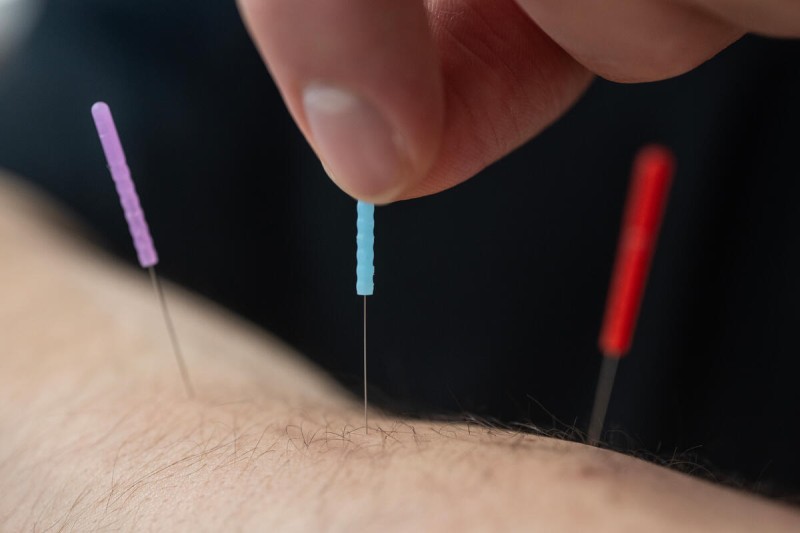
Cancer-related cognitive impairment — often called “brain fog” or “chemo brain” — has been shown to affect about 40% of breast cancer survivors, making it difficult for them to focus, work, and perform daily tasks.
But acupuncture may help alleviate this brain fog, according to a rigorous phase 2 clinical trial conducted by the Integrative Medicine and Wellness Service at Memorial Sloan Kettering Cancer Center (MSK). The study found that acupuncture doesn’t just boost someone’s perception of their cognitive abilities, it actually improves their performance on standardized tests.
“These results are good news for patients,” says Integrative Medicine and Wellness Service Chief Jun Mao, MD, MSCE, who led the study. “At a time when there’s a lot of speculation and misinformation about wellness therapies for cancer patients, we are conducting research to offer evidence-based therapies that may help them.”
Results from the acupuncture trial were presented at the annual San Antonio Breast Cancer Symposium on December 12, 2025, and featured in the media program.
Clinical Trial Testing Acupuncture for Breast Cancer Survivors
The trial enrolled 260 women who had completed treatment for breast cancer and reported that they were having problems with thinking and memory.
- All had been treated for stage 1, 2, or 3 disease.
- More than half had received chemotherapy.
- Nearly two-thirds were taking hormone therapy when they started the trial.
The study had three arms:
- 129 participants received acupuncture treatments that used needles inserted at defined points on the skin known as meridians. The treatments were given once a week for 10 weeks.
- 61 received standard care, as long as it didn’t include acupuncture.
- 70 patients received “sham” acupuncture, where needles were taped to the skin rather than inserted. Also, meridian points were not used.
Sham acupuncture is designed to mimic the experience of real acupuncture without using any of the actual therapeutic techniques. It is sometimes included in acupuncture trials to compensate for any benefit that patients may receive from getting specialized, one-on-one attention and care from the acupuncturist.
The cognitive abilities of all participants were measured in two ways:
- One test asked how patients perceived their memory, attention, and ability to perform daily tasks.
- The other test evaluated their actual abilities to perform memory and learning tasks using standardized assessments performed with staff blinded to the treatment.
- The tests were given three times during the trial — at the beginning, at 10 weeks, and again at 26 weeks.
“Whether someone is scoring higher on cognitive tests or only thinks their mind is sharper, both of these measures are important,” Dr. Mao says, “because they can affect someone’s quality of life and day-to-day functions.”
How Does Acupuncture Help Breast Cancer Survivors?
The trial found that patients in the real and sham acupuncture groups had clinically meaningful improvements in how they perceived their cognitive abilities.
Even though some of the patients who received sham acupuncture may have guessed they were not receiving real acupuncture, many still reported feeling like their cognitive problems had improved.
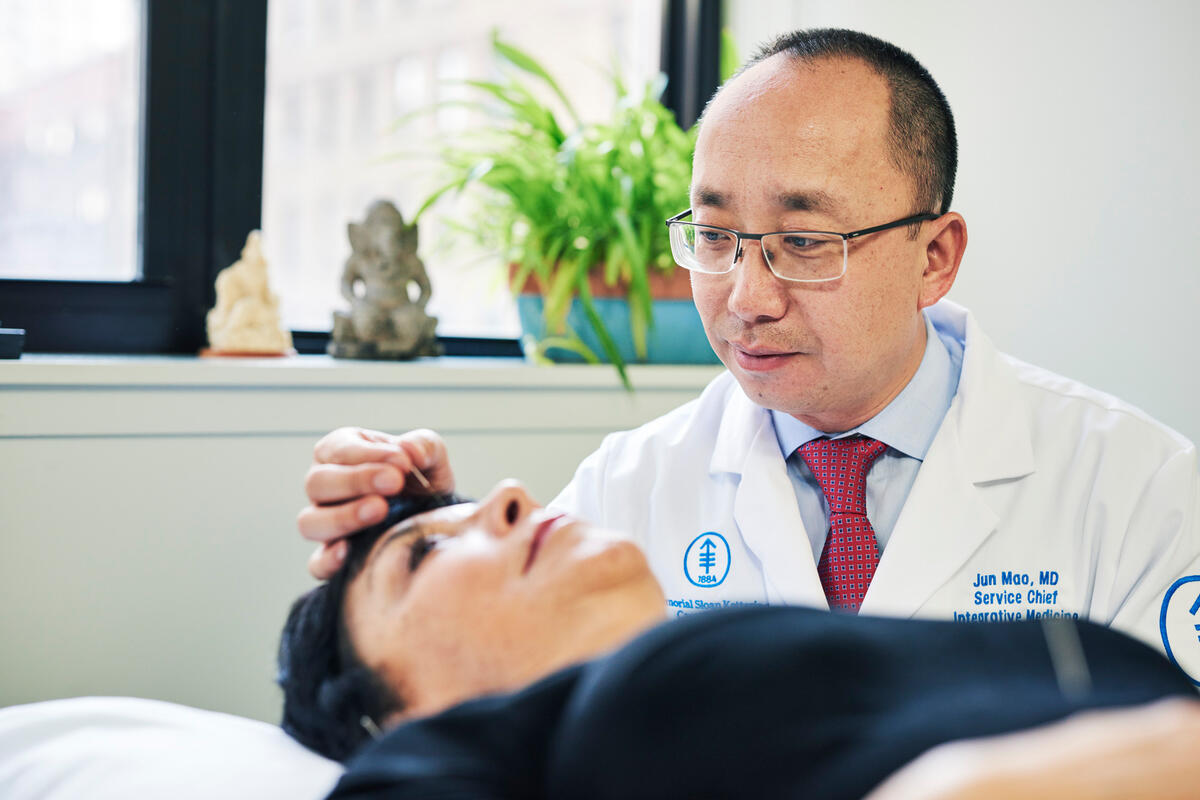
“I had one patient tell me that even though she knew she was getting sham acupuncture, she really benefited from having the time to relax and feel cared for during the sessions,” Dr. Mao says. “She said that as a busy working mom, she rarely gets time to herself.”
However, only the group receiving actual acupuncture showed improved scores on the cognitive tests over time. Patients in the sham acupuncture group, though they may have felt better, did no better on the cognitive function tests. “This finding is important for establishing evidence that there were actual benefits from the real acupuncture treatments,” Dr. Mao says.
Previous studies using brain scans suggest that acupuncture may stimulate areas of the brain that are involved in memory, attention, and learning, he explains.
Integrative Medicine Aims To Improve Quality of Life in Cancer Patients and Cancer Survivors
At the San Antonio meeting, Dr. Mao and his team presented two other studies related to cognitive problems in breast cancer survivors — in particular, the link to insomnia.
“When you have a night where you don’t sleep well, you often have trouble focusing the next day,” Dr. Mao says. “For many breast cancer patients, this problem can be cumulative — becoming worse and worse over time. We see this in people with other types of cancer, as well, due in part to the depression and anxiety that cancer patients often face. But it can be particularly severe in people with breast cancer because the treatments so often cause disruption to hormones.”
Hormone therapies can cause hot flashes, which make it difficult to sleep through the night.
Dr. Mao and his team plan to continue studying acupuncture in breast cancer survivors, as well as integrative interventions like exercise and mindfulness. In addition, they will explore how acupuncture might improve the cognitive abilities of older cancer patients, who are already more likely to face problems with thinking and memory.
“We are trying to focus on holistic ways to relieve patients’ symptoms and make them feel better,” Dr. Mao says. “In addition to these subjective improvements, it’s also important to look for treatments that might objectively lead to better function and promote healthy aging.”
Additional Authors, Funding, and Disclosures
The other authors on the acupuncture study were Xiaotong Li, Yuelin Li, Kevin Liou, Kaitlin Lampson, James Root, and Tim Ahles.
The acupuncture trial was funded by grants from the National Cancer Institute and the National Institutes of Health’s Cancer Center Support Grant.
Dr. Mao declares receiving funds from Tibet Cheezheng Tibetan Medicine Co. Ltd. and Zhongke Health International LLC for other work. He is a cofounder of Greatly Health.
Key Takeaways
- Cancer-related cognitive impairment — often called “brain fog” or “chemo brain” — affects about 40% of breast cancer survivors.
- A randomized clinical trial looked at how breast cancer survivors performed on cognitive tests after receiving real acupuncture, sham acupuncture, or usual care.
- Patients in both the real and sham acupuncture groups reported feeling like their brain fog had eased, but only those in the real acupuncture group had measurable improvements on standardized cognitive tests.
- MSK doctors and scientists are studying how integrative medicine techniques like acupuncture can improve quality of life in cancer patients and survivors.
Dr. Mao holds the Laurance S. Rockefeller Chair in Integrative Medicine at MSK.