
As children, Keisha Reader and her younger brother, Mortel Bartley, spent hours together picking mangos and apples, then cooling off with a swim in the irrigation canals of their farming community in Jamaica. Close in age, they’ve been close in life. When they ended up living in different cities in the United States, frequent phone calls kept them connected.
So when Mortel was diagnosed with a rare blood cancer at age 38, there was no question Keisha would do everything in her power to help him.
That included making space for him in her two-bedroom apartment in Brooklyn. Mortel had been living in Pittsburgh, but he needed treatment at Memorial Sloan Kettering Cancer Center (MSK). Keisha’s 9-year-old daughter, Serenity, would need to give up her bedroom for her uncle.
“It was definitely a big change for me. Everything about my life changed,” says Keisha, a single mother who works as a specialist in Patient Financial Services at MSK. “But he’s my brother, so of course I was going to be there for him.”
When someone close becomes a patient
As Keisha and her brother have learned, the moment someone you love learns they have cancer, everything shifts.
Suddenly, you’re not just a spouse, a parent, a sibling, or a friend anymore — you’re standing beside someone who’s scared, reaching into the unknown together. It can feel like the ground has dropped out from under you.
“Most of us never imagine we’ll become a caregiver,” says clinical social worker Sheila Langan, LMSW, who helps facilitate MSK’s online caregiver support group. “Even when you are committed to doing whatever it takes, caregiving is demanding and can become a significant part of your life.”
Clinical social worker Emily Rogers, LCSW, who co-leads the group, puts it simply: “You’re facing the emotional strain of uncertainty while also trying to determine the most meaningful ways to support the person you’re caring for.”
A rare diagnosis requires urgent action
Mortel was diagnosed in January 2025 with adult T cell leukemia/lymphoma (ATLL), an uncommon and aggressive blood cancer. His doctors in Pittsburgh urged him to seek a second opinion at a hospital with more experience treating this rare disease. MSK’s lymphoma specialists have expertise in treating patients with ATLL. And for Mortel, there was added comfort in knowing that Keisha already worked there.
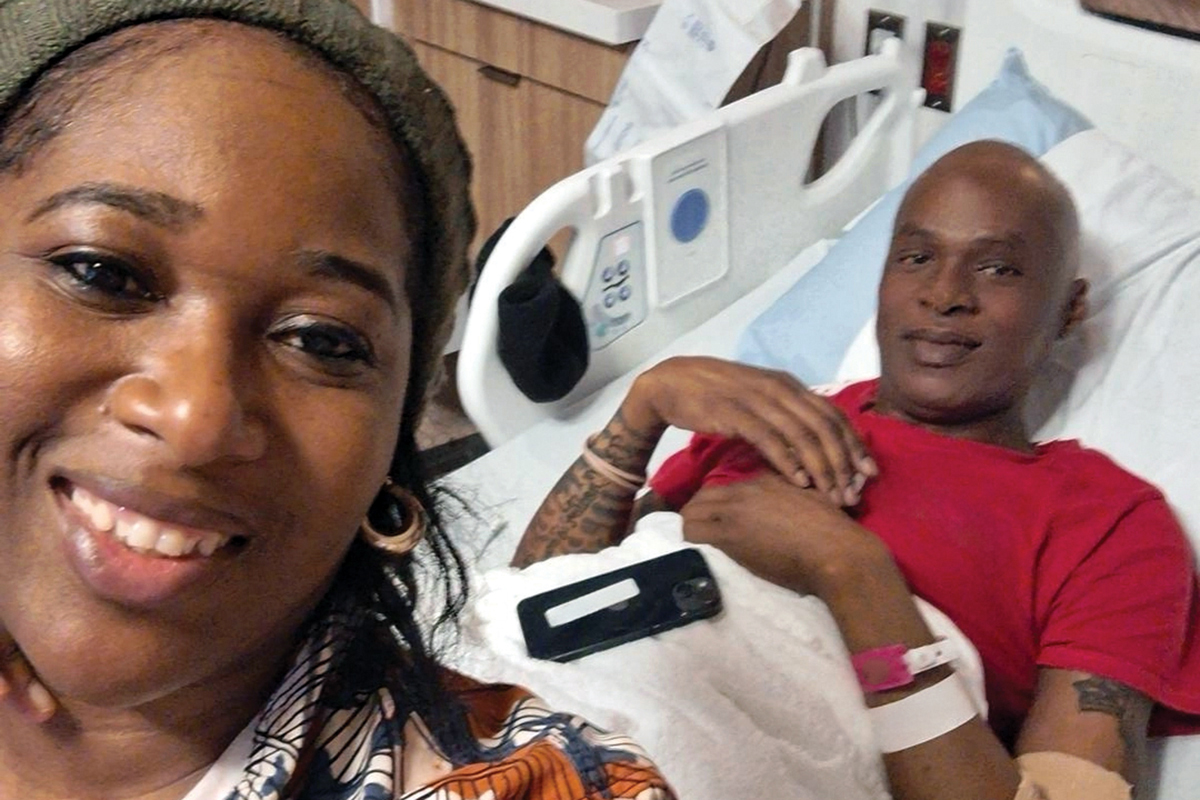
After running tests, Mortel’s new doctor, lymphoma specialist Robert Stuver, MD, broke the news that his disease was life threatening, and he needed to start chemotherapy right away.
“That’s when it became real,” Keisha remembers. “It was clear he wasn’t going back to Pittsburgh. He was going to be staying with me in Brooklyn for a long time.”
Life changed quickly. Serenity not only gave up her room, but Keisha had to take time off from work.
As Mortel’s treatments progressed, Keisha found herself feeling overwhelmed. “It was very draining,” she says. “But you just roll up your sleeves and say, ‘We gotta get to work.’”
The heavy lift of caregiving
Keisha’s experience is one that many caregivers can relate to. No matter your relationship to the patient, the responsibilities of caring for someone with cancer can pile up quickly: Driving them to and from appointments. Managing medications. Tending to wounds or chemotherapy ports. Preparing meals. Helping with personal hygiene.
And on top of all of that, you are likely spending hours on the phone coordinating between doctors’ offices, insurance companies, and pharmacies. You may feel you’ve become something like an unpaid case manager who never gets a break.
Keisha was fortunate that MSK allowed her to take extended leave to dedicate herself to caring for Mortel. It’s common for caregivers to reduce their work hours or leave their jobs entirely. This can create a financial burden on top of everything else, and it did for Keisha’s family, too. Mortel had been employed in a fiberglass factory, and he hasn’t been able to work since beginning treatment.
The emotional toll on caregivers
The challenges caregivers face are not just about managing tasks and logistics. Caregiving also has a deep impact on your emotional well-being.
While you’re dealing with the complexities of cancer treatment, you’re also managing your own shock and grief about your loved one’s diagnosis. In addition to fear and sadness, it’s common for caregivers to feel helpless and even resentful, which can in turn lead to guilt.
“Many caregivers feel they are not entitled to complain,” Langan says. “They look at what the person they’re caring for is going through, and then they minimize their own feelings. A lot of what we do in our support groups is to honor and normalize how challenging caregiving can be.”
“When Mortel gets discouraged, I need to be a cheerleader for him,” Keisha says. “But it’s hard, because I’m tired. And then I have to think about my daughter, too. She used to be the center of my world, and now I don’t have as much time to spend with her.”
Keisha has often had to rely on friends to pick up Serenity at school and care for her. “There were so many days when I just wanted to get home in time to see her for a few minutes before she went to bed,” she says.
The stress of cancer treatments
After several rounds of chemotherapy, Mortel had a stem cell transplant in the summer of 2025 using donor cells (called an allogeneic transplant). Because this type of transplant is especially challenging, his transplant doctor, Mohammad Alhomoud, MBBS, said he would need a caregiver in place for at least three months. Of course, Keisha said she would be there for Mortel.
“Keisha has been an amazing caregiver and has wholly supported Mortel through an extremely challenging medical journey,” Dr. Stuver says.
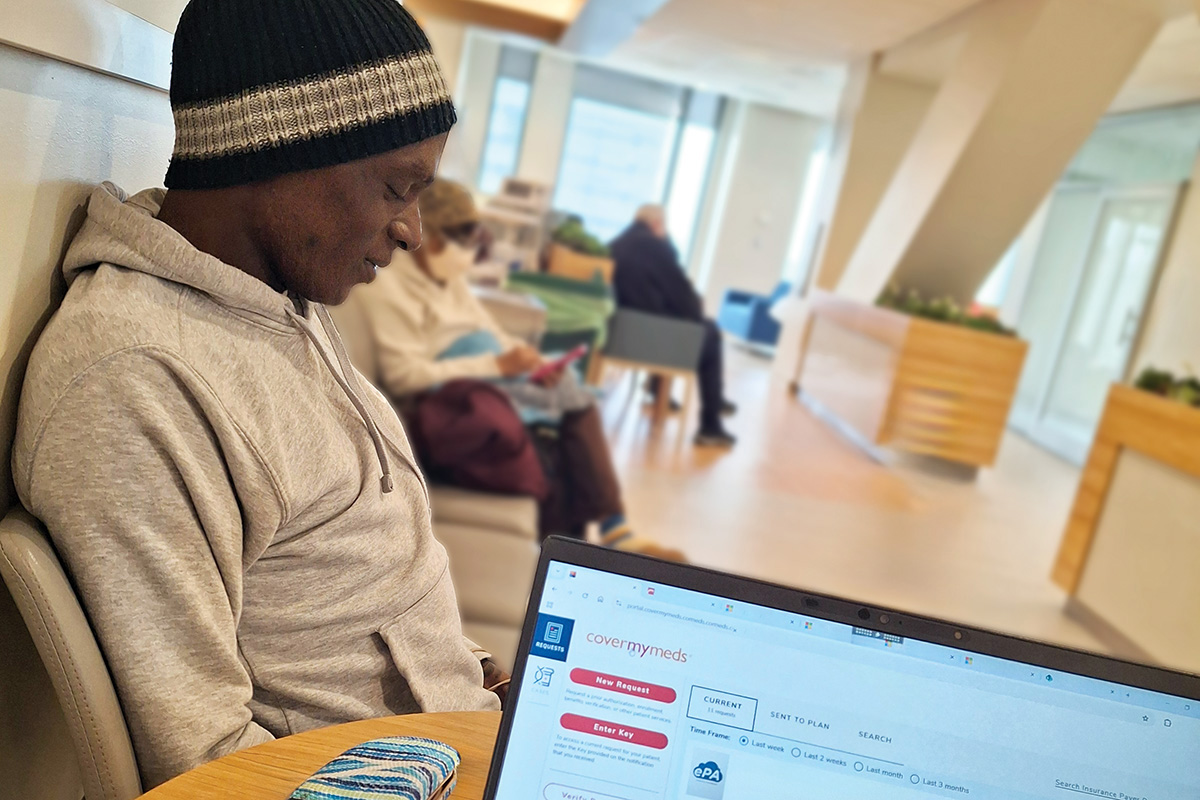
Keisha’s devotion has paid off. The transplant was successful, and a year later Mortel remains in complete remission from the ATLL. But he’s had to take steroids to treat side effects, and they make him feel stressed out and angry. “I feel bad, because sometimes I take that out on Keisha,” he says.
Mortel is still living with Keisha, but life is getting easier. Keisha went back to work in April 2026. Mortel can now help with school pick-ups for his niece, whom he rarely saw before the cancer. His connection with Serenity has deepened, and he loves spoiling her with little treats. She misses her room, but loves having her uncle around.
Mortel’s relationship with his big sister has deepened, too. “I’ve had to deal with so much, and there have been times when I didn’t know how I would go on,” Mortel says. “But the best part of this whole experience has been having Keisha to get me through it all.”
Tips for caregivers
- Have your own support team. “You may have a tendency to think you can do it all on your own,” Keisha says, “But you don’t have to do it alone. Let other people know when you need help.”
- Take care of your own mental health. “Put on your own oxygen mask before helping others,” Rogers says. “You can’t be an effective caregiver if you’re not taking time out for yourself, even if that just means getting caught up on sleep.”
- Understand your workplace’s leave policy. The Family and Medical Leave Act (FMLA) provides some employees with up to 12 weeks of unpaid, job-protected leave per year. But there are eligibility restrictions you should discuss with your employer.
- Tell the patient’s medical team about your emotional and financial challenges. Mortel’s doctors and nurses were able to guide Keisha to programs that defray costs, including free transportation to and from MSK.
How MSK cares for caregivers
MSK provides several support services for caregivers:
- Patient and caregiver education. Includes information on how to perform basic home health tasks.
- Social work programs. Includes the caregiver support group as well as advice on talking with children about cancer, navigating grief and loss, and other emotional topics.
- Counseling. Caregivers in crisis can meet with MSK counselors and get referrals for ongoing therapy.
- Integrative medicine. Programs include yoga, fitness, and meditation to relieve stress.
- Spiritual care. Our chaplaincy provides guidance for caregivers regardless of their religious affiliation.