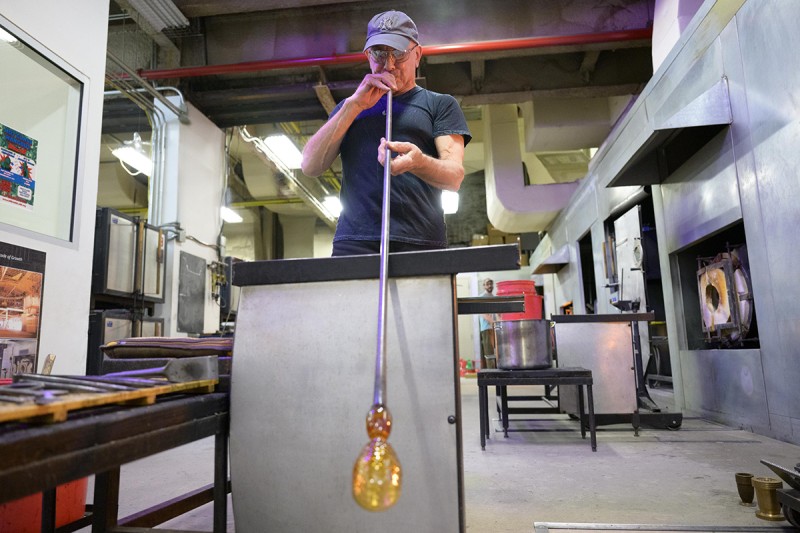
When he’s at work in his glassblowing studio, Charles Provenzano loses all track of time.
“I could be going for eight hours, and it feels like I just started,” says Charles, 75, who has trained with some of Italy’s most renowned glassblowers. “It’s like with concert pianists — you study an art so much, you get better, and it becomes you. That’s where the joy is.”
But when a painful lump on his tongue turned out to be cancer, Charles feared that he might have to give up “a love of my life.”
Thanks to a new approach for treating tongue cancer at Memorial Sloan Kettering Cancer Center (MSK), Charles is still able to practice his art and find joy in it. Standard treatment for tongue cancer can include removal of part or all of the tongue, as well as radiation, all of which can have a dramatic impact on a person’s ability to eat, swallow, and speak.
She’s the One: Choosing MSK for Tongue Cancer Treatment
When Charles came to MSK in October 2023, he met first with head and neck surgeon Jennifer Cracchiolo, MD, whose confidence and expertise made him feel comfortable right away. Charles took his daughter, Lucia, to the visit. She had studied neuroscience in college, and Charles valued her opinion.
“Dr. Cracchiolo came in completely focused on the case,” Charles says. “When she stepped out of the office for a moment, Lucia looked at me and said, ‘She’s the one.’ ”
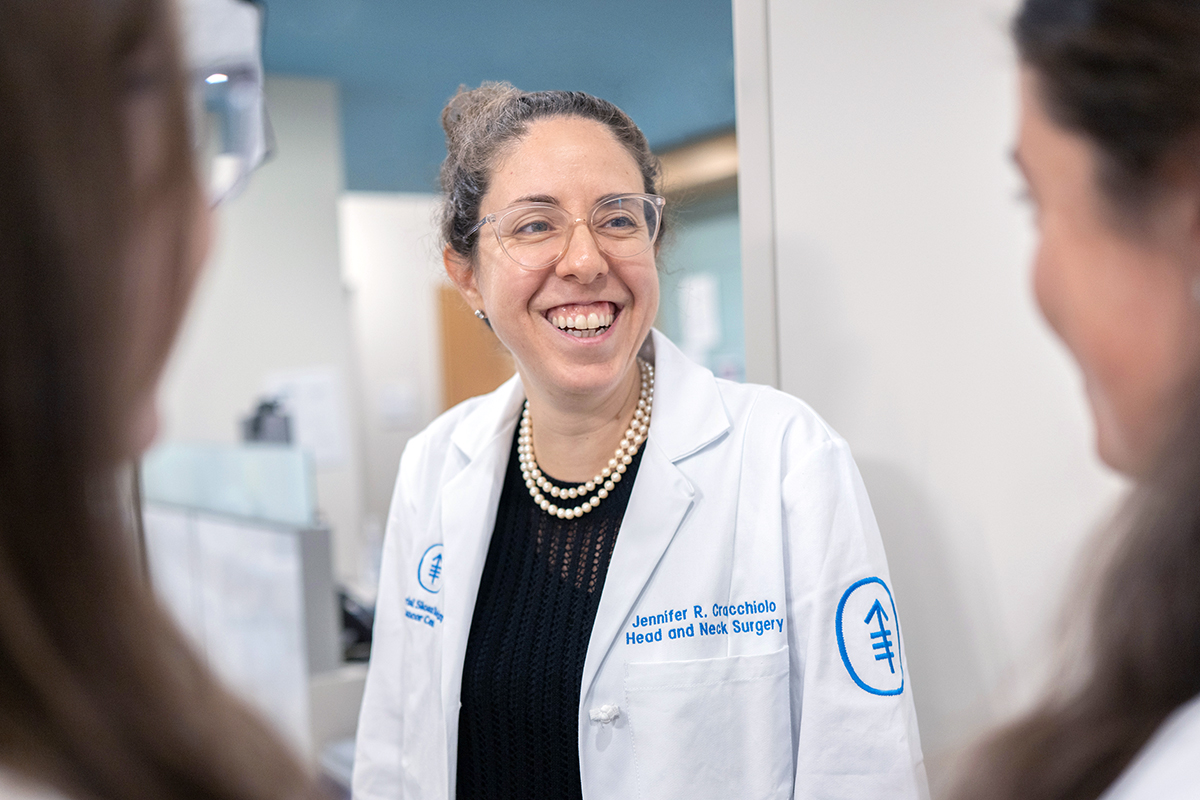
Many people with cancers of the head and neck worry about the side effects of treatment. Dr. Cracchiolo explained to Charles that the removal of the tumor might mean taking out over half of his tongue in a procedure called a “hemiglossectomy.” The surgeons would then rebuild his tongue using a different procedure called a “free flap reconstruction.”
Recovery would be difficult. Charles might have a hard time speaking and swallowing, and he would likely need rehabilitation therapy.
“I had been a bit in denial about how serious it was,” Charles says. “It wasn’t until later I realized how extreme the outcome could be if I had that procedure.”
A Clinical Trial To Minimize Surgery and Avoid Radiation
Dr. Cracchiolo called Charles the next day with good news: He was a promising candidate for a clinical trial led by MSK head and neck medical oncologist Lara Dunn, MD. Dr. Dunn is a leader in multiple trials testing targeted therapy, immunotherapy, and new combinations of agents for head and neck cancers.
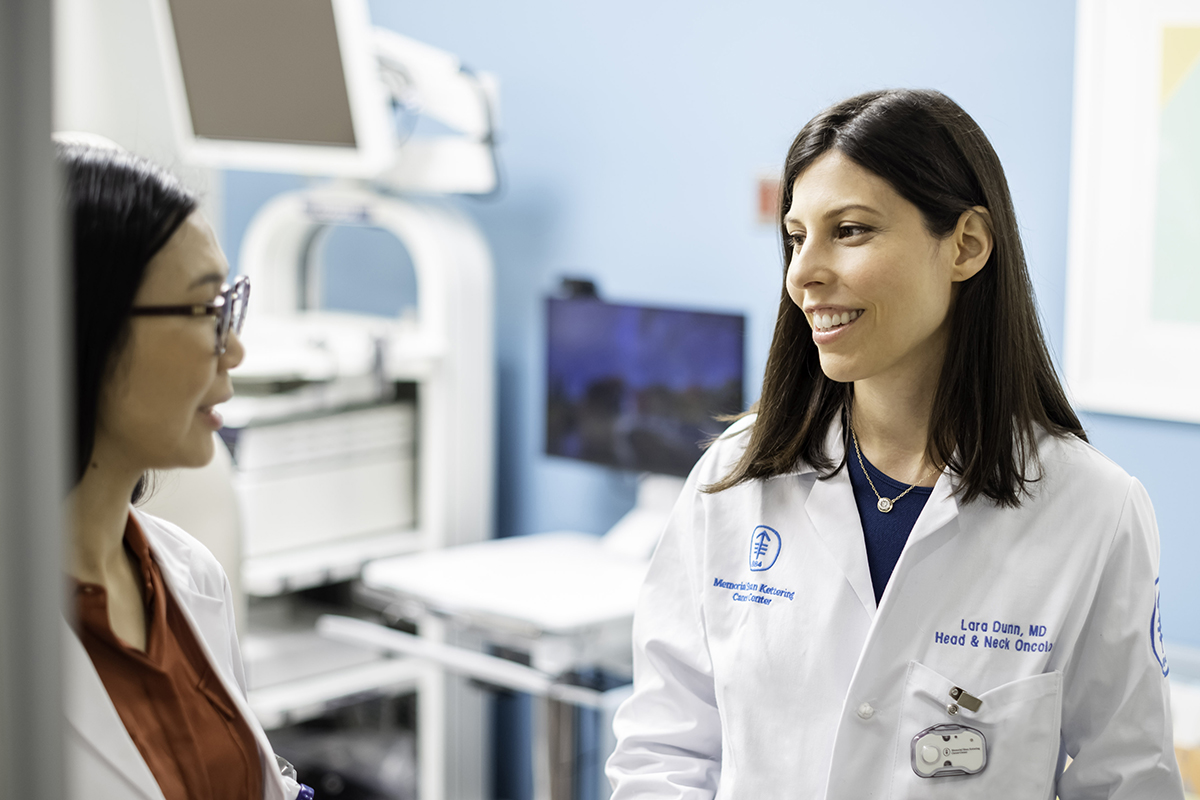
This clinical trial, available only at MSK, seeks to minimize surgery and potentially remove the need for radiation.
Dr. Dunn presented promising early results from the trial at the 2023 meeting of the American Society of Clinical Oncology (ASCO). She reported the approach worked well to reduce the size and extent of tumors. People in the trial had less complex surgery that preserved more of the tongue.
When Charles learned the trial was ongoing and that he could enroll, he didn’t hesitate: “I said, ‘Just sign me up right now.’ ”
The trial involved giving a drug combination before surgery — an approach known as neoadjuvant therapy — in hopes of shrinking the tumor first. When Charles met with Dr. Dunn, she explained he would receive a four-drug combination:
- Two chemotherapy drugs (cisplatin, carboplatin, or docetaxel)
- A medication that targets a protein called EGFR (cetuximab)
- An immunotherapy drug known as a checkpoint inhibitor (cemiplimab)
Resounding Success: Tongue Tumor Shrank by 90%
Charles had the powerful treatment over the next few months. Dr. Dunn warned him it would be hard, and it did take a toll. He lost weight and energy.
“It was intense,” Charles says. “But I thought it was worth it, mainly because I wanted to avoid the radiation.”
Eventually, the pain in his tongue started to ease. He slowly began to feel better.
Most importantly, the tumor on his tongue shrank to less than 10% of its original size.
By February 2024, Dr. Cracchiolo could remove the tumor while saving most of his tongue. She also took out lymph nodes from his neck to be sure the cancer had not spread.
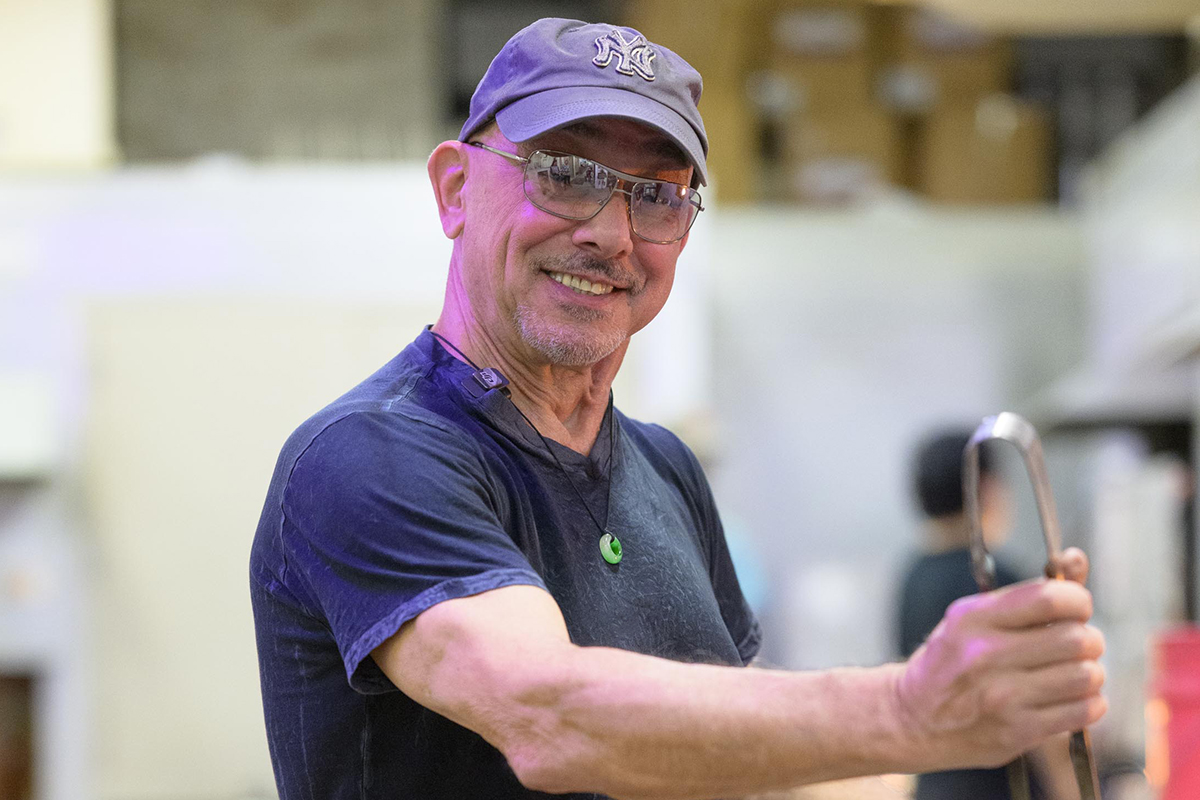
Charles did not need reconstructive surgery or follow-up radiation.
“This was a huge win,” says Dr. Dunn. “In the short term, Charles avoided major surgery and reconstruction. In the long term, he didn’t sacrifice a good quality of life.”
“Radiation can cause mouth sores, trouble swallowing, loss of taste, and even injure the jawbone,” she adds. “Thanks to the neoadjuvant therapy, Charles was able to avoid all that.”
Charles says recovery from surgery went fast. In two days, he could eat soft food and go home from the hospital.
“I felt comfortable the entire time I was at MSK from the moment I walked in the door, because of the atmosphere and the way they treat you,” he says. “It’s very professional and empathetic. They really take care of everything you need.”
The hardest part of his treatment was chemotherapy and immunotherapy, but Charles says he is glad he chose to join the clinical trial. He has had only minor lasting side effects. They included feeling numb in his neck and on one side of his tongue. He also had lichen planus, a common reaction to immunotherapy that causes chronic inflammation on the tongue. Charles says the condition comes and goes but has not affected his eating.
Back to His Beloved Glassblowing Studio
Almost two years after treatment, Charles feels well and continues his passion for glassblowing, both as an artist and teacher. He also runs his own jewelry store, does ceramics, and loves to travel — last year, he spent three weeks in Japan. His life is full.
“I feel very lucky,” says Charles. “Not only did I survive cancer, but I’m also enjoying my health, my family, and my art.”
“For people in my situation, I urge them to stay strong and just get through it, and never lose hope things will turn out well,” Charles says. “Thanks to the amazing doctors and staff at MSK, the outcome was even better than everyone expected.”
Dr. Cracchiolo’s research is supported by the MSK donor community, including James A. Gabriele.