When you’ve been through cancer treatment, hearing the words “you’re cancer free” should feel like the finish line. But for many patients, it’s the beginning of a new and sometimes uncertain chapter. That’s where survivorship care comes in — and it is more important than you may think.
What Is Survivorship Care?
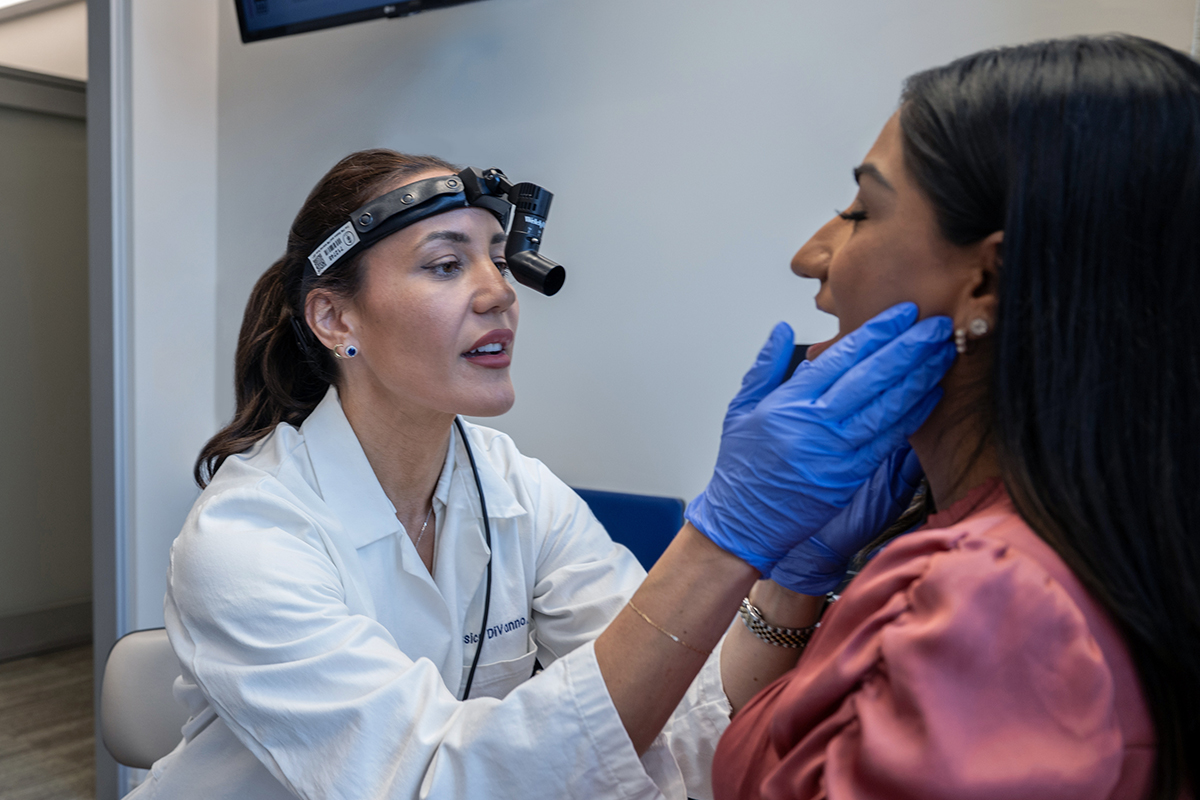
“Survivorship is a phase of care that should really begin from day one,” says nurse practitioner Jessica DiVanno, who leads MSK’s adult survivorship program. “It’s not just about screening for recurrence — it’s about whole-person care, promoting good health overall, and managing long-term side effects.”
The transition to survivorship happens when your risk of recurrence is very low, and you’ve met specific guidelines for your type of cancer. And here’s something many people don’t realize: You can be in cancer survivorship even if you’re taking medication long-term.
How Is Survivorship Care Different From Treatment?
So why not just continue seeing your oncologist? Because survivorship providers are specialists in this unique phase of care. “We have the clinical training to detect a recurrence, so patients can feel assured,” says DiVanno. “But our approach is different. We help patients adjust to how their lives may have changed, and we’re really specialized in managing any long-term side effects of treatment.”
Appointments during this phase of your care may focus on things that might not have been priorities during active treatment, such as:
Physical side effects: Issues like lymphedema (tissue swelling), fatigue, and sleep problems get dedicated attention. “We validate that what you’re experiencing is common and help you find ways to manage,” says DiVanno.
- Sexual health: These conversations often get overlooked but are crucial to quality of life.
- Mental health: The emotional adjustment to life after cancer deserves support.
- Overall wellness: From nutrition and exercise to stress management, survivor-ship care looks at the big picture.
MSK’s Team Approach to Your New Normal
Survivorship providers work closely with other services to give you comprehensive support. They frequently refer patients to Integrative Medicine for services like acupuncture, meditation, sleep therapy, and the About Herbs database — an internationally recognized resource for cancer patients that provides information on the risks and benefits of herbs, vitamins, and supplements.
MSK also has special programs for adult survivors of childhood cancers.
Eventually, some patients can even transition to having their primary care doctor manage their follow-up care with guidance from the survivorship team.
“Patients really do love our survivorship program,” DiVanno says. “It’s a place where they can feel heard and start to move forward with confidence. Getting this level of care after treatment is unique to MSK.”
How I Live Now: Stories From Survivors
Hear cancer survivors describe, in their own words, how they’ve moved forward with their lives after treatment.
A Fraternal Force for Good: Eddie Baynes

Eddie was diagnosed with stage 2 prostate cancer in 2024 and was treated by urologic surgeon Behfar Ehdaie, MD, MPH. He has become an advocate for prostate cancer awareness in the Black community.
When I was diagnosed, my biggest fear was the long-term effect of surgery. I wanted to avoid it at all costs.
Then MSK connected me with Michael, another Black man around my age, who had prostate cancer surgery from Dr. Ehdaie. Michael explained how MSK sexual health experts would work with me before and after the operation. He said, “They’re going to look after you, and if your sexual function isn’t coming back, they have a lot of options they can offer.” Talking to him made me feel much better about the path forward.
Throughout my cancer treatment and afterward at MSK, I learned I could do things to improve my outcome. Urologic surgeon Jose Flores, MD, MHA, who specializes in preserving sexual and urinary function, had me taking Cialis and doing Kegel exercises to strengthen my pelvic muscles even before surgery.
Since the operation, I have resumed the life I had before cancer, with a few differences. I can no longer ejaculate (it’s now a dry orgasm), but my erectile function is back to about 80% of what it was before. I take a low dose of Cialis every day to help with that. My bladder function is good. I sometimes leak from urinary incontinence when I’m stressed or exercising, but I wear liners to minimize it. I continued the Kegel exercises after the surgery, and I can tell the difference it makes if I take a break. It’s nice to have a sense of control. I’m very active and strong. I’m back to running five miles several times a week.
Prostate cancer screening saved my life. Now I am constantly speaking to men about its importance. I led the charge for everyone in my fraternity, Alpha Phi Alpha, to get their PSA checked and call me with their PSA number. About 80% did! This spring, I participated in my first Cycle for Survival to raise money for cancer research. I want men to know they can take control. Advocate for yourself and then for others. That’s how you fight fear.
Read more about Eddie’s story.
Savoring Simple Things: Sundas Hashmi

Sundas was diagnosed with oligodendroglioma (brain tumor) at age 37, in 2020, when her children were 2 and 6. Following surgery, she takes vorasidenib (Voranigo ®) under the care of oncologist Ingo Mellinghoff, MD.
In some ways, I’m lucky because my brain tumor is low-grade. When I was a teenager, my brother died from glioblastoma, a much worse brain cancer. But I’ve still had to adapt in many ways to a mind that feels different from the one I knew.
Before diagnosis, I was director of economic research at a family investment office. I have degrees in engineering and economics and always took pride in my problem-solving skills. Suddenly I could not manage even basic tasks, which really hurt my self-esteem. If my mind no longer worked how it used to, was I still me?
But I’ve learned ways to cope. My short-term memory is poor, so I make constant checklists. I always keep my water bottle, wallet, and keys on a shelf by the front door so I don’t forget them. I take daily naps. If I lose my balance or forget the name of a friend I’ve known for decades, I’ve learned to laugh it off. My cognition has slowly come back — maybe 80% of what it used to be — but I know I can’t go back to my life before surgery and must adjust to my new normal.
My focus has shifted to finding joy in simple things like family and nature. I enjoy making brownies with my daughter and playing squash with my son. Central Park has become my sanctuary. I love, love, love my daily walks there. I recently took up birding, and I’ve learned so much about our avian friends, including blue jays, cardinals, warblers, and hummingbirds. At night, when my brain is fried, I watch a lot of TV, which I find super relaxing. My daughter and I watch Pakistani dramas, and she’s learned some Urdu.
Like many Pakistani immigrants, I used to bury my emotions. When my brother passed away, my parents were very tight-lipped about it. But with the help of my therapist, I’ve become more comfortable talking about my sadness about my brother and the uncertainty of my life. I also work with a nonprofit, Our Brain Bank, that helps people with brain tumors. I now feel a responsibility to be more open about my challenges because it eases my own suffering and may also help others with theirs.
Read more about Sundas’ story.
Moving Forward by Giving Back: Nisha Falcigno

Nisha was diagnosed with stage 3 rectal cancer in 2014 and treated by colorectal surgeon Garrett Nash, MD, and oncologist Anna Varghese, MD. She has been cancer free since 2023 and volunteers weekly visiting MSK patients in the hospital.
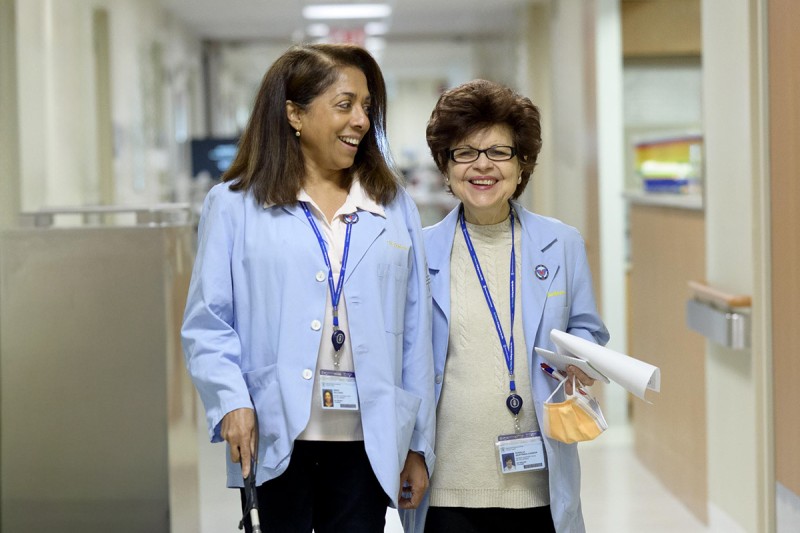
When I walk into a patient’s room with Rosalia, my volunteering partner, they are usually in bed with a lot of tubes, feeling lonely or afraid, and we tell them we were once in their position. I had a 28-day stay in the hospital, and things were not looking good for me. I had a daughter who was 17 years old, so I also know what it’s like to leave a child at home.
I think patients and their loved ones see: Here’s a person who seems to be thriving after cancer, and that could be us too.
I try never to use tentative words. Instead I say: “You will survive. You should plan that trip. You are gonna be living your life for many years to come.”
I say it with the confidence and hope that they get something out of it, even if I don’t know it for sure. We can’t live like we’re going to die. What’s important is how you live your life as you are today.
As I was being treated for cancer, I was also losing my vision from a different disease. I would ask myself, “Why? There must be a reason.” I needed to answer “why” by finding my purpose — and that’s why I volunteer.
My daughter tells me that losing my vision has given me a superpower. I listen to someone’s voice and can tell how they’re feeling and what they need at that moment. Last week, I walked into a patient’s room. She’d just had a hysterectomy. I stood close to her, and at one point, she reached out to hold my hand. She didn’t tell me she wanted to, but I sensed that was where the conversation was going. It was a beautiful moment for both of us.
I tell people if you’re lucky enough to survive cancer, take that gift and pay it forward.
Giving back is so rewarding. You did the hard work to survive. See how you can help your fellow human beings. You can hold the door for somebody else someday.
MSK’s Adult Survivorship Program
To learn more about the resources available to cancer survivors at MSK, visit mskcc.org and search for your cancer type, or go to our Adult Survivorship Program, where you’ll find general information and resources, as well as our disease-specific clinics, including:
- Breast cancer
- Anal, colon, and rectal cancers
- Cervical, endometrial, and ovarian cancers
- Head and neck cancers
- Lymphoma
- Melanoma
- Lung and esophageal cancers
- Thyroid cancers
- Kidney and prostate cancers
- Blood and marrow stem cell transplantation