
Sundas Hashmi was frying spring rolls for a dinner party when suddenly everything went dark. She woke up in the emergency room of a Manhattan hospital with her husband and medical staff hovering over her. They told her she had suffered a grand mal seizure — an electrical storm that swept through her brain, leaving her unconscious.
Sundas was 37 years old and seemingly in perfect health. But the ER doctors said they had detected a lesion in her brain, and she needed surgery to have it removed. It was early 2020.
Despite the shock, Sundas knew she wanted to take the time to get a second opinion from Memorial Sloan Kettering Cancer Center (MSK). That is what allowed her to receive an experimental treatment that gave her the best chance of getting the most out of her life, now radically transformed.
Sundas met first with neurosurgeon Viviane Tabar, MD, and says she knew immediately that she had made the right decision. Dr. Tabar, Chair of the Department of Neurosurgery, calmly explained that she would remove the brain tumor and then work closely with her colleagues on MSK’s special multidisciplinary brain tumor team to offer the best additional treatment options.
“I’ve been so impressed with MSK — how knowledgeable they are, and the bedside manner is so good,” Sundas says. “Everybody is so kind, and I couldn’t have asked for a better team.”
Awake during brain surgery
In February 2020, Sundas underwent surgery at MSK. Dr. Tabar performed an awake craniotomy — a procedure in which the patient remains conscious throughout the operation — so the surgical team could monitor neurological function in real time. Sundas was answering questions during the procedure, allowing the surgical team to remove as much of the tumor as possible while preserving her quality of life and essential functions. When the surgeons approached a critical area, Sundas started having difficulty with her speech and Dr. Tabar stopped the surgery. Even so, she was able to remove 95% of the tumor.

Dr. Tabar told her the recovery could be difficult, and it was. Sundas woke up to a world that no longer made complete sense. In the following months, she struggled to adapt. Her short-term memory was wiped nearly clean. At home, glasses of water fell from her grip. Spoons tumbled from her fingers. She didn’t know what year it was, who the president was, or how to get back to her own apartment. When she tried to speak, incoherent sounds came out instead of sentences.
As someone who had earned degrees in engineering and economics and served as director of economic research at an investment firm, Sundas found herself now unable to connect two dots on a piece of paper or identify a drawing of an airplane.
Sundas and her husband were getting worried, but Dr. Tabar reassured her that she had seen a lot of similar cases, and these symptoms improve with time. Sure enough, six months later, Sundas was recovering well. Her speech was fluent, and her cognitive function was much improved though not fully back to normal.
Diagnosed with oligodendroglioma
The tumor was identified as an oligodendroglioma, a lower-grade malignant brain cancer with a better prognosis than its more aggressive counterpart, glioblastoma — which Sundas understood all too well. Her brother had died from glioblastoma when he was just 18. That loss shaped her deeply, both emotionally and medically. She had watched radiation treatment leave her brother severely diminished.
Sundas understood her type of brain cancer was different, and she had a choice to make. Her MSK neuro-oncologist, Ingo Mellinghoff, MD, FACP, Chair of the Department of Neurology, presented her treatment options — standard radiation and chemotherapy on one hand or a clinical trial drug called vorasidenib on the other. Dr. Mellinghoff was leading the trial testing vorasidenib against certain low-grade gliomas, including oligodendroglioma.
He was candid with her: Radiation can cause lasting cognitive damage over time.
How vorasidenib attacks cancer cells
Vorasidenib on the other hand, is a targeted therapy, designed to attack cells carrying a mutation in IDH genes. Sundas’ tumor had these mutations, which are present in 80% of low-grade gliomas. The benefit of targeted therapy is that it can kill cancer cells while largely leaving the healthy ones alone, a stark contrast to chemotherapy’s indiscriminate destruction. (The FDA approved vorasidenib as a treatment for low-grade gliomas in 2024. The drug has since been approved in more than 40 countries.)
For Sundas, taking another hit to her cognition was unacceptable, especially in light of what she has seen her brother endure. She chose the clinical trial.
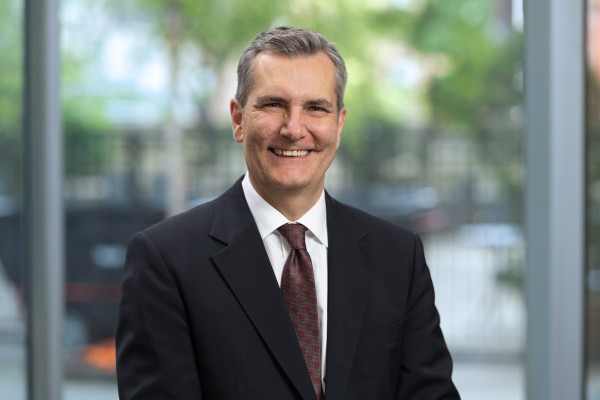
It was a double-blind clinical study, meaning neither Sundas nor her medical team knew whether she was receiving vorasidenib or a placebo. (This is considered the gold standard in medical research for testing treatments.) After a year, close follow-up brain MRIs showed the tumor was growing, and Sundas’ treatment assignment was “unblinded.” It turned out that she had been receiving placebo, so she was switched over to the actual drug.
Sundas has been on vorasidenib for nearly five years now, and her cancer has remained stable.
Vorasidenib does carry side effects: significant fatigue, along with ongoing short-term memory challenges — though Sundas acknowledges it’s difficult to untangle which symptoms come from the pill, which from the surgery, and which from the anti-seizure medications she also takes.
“This is a groundbreaking drug,” Sundas says. “We waited for so long for something like this to come to the market. I’m just thankful it’s there.”
Living scan to scan
Every three months, Sundas returns to MSK for an MRI. She describes the day of the scan as peak anxiety — a nervousness that doesn’t ease until she can pull up the radiologist’s report on the patient portal.
When Dr. Mellinghoff confirms the good news, she allows herself to exhale. Then she rewards herself with a sandwich.
Regarding her cognition, Sundas has learned ways to cope.
“I make constant checklists,” she says. “There’s a shelf in front of my main door where I keep my water bottle, wallet, and keys so I can pick them up and go. I take daily naps because my brain needs more rest. I’ve learned to laugh it off if I lose my balance or forget the name of a friend I’ve known for decades. Now I can let it go, give myself grace, and just be grateful for every single day.”
A life rebuilt around what matters
Sundas says she has emerged from this experience more awake to ordinary joys. She and her husband moved near Central Park, which she calls her sanctuary. Her daily walks among the oaks and songbirds are both meditative and healing. She has taken up birding with genuine enthusiasm — blue jays, cardinals, warblers, hummingbirds — and recently added squash to her routine, drawn in by research suggesting that high-intensity exercise supports cognitive function, and delighted to discover an activity she can share with her son two or three times a week.
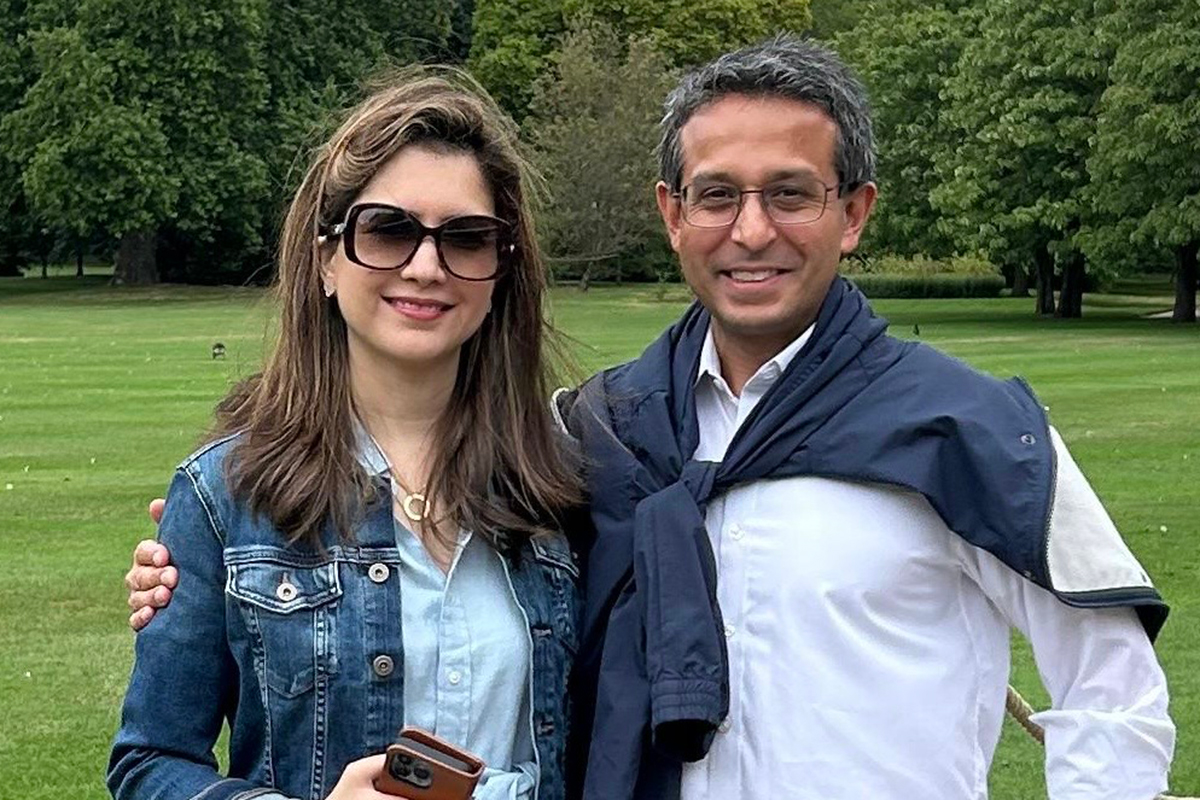
She also serves on the board of a nonprofit called Our Brain Bank for Glioblastoma, a resource for the newly diagnosed glioblastoma patients and their caregivers, who have received terrifying news and need to know they are not alone.
Her children — a son, now 8, and a daughter, now 13 — know about their mother’s illness. She says telling them was one of the hardest things she has ever done. Her daughter’s first question cut straight to the heart: Mommy, are you going to die? Sundas told her she had a great team of doctors and that they were doing everything possible to help her live to take her daughter to college and beyond.
At night, when her brain is exhausted and she has nothing left to give, she watches television — Pakistani dramas with her daughter, who picks up Urdu in the process, and prestige dramas like The Pitt and Succession when she’s alone.
“Television is the best distraction machine ever invented,” she says.
A message to others
For anyone newly diagnosed with brain cancer, Sundas has a message she offers with the authority of lived experience:
- Don’t accept the first answer you’re given. Seek second opinions from physicians with deep expertise.
- Research your specific diagnosis. Advocate for yourself.
- Handle the practical matters — the will, the healthcare proxies, the power of attorney — and then focus on survivorship.
- Find what brings you joy and do it regularly.
“Like many Pakistani immigrants, I used to bury my emotions,” Sundas says. “When my brother passed away, my parents were very tight-lipped about it. But with the help of my therapist, I’ve become more comfortable talking about my sadness over my brother’s loss of life and the uncertainty of my own. I feel a responsibility to be more open about my challenges because it eases my own suffering and may also help others with theirs.”
Key Takeaways:
- Oligodendroglioma is a lower-grade brain cancer that can still be malignant.
- A new targeted therapy called vorasidenib can slow or stop the growth of this cancer with fewer side effects than chemotherapy and radiation.
- Sundas Hashmi received vorasidenib as part of a clinical trial, and her cancer has remained stable for nearly five years.
Dr. Tabar is the Theresa Feng Chair in Neurosurgery.
Dr. Mellinghoff is the Evnin Family Chair in Neuro-Oncology.