It’s long been assumed that hereditary cancers — those caused by mutated genes that are passed down in families — arise in people who are younger. While cancers in older patients, the thinking went, resulted from environmental exposures, lifestyle factors, random genetic changes, or a combination of these factors.
Now a new study from Memorial Sloan Kettering Cancer Center (MSK) challenges those assumptions. The researchers found that in patients over 50, hereditary cancers are much more common than expected. This finding has implications for what kind of genetic testing patients should receive, regardless of their age.
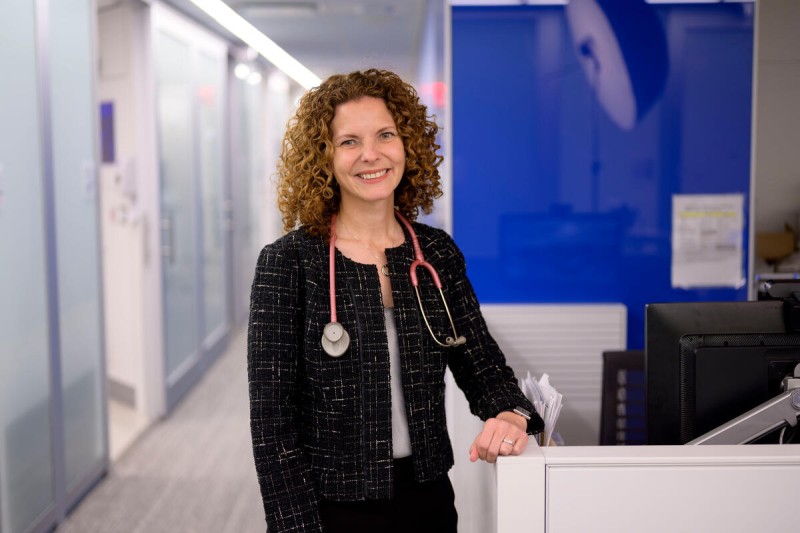
“Most cancer diagnoses occur in people who are age 50 or older,” says MSK gastrointestinal oncologist and clinical geneticist Zsofia Stadler, MD. “Our study found that if we limit genetic testing to only those under 50, we would miss 72% of patients with mutations in inherited cancer risk genes.”
Being aware of inherited cancer mutations can not only have implications for patients and the treatments they receive — it also helps their families, by letting them know they could be at increased risk for cancer.
Dr. Stadler is co-corresponding author of the new paper, which was published October 8, 2026, in Cancer Discovery. Her co-corresponding author is Luis Diaz Jr., MD, Head of the Division of Solid Tumor Oncology at MSK.
What are hereditary cancer mutations?
Hereditary or inherited cancer mutations, also known as germline mutations, are changes in a person’s DNA that increase the risk of developing cancer over a lifetime. Unlike mutations that develop inside a tumor, germline mutations appear in every cell in the body.
Some of the most common and well-known mutations are:
- BRCA1 and BRCA2, which increase the risk of breast cancer, ovarian cancer, prostate cancer, pancreatic cancer, and melanoma.
- Genes associated with Lynch syndrome, which increase the risk of colorectal cancer and other gastrointestinal cancers, uterine cancer, and genitourinary tract cancers.
If someone has a germline mutation in a cancer risk gene, it usually means they inherited it from one of their parents. And with many of these mutations — including BRCA1, BRCA2, and the Lynch syndrome genes — there is a 50-50 chance that they will pass it down to each of their children. Their siblings, aunts, uncles, cousins, and other relatives are also much more likely to carry the mutation than members of the general population.
What role does age play in hereditary cancer mutations?
Cancer typically develops as DNA damage accumulates over a lifetime — which is why it’s most common in older adults.
But inherited mutations add extra risk from birth, meaning cancer can strike decades earlier than expected. Cancers that typically appear in people in their 60s or 70s may instead arise in someone in their 20s or 30s.
“When a patient is diagnosed with cancer at a young age, we often suspect a germline mutation,” says Dr. Stadler, who was recently named Chief of MSK’s Clinical Genetics Service. “In such early-onset cases, we then conduct genetic testing to determine whether the patient carries a mutation in an inherited cancer risk gene.”
How does MSK detect hereditary mutations in cancer patients?
MSK looks for inherited mutations in cancer patients through a test called MSK-IMPACT®, which analyzes the DNA of a patient’s tumor. The purpose is to identify the specific mutations driving the cancer’s growth and to match patients with the most effective treatments.
But MSK-IMPACT goes further and does something that other tumor genetic tests don’t do: In addition to looking for cancer-causing mutations in tumor tissues, it also includes a sample of normal DNA — usually collected from blood or saliva — for comparison.
Having both kinds of samples allows doctors to determine whether the patient carries an inherited gene that may have contributed to their cancer.
What did the new study about germline cancer mutations find?
In the new study, the researchers performed germline genetic testing on 39,184 patients with a range of solid tumors — 32 different types of cancer. The average age of patients included in the analysis was 59.
For each cancer type, the scientists determined the average age at which the disease typically develops — they then used this information to determine at which age each cancer would be considered “early onset,” “average onset,” or “late onset.”
The researchers discovered that although patients with early-onset cancers were the most likely to have germline mutations, the rate of these inherited mutations was higher than expected even for patients with average-onset and late-onset disease. Overall, 16.3% of all patients had inherited mutations.
One of the study’s most striking findings was that using the standard age cutoff of 50 to determine eligibility for germline testing would have failed to identify 72% of inherited mutations, missing them in 4,601 patients.
“This study shows that hereditary cancers can occur at any age,” Dr. Stadler says. “Based on these findings, every patient diagnosed with cancer should be tested for inherited mutations.”
Why is it important to know whether a cancer is caused by a germline mutation?
There are several reasons why it’s important to know whether a germline mutation contributed to a patient’s cancer.
Previous studies from Dr. Stadler and her colleagues have found that about half of patients with germline mutations have genetic changes that can be targeted with drugs. For example, tumors caused by BRCA1 and BRCA2 mutations often respond to a class of targeted drugs called PARP inhibitors. Patients with Lynch syndrome are much more likely to respond to immunotherapy drugs called checkpoint inhibitors.
People with inherited mutations also have a high risk of developing additional cancers. Identifying these mutations can help their doctors recommend appropriate screening tests and preventative care. Patients may qualify for specialized surveillance programs that monitor them more closely, such as the CATCH (Comprehensive Assessment, Treatment, and Prevention of Cancers with Hereditary Predispositions) clinic at MSK.
Perhaps most important, identifying an inherited mutation can help entire families. People who learn they carry one of these mutations can inform their relatives, so they can get tested too. MSK researchers are studying this process, called “cascade testing,” and developing ways to help cancer patients share genetic risk information with family members more effectively. (Read how cascade testing has helped one family with a BRCA1 mutation.)
“Our findings suggest that every cancer patient should be offered germline genetic testing, regardless of age or cancer type,” Dr. Stadler says. “At MSK, we have already been incorporating this approach into patient care for those who receive MSK-IMPACT testing. With these findings, we hope to build on that experience and establish germline testing as a standard of care for all people with cancer.”
Key Takeaways
- A new MSK study of nearly 40,000 cancer patients challenges the long-held assumption that hereditary cancers primarily affect younger people, finding that inherited mutations are far more common in older patients than previously believed.
- The study found that relying on the standard age cutoff of 50 to determine eligibility for genetic testing would miss 72% of patients with inherited cancer mutations, representing thousands of unidentified cases.
- Knowing whether a cancer is caused by an inherited mutation is critical because it can guide more targeted and effective treatment options, such as PARP inhibitors for BRCA mutations or immunotherapy for Lynch syndrome.
- Identifying inherited mutations has benefits that extend beyond the individual patient, enabling family members to get tested and take preventive action through a process known as cascade testing.
Funding
This work was supported by the MSK Support Grant/Core Grant from the National Cancer Institute (P30 CA008748), the Precision and Interception Program, the MSK Molecular Diagnostics Service in the Department of Pathology, the Marie-Josée and Henry R. Kravis Center for Molecular Oncology, Cycle for Survival, and the Robert and Kate Niehaus Center for Inherited Cancer Genomics at MSK.