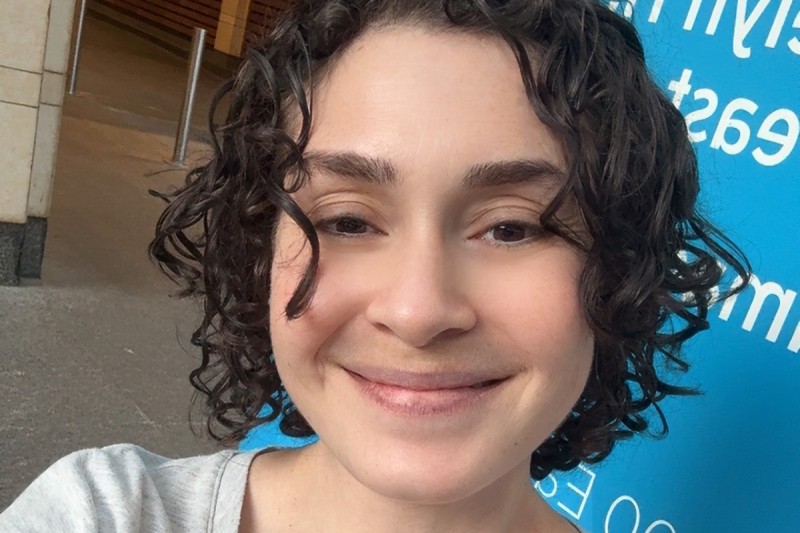
At 34, Sarah S. was blindsided when a breast lump turned out to be triple-negative invasive ductal carcinoma, an aggressive form of breast cancer. “Up to that point, I was at the peak of health, living an exciting life in New York City,” she says.
What followed was nearly five years of active treatment at Memorial Sloan Kettering Cancer Center (MSK) — surgeries, radiation, multiple rounds of chemotherapy, and other treatments. Now 41, Sarah is in remission. But the cancer revealed something that would ripple far beyond her own diagnosis: an inherited mutation in a gene called BRCA1.
“I was completely fractured,” she remembers. “I was trying to process this aggressive cancer diagnosis, and then I learned I’d be living with an increased risk of other cancers for the rest of my life.”
The mutation had implications not only for Sarah, but for members of her family as well.
What are hereditary cancer genes and germline mutations?
Most cancers develop from mutations that arise randomly during a person’s lifetime. But some are caused by inherited mutations — called germline mutations — passed down through families from generation to generation.
Mutations in BRCA1 and a related gene called BRCA2 are among the most common. They are linked to a greatly increased risk of several cancers, including:
- Breast cancer in women
- Breast cancer in men (BRCA2 only)
- Ovarian cancer
- Prostate cancer
- Pancreatic cancer
- Melanoma
For a woman with a BRCA1 mutation, the risk of developing breast cancer during her lifetime is between 55% and 72%, compared with 13% for the general population, according to the National Cancer Institute. The risk of developing ovarian cancer is between 35% and 46%, compared with 1.2% for the general population.
People with these mutations also tend to get cancer younger. This is likely why Sarah developed breast cancer at 34, says her doctor, breast medical oncologist Shari Goldfarb, MD, who leads MSK’s program for Young Women with Breast Cancer.
Watch How a Breast Cancer Patient Is Helping To Break Her Family’s Cycle of Inherited Cancer Risk
A diagnosis that changed an entire family
Shortly after her BRCA1 diagnosis, Sarah’s parents got tested. They learned that the mutation had come from her dad. He wasn’t close to his side of the family, but he knew there had been several cancer deaths at a young age. His mother had died of pancreatic cancer in her 40s.
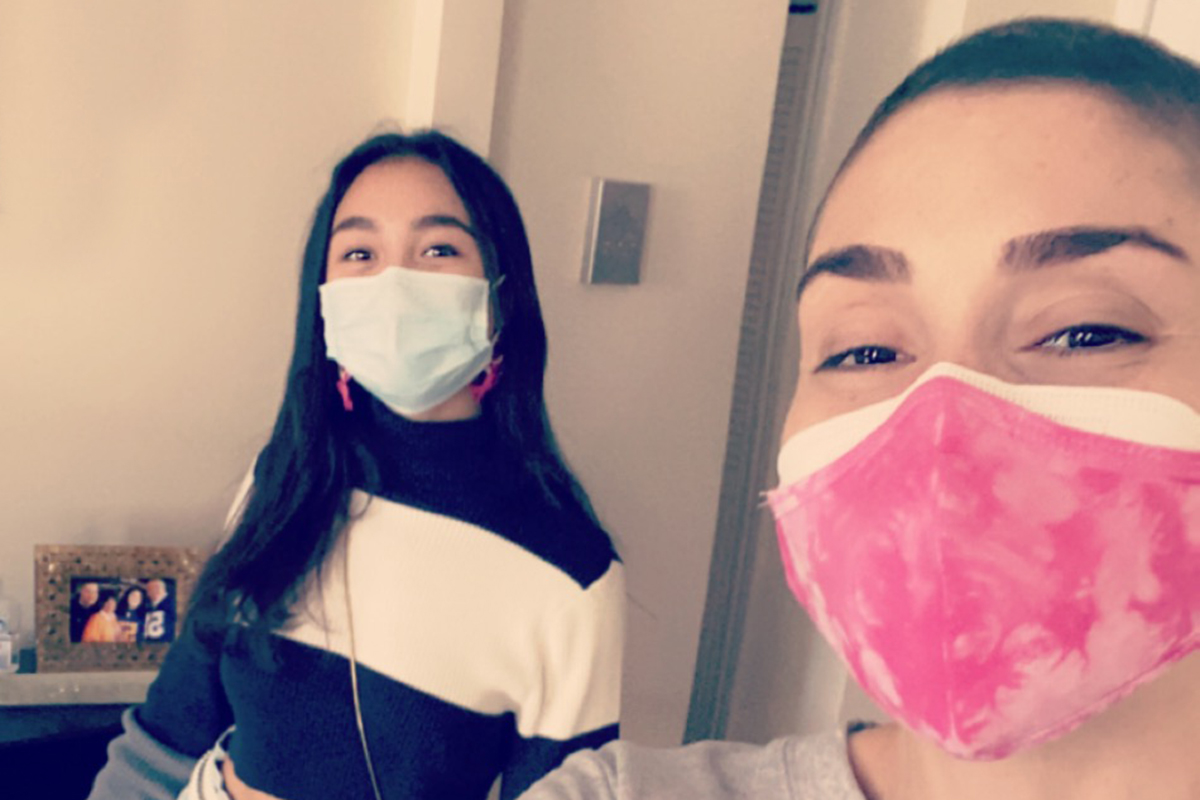
By a stroke of luck, Sarah had connected with two younger cousins on her father’s side just a few months before her cancer diagnosis. Her cousin Mable had sent her a message on Instagram — a simple “hi!” that led to an immediate connection. Sisters Mable and Norely, who live in Colorado, had not known Sarah growing up. The three young women quickly bonded, and when Sarah shared her cancer journey on Instagram, those bonds deepened.
So when Sarah learned the full implications of her BRCA1 status, she decided to share this information with her cousins and suggest that they consider testing.
Both sisters tested positive. They were 21 and 23.
What is cascade testing?
What Sarah launched for her parents and her cousins has a name: cascade testing — a systematic approach to identifying family members who may carry an inherited mutation and ensuring they get screened for it.
Cascade testing sounds straightforward, but it often falls through the cracks. Cancer patients are already overwhelmed — reaching out to relatives about genetic risk can feel like too much.
MSK’s Clinical Genetics Service has been working to overcome those challenges. A clinical trial funded by the National Human Genome Research Institute and led by clinical geneticist Kenneth Offit, MD, MPH, and psychologist Jada Hamilton, PhD, MPH — called the EfFORT Study — is testing a new model that makes it easier to inform families and ensure they get accurate information, which could save their lives.
“We want to make sure everyone at risk is aware and gets the support to move forward with testing,” says trial genetic counselor Victoria Groner, MS, CGC.
‘She’s my guardian angel’
Learning they carried BRCA1 changed the sisters’ lives. Mable and Norely started regular breast exams, MRIs, and eventually mammograms.
“There are definitely nights that worrying about all this keeps me up,” says Mable, now 27. “But the silver lining is that it’s made me more conscious of my health overall and led me to be much more proactive. Sarah is my guardian angel.”
“Watching Sarah cope with cancer has taken an emotional toll,” Norely adds. “But she has taught us to live day by day and not be consumed by fear.”
For Sarah, the feeling is mutual. “One thing I have gained from this traumatic disease is that, through learning that I was BRCA1-positive, I was able to help my cousins,” Sarah says.
What are the options for people with germline mutations?
Norely, now 30, recently got married. She and her partner are talking about having children through in vitro fertilization (IVF), which allows embryos to be screened and tested before implantation, preventing the mutation from being passed to the next generation. This is called preimplantation genetic testing.
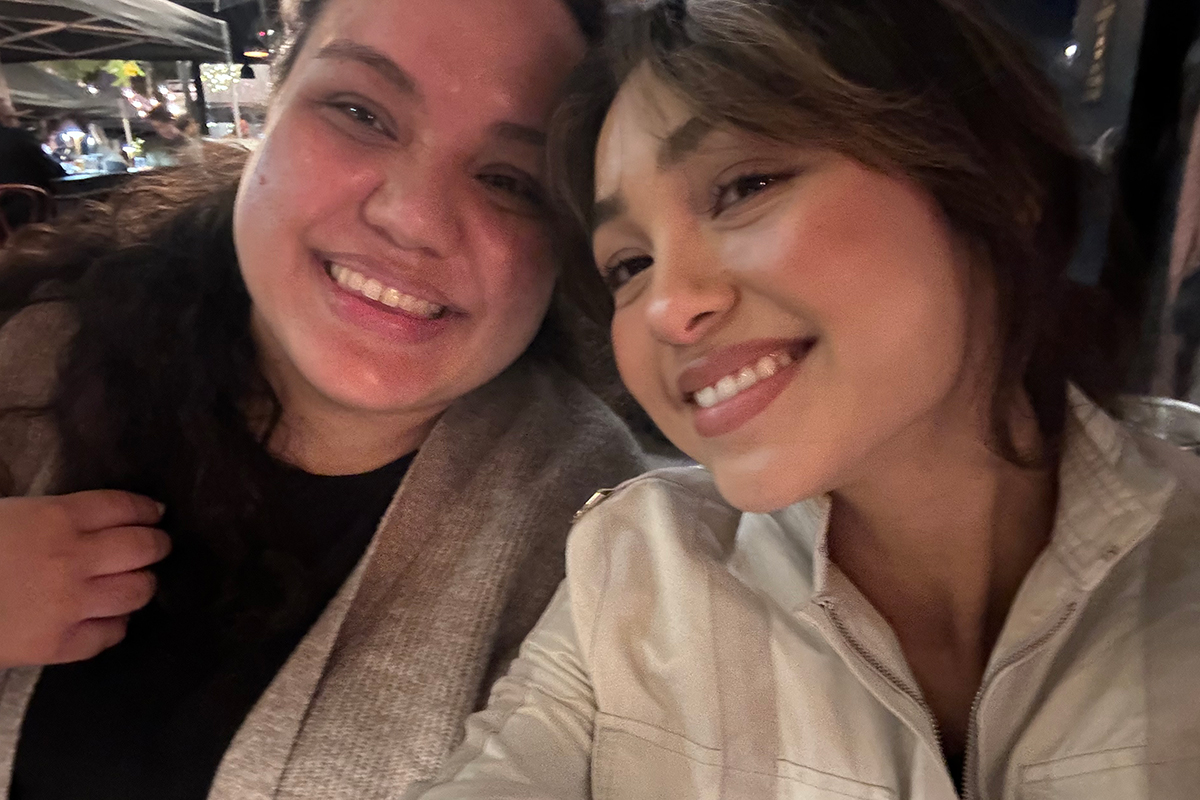
Mable is starting to think about IVF too. She’s also considering a prophylactic mastectomy — surgery to remove healthy breast tissue — which reduces breast cancer risk by 90% to 95% for those with BRCA and other breast cancer–associated mutations.
Some women also choose to have their ovaries and fallopian tubes removed (prophylactic salpingo-oophorectomy), usually after completing their families, which cuts ovarian cancer risk by 80% to 90% and also lowers breast cancer risk. “This is extremely important since there is no current screening for ovarian cancer,” Dr. Goldfarb says.
Men with BRCA mutations should stay on top of their risk, too. They should be regularly screened for breast and prostate cancers. It’s also important to remember that men have the same ability to pass on a BRCA gene mutation to their children that women do. “Too often, women do not consider paternal family history when assessing their risk,” Dr. Goldfarb notes.
Pancreatic cancer remains hard to screen for, but MSK patients can join the Pancreatic Tumor Registry, which monitors them closely and aims to develop better methods to detect the disease early.
Five years cancer free — and counting
Sarah recently marked five years of being cancer free. She’s living her New York City life and spending time with friends, family, and her dog. A double mastectomy and removal of her ovaries — all part of her treatment — have significantly reduced her risk of future cancers.
She is quick to credit her care team at MSK, especially Dr. Goldfarb and her nurses. “One thing that got me through this is that I have a group of people to watch me and guide me constantly,” Sarah says. “They allow me to tell myself, ‘You’re going to be OK.’ ”
As a BRCA1 carrier, Sarah’s father is also at increased risk of cancer. He has chosen not to have any additional screenings. Genetic counselor Groner says this is not uncommon. “Many older people believe if they have lived as long as they have without cancer, there is nothing extra they need to do,” she notes. “However, people at almost any age can benefit from increased surveillance.”
Should I consider getting tested for inherited cancer genes?
Most cancers aren’t hereditary. But if your family has a strong history — multiple relatives with the same cancer, or diagnoses at unusually young ages — genetic testing is worth considering. Insurance often covers it.
BRCA1 and BRCA2 are just two of the many known hereditary cancer mutations. Genetic counselors can review your family cancer history and determine which testing makes sense for you. “Your primary care doctor is a great resource,” Groner says. “But for genetics specifically, a specialist can give you the most accurate, up-to-date guidance.”
If you test positive, programs like MSK’s RISE (Risk Assessment, Imaging, Surveillance, and Education), for women with increased breast cancer risk, can build a personalized surveillance and prevention plan. Similarly, MSK’s CATCH clinic (Comprehensive Assessment, Treatment, and Prevention of Cancers with Hereditary Predispositions), helps people with hereditary cancer syndromes to lower their cancer risks.
“Knowledge is power,” Dr. Goldfarb says. “Once you know you have one of these mutations, you can act. You can protect yourself, and you may also be able to protect future generations.”