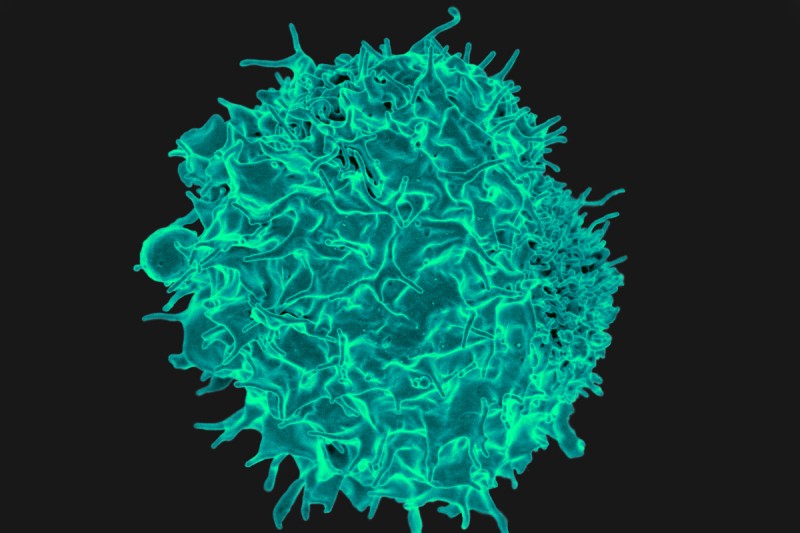
Developing effective immunotherapies for acute myeloid leukemia (AML) has long been hampered by a critical challenge: Therapy directed at killing the leukemia cells may also harm the body’s ability to make new, healthy blood cells. This happens because most of the proteins that can be targeted on the surface of the blood cancer’s cells are also found on vital blood-forming cells.
Now, a team of researchers from Memorial Sloan Kettering Cancer Center (MSK) has developed a new type of CAR T cell therapy that targets a protein found almost exclusively on leukemia cells and not on healthy cells.
The research takes an innovative approach by harnessing antibodies discovered in AML patients whose cancer went into long-term remission following a bone marrow transplant.
Antibodies are immune proteins that recognize and attach to threats. And these antibodies target U5 snRNP200, a protein usually found inside a cell’s nucleus but that unexpectedly appears on the surface of leukemia cells in about half of all AML patients.
The team’s findings, conducted in animal models, were published April 30 in Cancer Discovery.
The work was led by leukemia specialist Anthony Daniyan, MD, and Omar Abdel-Wahab, MD, Chair of the Molecular Pharmacology Program at MSK’s Sloan Kettering Institute. The study’s first authors were postdoctoral fellow Takeshi Fujino, MD, PhD, and medical student Jennifer Lewis, both members of the Abdel-Wahab Lab.
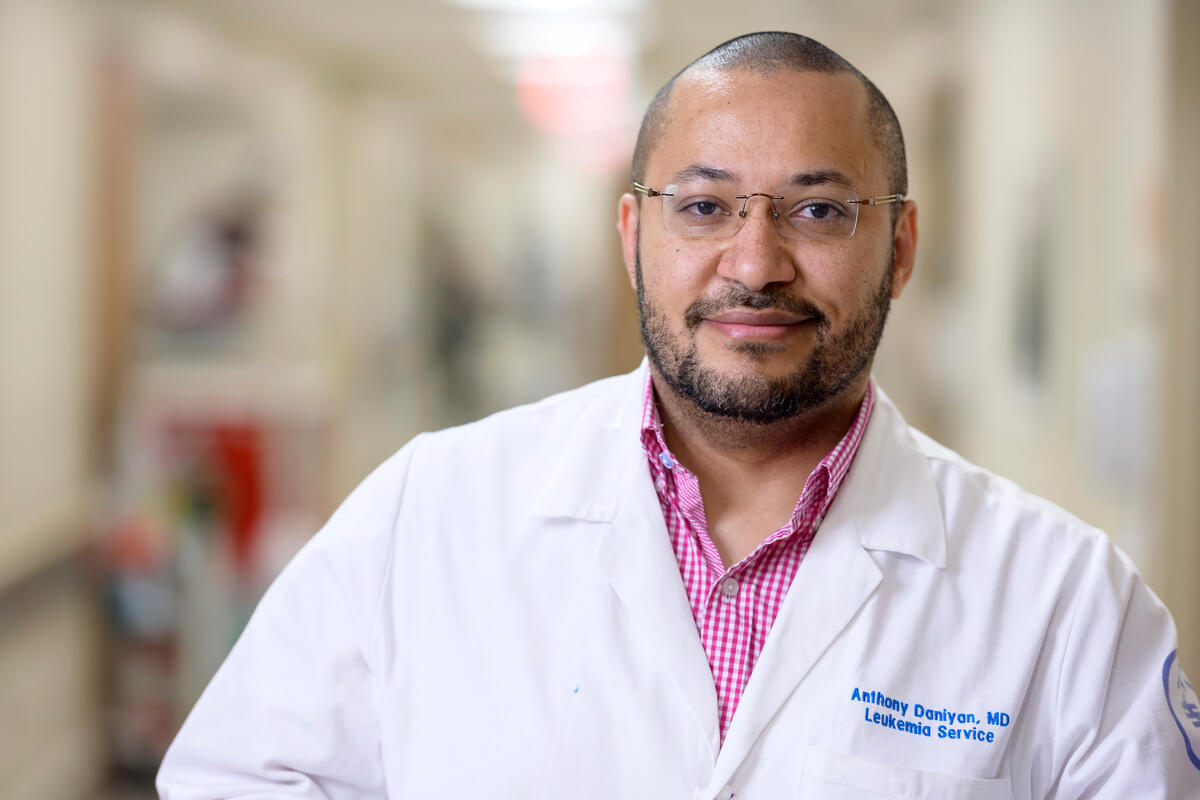
“We don’t know yet why this protein ends up on the cell surface, but it may create an opportunity to safely target AML cells without damaging a patient’s healthy cells,” Dr. Daniyan says. “We figured out a way to engineer CAR T cells to mirror what was happening in patients in remission, as well as a method to make the approach even more effective by coaxing the cancer cells produce even more of this surface protein.”
Moreover, the engineered cells proved broadly effective against several other types of leukemia. These include B-cell acute lymphoblastic leukemia (B-ALL) and pediatric leukemia — which is quite different from leukemia in adults, arising due to large genetic rearrangements and the fusion of oncogenes rather than the development of small “typos” in the genetic code as people age.
“Rather than focusing on why treatment fails in AML, we looked for what helps people survive and learned from their success,” Dr. Abdel-Wahab says.
While promising, these investigational studies will require further development to advance them from the laboratory into the clinic, the authors note.
New Treatments for Acute Myeloid Leukemia Are Critically Needed
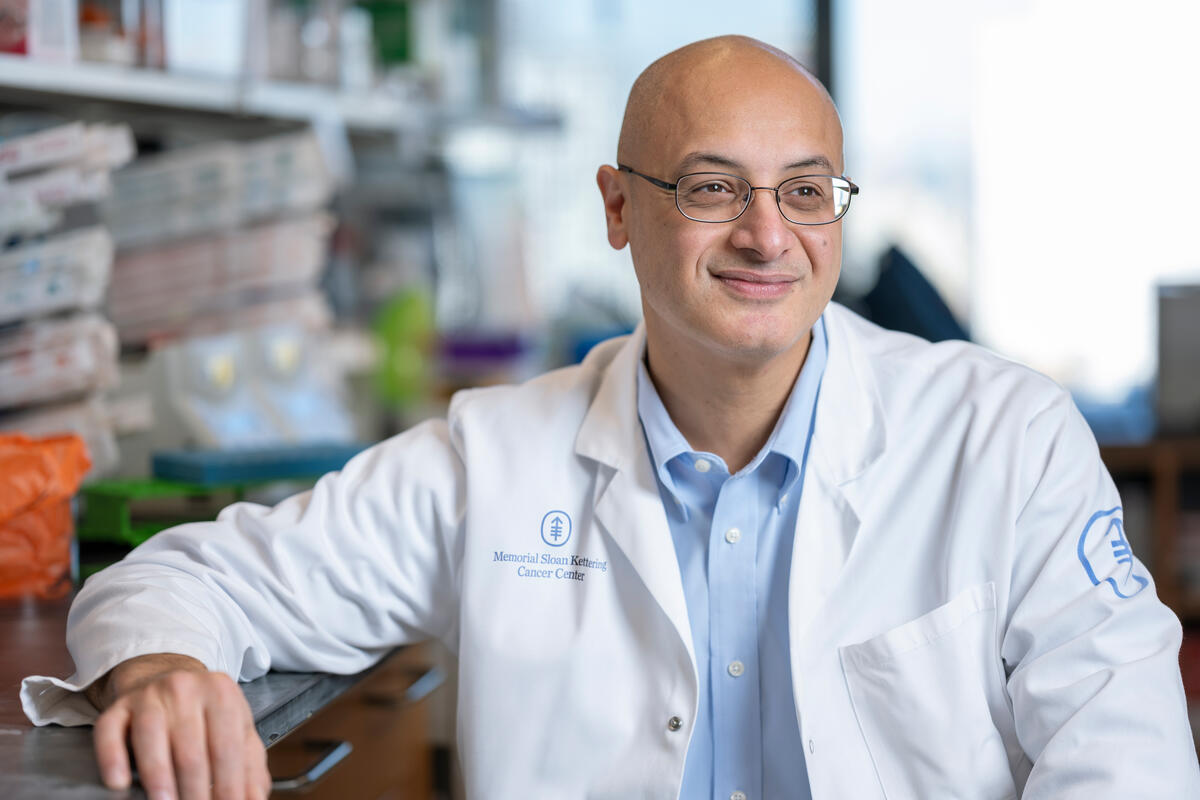
There is a critical need to develop new treatments for AML, Dr. Abdel-Wahab says. Bone marrow transplantation works for some patients, but many people aren’t healthy enough to receive one or a suitable donor can’t be found.
Overall, just 3 out of 10 AML patients live for five years or more after a diagnosis. And for those whose cancer resists treatment or returns after treatment, the survival rate is closer to 1 in 10.
“That’s right up there with the cancers we usually talk about as being the most deadly, like lung and pancreatic cancer,” Dr. Abdel-Wahab says.
Learning From the Graft-Versus-Leukemia Effect
When patients receive a bone marrow transplant, doctors first give chemotherapy to eliminate diseased blood-making cells in the bone marrow, and then healthy donor blood stem cells are infused to rebuild the body’s blood production system. The transplant provides an additional benefit through what’s called the “graft-versus-leukemia” effect — immune cells from the donor recognize and attack cancer cells lingering in the patient’s body.
“These donors’ antibodies are actually what drive the leukemia intro remission,” Dr. Daniyan says. “So we said, ‘Why don’t we just let nature be our guide?’ And T cells, which get modified into CAR T cells, are even more potent than antibodies — so our approach combines the best of both worlds.”
Strengthening CAR T Cells
The team took the genetic sequences from the patient’s antibodies and engineered them into CAR T cells, which stands for “chimeric antigen receptor T cells” — a technique pioneered at MSK in the early 2000s — essentially creating a therapy that mimics the successful natural immune response seen in patients. .
To make the therapy even more powerful, the researchers “armored” the CAR T cells by genetically modifying them to continuously secrete interleukin-18 (IL-18), a signaling molecule that boosts immune responses. This IL-18 armor serves a dual purpose:
- It increases the amount of target protein on the surface of cancer cells, making them easier to attack.
- It also supports the patient’s immune system in the fight against the leukemia.
Promising Results and Long-Term Protection
In mouse models, the new MSK-developed CAR T cells demonstrated remarkable effectiveness. They not only eliminated leukemia in animal models of both adult and pediatric AML, they also created long-lasting protection. When mice that had been successfully treated were exposed to leukemia again nearly a year later, they remained cancer-free — a sign their immune systems had effectively learned how to fight the cancer.
Importantly, the treatment spared healthy blood-forming cells, experiments showed.
The researchers also discovered that the new approach shows promise against another leukemia — B-cell acute lymphoblastic leukemia (B-ALL), a fast-growing blood cancer where immature B-cells multiply in the bone marrow and blood.
The unusual U5 surface protein was detected in nearly 90% of B-ALL patient samples tested. In laboratory studies, the CAR T cells effectively targeted B-ALL cells — including those that had lost CD19, the protein targeted by current CAR T cell therapies against this type of leukemia.
“CD19 loss is a major mechanism of treatment resistance in B-ALL patients who relapse after CD19-directed CAR T cell therapy,” Dr. Abdel-Wahab notes. “Our approach could potentially address that challenge.”
Advancing the Treatment From the Lab to the Clinic
Based on these promising preclinical results, the research team is now working to advance their new CAR T cells toward clinical trials.
The researchers are optimistic about translating the approach from laboratory models into people for several reasons.
First, the strategy is likely to be safe to use in people — the target was discovered in patients who achieved long-term remission, after all. And the U5 snRNP200 protein is essential to the cell’s survival, so cancer cells will be unlikely to evolve in a way that eliminates it as a way of resisting the treatment.
“We’re encouraged about our ability to bring these innovations to the clinic to benefit patients with leukemia,” Dr. Abdel-Wahab says.
MSK is pursuing an Investigational New Drug (IND) designation for the approach from the U.S. Food and Drug Administration (FDA) — a necessary first step toward testing any new therapy in patients.
MSK is also seeking commercial and philanthropic partners to accelerate translation of this discovery from the lab to the clinic. Inquiries can be directed to Lisa Kennedy, PhD, Director of Technology Development and Licensing, in MSK’s Office of Entrepreneurship and Commercialization.
Additional Authors, Funding, and Disclosures
Additional authors of the paper include Bingyi Chen, Tamar Feinberg, Maxim Maron, Alexander Lewis, Charlotte Wishnack, Quinlan Sievers, Satoshi Kaito, Winson Cai, Sarah Yoo, Serena Mathew, Sydney Souness, Erin Burns, Jasmine Um, Elisa de Stanchina, Qing Chang, Besnik Qeriqi, Kevin Chen, Pu Zhang, Susan DeWolf, Joshua Weinreb, Renata Mammone, Ileana Miranda, Robert Stanley, Maria Adriana Cuibus, Kenyon Weis, Brianna Gipson, Cynthia Castro, Nina Fox, Michael Lee, Jaime Alvarez-Perez, Daoqi You, Filemon Dela Cruz, and Andrew Kung — all of MSK — and Alyssa Fronk and Martin Akerman of Envisagenics.
The work was supported by the National Cancer Institute (P50 CA254838, R35CA304457, R01 CA251138, R01 CA242020, R01 CA283364, 1R01CA291796, P30 CA08748); the National Heart, Lung, and Blood Institute (R01 HL128239); the Leukemia & Lymphoma Society/Blood Cancer United; the MSK Technology Development Fund; the Tow Center for Developmental Oncology; the Edward P. Evans Foundation; a Cycle for Survival Equinox Award; and the Neil S. Hirsch Foundation.
The team also used the MSK Proteomics and Metabolomics Core and the Integrated Genomics Operation.
Dr. Daniyan is an inventor on several patents related to CAR T cell therapy. If companies license these patents from MSK, he may receive a share of the royalty payments. He serves as chief scientific officer of PromiCell Therapeutics Inc., where he also owns equity in the company.
Dr. Abdel-Wahab is a founder and scientific advisor of Codify Therapeutics, owns stock in the company, and receives research funding from them. He consults for MagnetBio and Janssen, and serves on the scientific advisory boards of Envisagenics Inc., Harmonic Discovery Inc., and Pfizer Boulder. He has previously received research funding from H3B Biomedicine, Nurix Therapeutics, Minovia Therapeutics, and LOXO Oncology for work unrelated to this study.
Read the study: “Development of CAR T cells Targeting a Surface RNA Binding Protein for the Treatment of Acute Leukemias,” Cancer Discovery. DOI: 10.1158/2159-8290.CD-25-0920