A clinical trial at Memorial Sloan Kettering Cancer Center (MSK) is showing promise for people with early-stage rectal cancer whose tumors are driven by excessive amounts of a protein called HER2 (human epidermal growth factor receptor 2).
The trial suggests that many of these patients may be successfully treated using targeted therapies to avoid surgery, resulting in fewer side effects and better quality of life during and after treatment.
The phase 2 study treated eight people fully with early-stage rectal tumors using two well-known targeted therapies — trastuzumab (Herceptin) and tucatinib (Tukysa) — that attack HER2-driven tumors. The two drugs were given alone for the first six weeks, then afterwards in combination with standard chemotherapy.
Typically, these rectal cancer patients would eventually undergo a large surgery. But in the trial, 4 of the 8 patients saw their tumors disappear using only the targeted therapies and chemotherapy. In three patients, tumors began to regrow but were managed without surgery, using radiation or a minimally-invasive procedure.
Overall, the targeted therapies were well tolerated, with side effects that were manageable.
How Skipping Radiation and Surgery Improves Quality of Life for HER2 Rectal Patients
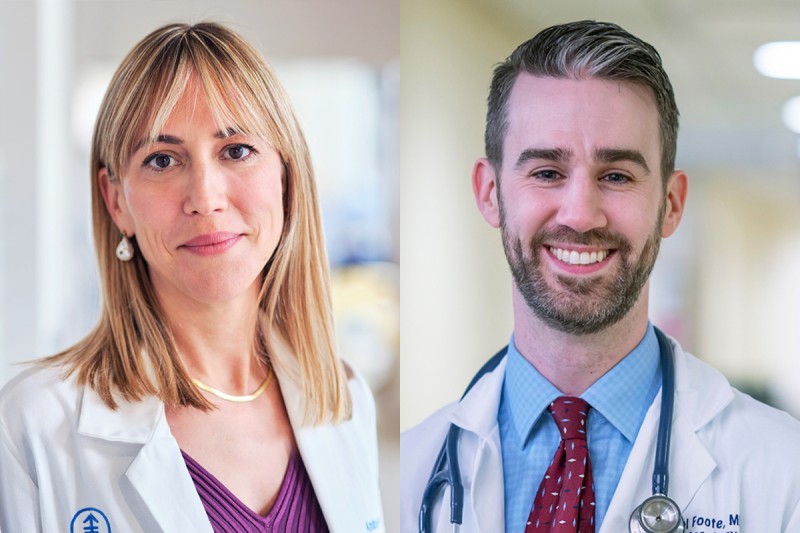
“Radiation and surgery are usually successful for rectal cancer, but they have side effects that can sometimes be life-altering,” explains gastrointestinal medical oncologist Andrea Cercek, MD, who led the trial.
These side effects can include compromised sexual function and fertility, as well as the need for a temporary or permanent ostomy bag, an external pouch for collecting waste.
“Our goal was to minimize the toxicity of treatments,” Dr. Cercek explains. “If we can use this new approach and spare people a permanent ostomy bag, for instance, that’s a big win for patients.”
“Our early research suggests that rectal tumors driven by HER2 may be particularly aggressive,” says MSK gastrointestinal oncologist Michael Foote, MD. He presented the interim results of the trial at the April 2026 conference of AACR (the American Association of Cancer Research).
“These tumors can spread to areas of the body like the brain and bone, where rectal cancer usually doesn’t go,” Dr. Foote says, “so we hypothesize that this patient group may benefit from treatment aimed specifically at HER2.”
How HER2 Can Drive Rectal Cancer
HER2 is a gene involved in cell growth. In some rectal cancers, cells produce too many copies of the HER2 gene, an abnormality called “gene amplification.”
The result of gene amplification is too many growth signals that prompt cells to multiply uncontrollably. “Many researchers believe this overexpression of HER2 also enables cancer cells to evolve in a way that makes them more likely to metastasize,” Dr. Foote says.
How HER2 Targeted Therapies Work
Tucatinib and trastuzumab work together to block the abnormal protein signaling caused by HER2 amplification, slowing the spread of tumor cells.
Combining chemotherapy with the targeted therapies kills cancer cells and shrinks the tumor. In half of the people enrolled in the trial, the tumors disappeared completely. “That response rate is higher than you would expect, which is wonderful,” say Dr. Foote.
“This approach has worked well for patients with Stage 4 cancer that has spread, extending their survival,” says Dr. Cercek. “For this trial, we wanted to see if using it with patients who had early-stage disease could mean eliminating some of the treatments that we know are harder on patients.”
Manageable Side Effects and Lasting Benefits
The therapies in the trial were generally well tolerated. “The majority of side effects were either a temporary change in liver enzymes, which resolved, or diarrhea, which was manageable,” says Dr. Foote.
“In no cases have we seen cancer progress or spread while patients were on the initial HER2-treatment or chemotherapy. This was a safe treatment to give patients that didn’t impair their ability to receive standard treatments down the line,” says Dr. Cercek.
In three cases, some tumor cells regrew, but the tumors were removed using a minor colonoscopy-like procedure or radiation without surgery. “The treatments given during the trial shrank the tumors so much that they could be easily removed and those patients are doing fine,” says Dr. Foote.
Bad News for Cancer: Promising Rectal Clinical Trial Results
The MSK Focus on Successful Treatment Using Less-Invasive Treatments
For both doctors, their trial fits well with MSK’s groundbreaking contributions to making cancer therapies less invasive and improving people’s quality of life during and after treatment.
“MSK colorectal surgeons are pioneers in using a watch-and-wait approach, or non-operative management,” Dr. Cercek says. “That’s where we use chemotherapy, immunotherapy, and sometimes radiation to shrink a tumor to the point where surgery isn’t needed. Instead, we monitor the patient closely to make sure cancer doesn’t come back.”
Dr. Cercek and gastrointestinal medical oncologist Luiz Diaz Jr., MD, also led a heralded trial that used immunotherapy alone to successfully treat rectal patients whose tumors have a genetic marker called MMRd (mismatch repair deficiency).
Every single patient in the original trial saw their tumor disappear without chemotherapy, surgery, or radiation — which meant preserving the fertility of many younger patients who have gone on to have children. This approach has been expanded with clinical trials involving several cancer types, including stomach (gastric), colon, esophageal, urothelial cancer.
Dr. Foote believes this focus on constantly finding new ways to treat people with less-invasive therapies is a hallmark of MSK. “We know that only a small percentage of people with rectal cancer have an overexpression of HER2,” he says. “But this trial suggests we can help them in ways that mean they don’t need to alter their expectations of what their life can be.”
Key Takeaways
- A new rectal cancer treatment approach for HER2-amplified tumors is showing exciting results. A small clinical trial at Memorial Sloan Kettering Cancer Center (MSK) tested two targeted drugs — trastuzumab and tucatinib — in combination with chemotherapy for rectal cancer patients whose tumors were fueled by too much HER2 protein. In 4 of the 8 patients enrolled in the trial, tumors disappeared.
- Patients may be able to skip harsh treatments. Rectal cancer patients generally undergo radiation and surgery, which can cause serious long-term side effects, such as infertility and permanent ostomy bags. But 6 out of 8 patients in this trial avoided major surgery.
- The science involves blocking a faulty growth signal. HER2 is a gene that when overactive sends too many “grow and multiply” signals to cells, making tumors more aggressive. The two targeted drugs work together to block those signals while chemotherapy helps destroy the remaining cancer cells.
- Treatments were safe with manageable side effects. No patient had their tumors grow on the therapy. Side effects have been generally well tolerated, mostly temporary digestive issues or liver enzyme changes. This trial fits into MSK’s broader mission of helping cancer patients live fuller lives by reducing the impact of treatment wherever possible.
Additional Authors and Disclosures
Additional authors and disclosures can be found in the abstract at the American Association of Cancer Research.