This resource explains different types of durable medical equipment for your shower or bathtub. It also explains where to buy the equipment and how to use it.
Handheld shower heads
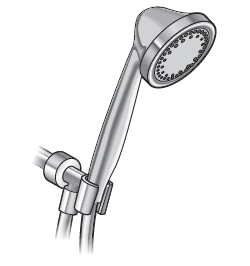
A handheld shower head is a shower head that you can remove and hold (see Figure 1). It can be useful for people who cannot stand up to shower or who need help showering.
Handheld shower heads:
- Make it easier to shower while sitting down.
- Make it easier to shower with help from a caregiver.
- Give more control over the water direction and flow.
- Can be used to avoid getting certain parts of your body wet. This includes an incision (surgical cut) site or a cast.
A handheld shower head can lower your risk of falling. You can get into the dry shower or bathtub, then turn on the water once you’re inside.
How to use a handheld shower head
A handheld shower head can often attach to the shower pipe you already have. To install it, remove your current shower head and replace it with the handheld shower head. Follow the directions that come with the handheld shower head.
Insurance plans do not usually cover handheld shower heads. Check with your insurer to see if it will be covered under your plan before buying one.
Shower chairs
A shower chair is a metal or plastic chair you use in the shower. The chairs usually have rubber or suction cups on the bottom of the legs. This stops the chair from sliding.
A shower chair lets people who cannot stand for a long time sit down while showering. Not all shower chairs fit in smaller showers or tubs. Make sure to measure your bathtub or shower before buying a shower chair.
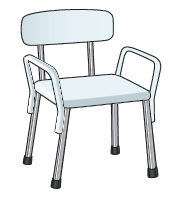
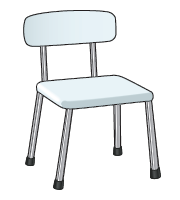
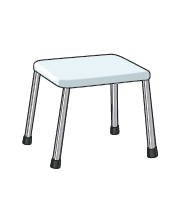
There are 3 common kinds of shower chairs:
- Shower chairs with arms and a back (see Figure 2).
- Shower chairs with a back (see Figure 3).
- Shower chairs without backs or arms (see Figure 4).
How to use a shower chair
You do not need to install a shower chair. To use it, place it in the shower. If it has suction cups, make sure they stick to the shower floor before you use the chair.
Transfer tub benches
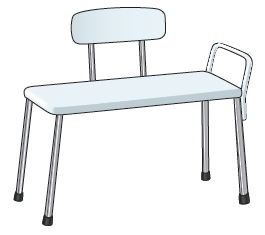
A transfer tub bench is a seat used to help you move in and out of your shower or bathtub. It’s helpful for people who have trouble lifting their legs to step over the tub. The bench has rubber caps or suction cups at the bottom of each leg (see Figure 5). These help you move safely and easily by keeping the bench from moving in the tub.
How to use a transfer tub bench
Put 2 legs of your transfer tub bench inside the tub. Put the other 2 legs of the bench outside the tub (see Figure 6). Place the bench so that a little more than half of it is in the tub. Make sure each leg is held in place so that your bench does not slide. Leave enough space in front of the bench for your legs.
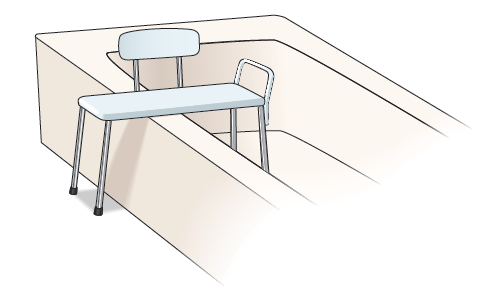
You can sit on your bench and lift your legs in and out of the tub. You do not have to step over the side of the tub.
You cannot use a transfer tub bench with showers that have glass doors. If your shower has glass doors, you can take them off. Replace the doors with curtains so you can use the tub bench. You can put the doors back on later, if needed.
Where to buy shower and bathtub accessories
You can buy a handheld shower head, shower chair, or transfer tub bench at:
- Medical supply stores or websites.
- Retail drug stores (Walgreens or CVS).
- Supercenters (Walmart or Target).
- Home supply stores (Lowe’s or Home Depot).
- Online retailers (Amazon).
Insurance plans do not often cover these accessories. Some plans may cover shower chairs and transfer tub benches with a prescription. Check with your insurer to find out what your plan covers before buying the equipment you need. If your plan covers it, ask your healthcare provider for a prescription. Follow your insurer’s instructions for getting coverage.
Learn about our Health Information Policy.