Marginal zone lymphoma is a slow-growing, rare form of non-Hodgkin lymphoma that usually responds well to initial therapies. But in some patients, the disease keeps returning despite multiple treatments.
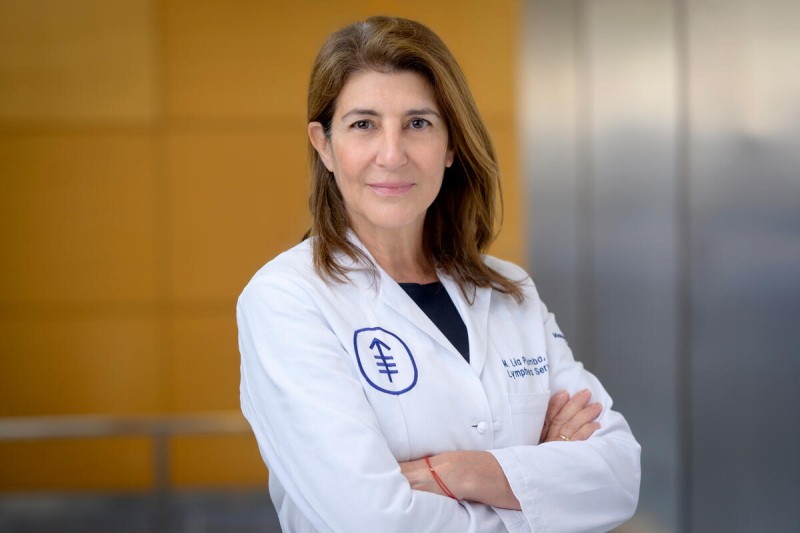
Now the U.S. Food and Drug Administration (FDA) has approved a new therapy for these stubborn cases of marginal zone lymphoma: lisocabtagene maraleucel (Breyanzi®). The approval is based on results from a phase 2 clinical trial led by Memorial Sloan Kettering Cancer Center (MSK) hematologist-oncologist Lia Palomba, MD.
“People with this type of lymphoma have desperately needed a treatment that has lasting effects without toxicity,” Dr. Palomba says. “Lisocabtagene maraleucel is a critical advance and the first CAR T therapy approved to treat marginal zone lymphoma when it has relapsed after at least two previous treatments.”
The symptoms of marginal zone lymphoma may include swollen lymph nodes, fatigue, fever, and unexplained weight loss. This cancer affects a type of cell of the immune system named B cells, which are a type of white blood cell that produces antibodies to fight infection. Although the disease grows slowly, it can transform in rare cases into a more aggressive type, such as diffuse large B-cell lymphoma.
Clinical Trial Success With CAR T Cell Therapy for Marginal Zone Lymphoma
Lisocabtagene maraleucel is a chimeric antigen receptor (CAR) T cell therapy. This form of immunotherapy involves removing T cells from a patient and outfitting them in the lab with receptors that recognize specific targets — known as antigens — on the surface of a cancer cell. The remodeled T cells are infused back into the bloodstream, where they multiply and launch a variety of immune responses to attack the cancer cells.
Lisocabtagene maraleucel targets an antigen called CD19, a strategy that was first developed in 2003 at MSK by physician-scientist Michel Sadelain, MD, PhD, a pioneer in CAR T cell research.
The clinical trial, called TRANSCEND FL, tested lisocabtagene maraleucel in patients with a variety of B cell lymphomas, the most common type of non-Hodgkin lymphoma. The participants included 67 patients with marginal zone lymphoma who received lisocabtagene maraleucel after their disease had returned or become resistant despite at least two previous therapies.
- 62% had a complete response (complete disappearance of all detectable signs of the lymphoma).
- 95% of patients had at least a partial response to the treatment.
- Overall, 90% of patients were still responding to the treatment after two years, showing the effect was lasting.
- Side effects were tolerable and reversible in most cases.
MSK’s History of Treating Non-Hodgkin Lymphomas With CAR T Therapy
Lisocabtagene maraleucel has now been approved for five distinct subtypes of non-Hodgkin lymphoma. In 2024, the FDA approved the CAR T cell therapy for a similar — but more aggressive — type of non-Hodgkin known as mantle cell lymphoma. That approval was also based on a clinical trial led by Dr. Palomba.
“This treatment was born out of investigations in MSK labs that we have been able to adjust and modify in the clinic,” Dr. Palomba says. “I have led trials, along with MSK hematologist-oncologist Jae Park, MD, testing different iterations of the CAR T cells so they will be more persistent and effective. Fundamentally, these therapies have completely changed the outcome of people with lymphomas.”
The approval for marginal zone lymphoma marks another landmark achievement for CAR T cell therapies originating at MSK, where lessons in the lab and the clinic are shared efficiently in a unique ecosystem of discovery.
Key Takeaways
- Marginal zone lymphoma, a form of non-Hodgkin lymphoma, sometimes returns despite multiple treatments.
- The FDA has approved a CAR T cell therapy called lisocabtagene maraleucel (Breyanzi®) for relapsed marginal zone lymphoma.
- The approval is based on results from a phase 2 clinical trial led by MSK hematologist-oncologist Lia Palomba, MD.
- Lisocabtagene maraleucel targets an antigen called CD19, a CAR T cell strategy that was first developed at MSK in 2003.
Funding and Disclosures
The clinical trial is funded by Bristol Myers Squibb.
Dr. Palomba’s disclosures are available on her profile page.


