
Carla Murray never imagined a podcast would save her life.
At age 50, she was juggling a busy schedule, running an architectural practice in Manhattan with her husband, John Paul, and raising three boys. When her doctor detected benign cysts in her pelvis in 2024, she was set to have a routine operation to remove them.
But then she remembered an intriguing detail she had heard on an episode of Cancer Straight Talk, a podcast produced by Memorial Sloan Kettering Cancer Center (MSK). In the 2022 episode, gynecologic surgeons Kara C. Long, MD, of MSK, and Rebecca Stone, MD, of John Hopkins, discussed how removing the fallopian tubes — the hollow ducts connecting the ovaries to the uterus — could lower the risk of ovarian cancers.
Research shows that the most common and lethal form of ovarian cancer usually starts in the fallopian tubes rather than the ovaries. Removing the tubes (called salpingectomy) could reduce the risk of ovarian cancer by up to 80%. This simple surgery could be a turning point for one of the deadliest and most difficult-to-treat cancers.
“Currently, there are no tests that can detect ovarian cancer before it spreads, and most patients don’t have symptoms until it is in more advanced stages,” Dr. Long says.
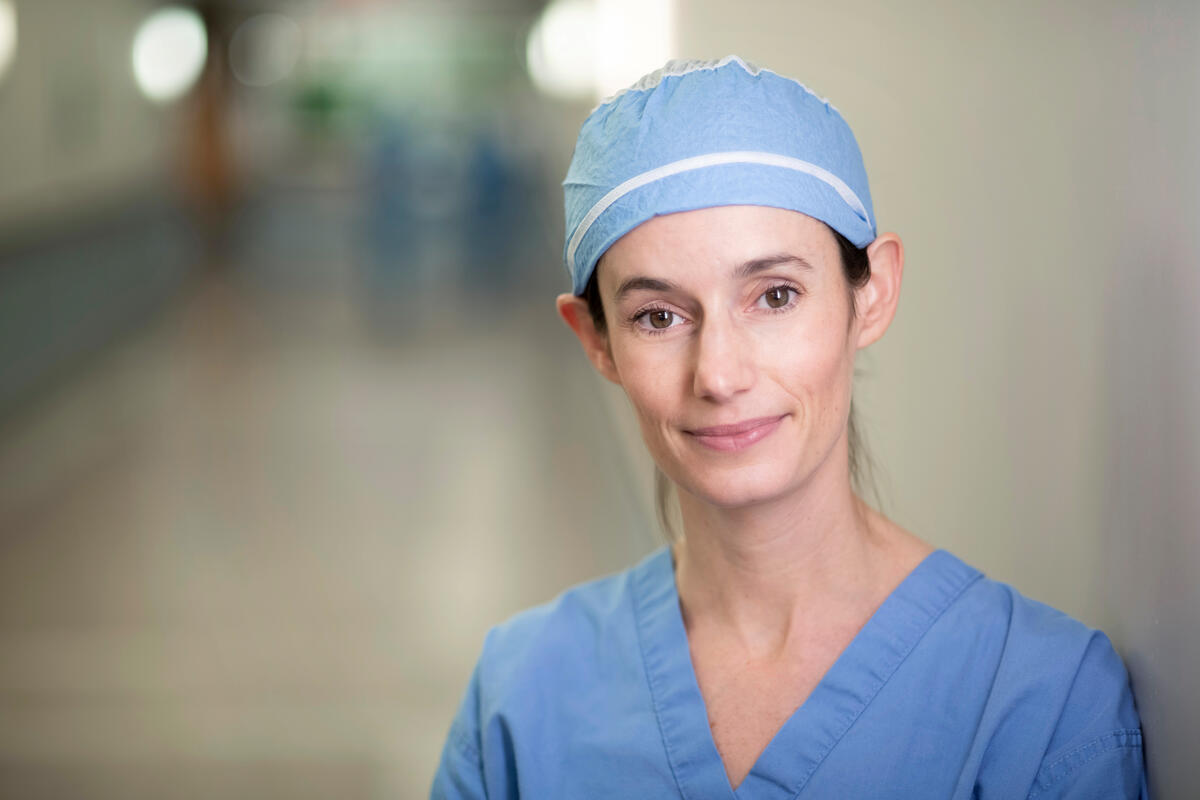
By reviewing the medical records of ovarian cancer patients to see how many had previously had abdominal surgery, Drs. Long and Stone found something astonishing.
“In almost a third of patients, there had been a missed opportunity for fallopian tube removal during a prior surgery,” Dr. Long says. “That’s hundreds of women, just at two hospitals. Imagine how many more lives could be saved if women and their doctors knew about this option.”
Seizing the opportunity
When Carla found out she needed to have cysts removed, she was already on high alert about cancer risk. In 2018, she had come to MSK after learning she had very early-stage breast cancer. Given a strong family history with this disease, she had opted for a double mastectomy.
In the following years, she was still tuned in to the latest cancer information coming from MSK.
“When I stumbled on the podcast, it really caught my attention,” she says. “I talked to my gynecologist, and we agreed that because of my family history of breast cancer, it would be a good idea to have my tubes removed if I ever needed an operation in the pelvis.”
Surgery to remove a cyst was the opportunity she had been waiting for, so Carla raised the issue with the team at the hospital where the procedure would be performed.
“I had to advocate and push a bit, to keep reminding them,” she says. “It’s not something they offer as standard of care.”
Her persistence paid off. In October 2024, she had surgery to remove both the cysts and the fallopian tubes, which only added a few extra minutes to the procedure.
Alarming results, just in time
Several days later, on a Friday, Carla’s surgeon called to warn her that she had received an email that a tumor had been found in one of the tubes, although she did not yet have the full pathology report.
“If there’s a record for how many times one can check the patient portal, I set it over that weekend,” Carla says. “Constantly hitting refresh, refresh, refresh. It showed up at 8:30 Monday morning.”
The report was alarming: High-grade serous ovarian cancer, the most common type, and fast growing.
“I was thinking, How can this be happening? I thought I was just checking off a box for cancer prevention,” Carla says. “I cried for a half-hour and then got on the phone to Memorial Sloan Kettering to get an appointment.”
Soon she met with Dr. Long, one of the people indirectly responsible for the cancer being found. It was unclear if the disease had spread beyond the fallopian tubes, but Carla needed surgery to make sure.
The operation took place later that month. Dr. Long removed both ovaries, the uterus, the cervix, and the omentum (a large fold of fatty tissue inside the abdomen). Everything looked normal on a CT scan and to the naked eye in the operating room, but after pathology was done, Carla was diagnosed as having stage 3A tubo-ovarian cancer. Although this is an advanced form of the disease, in most cases it would have remained hidden.
“Dr. Long’s team was amazed it was detected so early,” Carla says. “They were saying, ‘How did you end up here? We almost never see patients as early as you. How could you have known to have your tubes removed?’ I told them I had heard the podcast.”
For Dr. Long, that moment further reinforced her drive to get the word out to more women — and their doctors.
“It’s a miracle that you can prevent this horrible disease, or at least drastically reduce your risk, with a procedure that adds only five minutes to the surgery,” Dr. Long says. “I can’t really think of another type of cancer where this sort of simple procedure is an option.”
Invisible threat
Dr. Long explains that imaging tests like ultrasound and MRI don’t pick up tubo-ovarian cancer.
“The end of the fallopian tube acts like a paintbrush, wiping cancer cells on everything,” Dr. Long says. “It’s like if someone threw a wet paintbrush in your bag and you walk around with no idea it is there, but at the end of the day, you open it up and the paint is all over.”
After the surgery, Carla needed chemotherapy to wipe out any remaining cancer cells. She received six rounds of treatment under the care of MSK medical oncologist Carol Aghajanian, MD.
“I asked Dr. Aghajanian how long before I would have been stage 4, and she said probably a year,” Carla says. “If I had not had the tubes out, I would have been stage 4 not long after, maybe still without any clear symptoms.”
The chemotherapy was hard, although not as bad as Carla feared. It was completed in March 2025. Since then, follow-up scans have shown no evidence of cancer.
“Even now, 16 months out, it’s still hard sometimes, but I’ve come to believe I’m going to be OK and see myself here in the long term,” she says.
Making salpingectomy a more visible option
Dr. Long and MSK are part of a collaborative national effort called Outsmart Ovarian Cancer to raise awareness about how a salpingectomy can prevent the disease.
The American Cancer Society — after conferring with Drs. Long and Stone — is making salpingectomy a strategic priority and plans to launch a campaign in the next year.
In addition, the American College of Obstetricians & Gynecologists released updated guidelines on August 20, strengthening its recommendation “for salpingectomy at the time of hysterectomy and other surgical procedures to reduce the risk of ovarian cancer.”
A new clinical trial
Dr. Long is leading a new clinical trial at MSK, Johns Hopkins, and MD Anderson Cancer Center to see if women scheduled for abdominal surgery are interested in the preventive procedure after watching an educational video.
The goal is to educate women about their choices — not to pressure them into surgery. And while removing fallopian tubes is a form of permanent birth control, it is still possible to get pregnant afterward through in vitro fertilization, as long as the ovaries and uterus remain.
The hope is that solid evidence that lives are saved will bring about a shift in standard practices — and public policy.
“We are advocating for changes in laws regarding medical insurance coverage, making it clear that this is preventive care, not just an elective surgical procedure,” Dr. Long says.
She and others are also pushing for a change in how the cancer is labeled: “Tubo-ovarian cancer” is more accurate than “ovarian cancer” because of where it usually starts.
Grateful for a full life
Carla’s prognosis continues to be good, and her life is busy with her husband, John Paul, and their three sons. She finds joy in cooking and working in her garden at their house in Long Island. The family also loves to travel: Six months after she finished chemotherapy, they flew to Kenya for a friend’s wedding in Nairobi. They went on safari over two weeks — the “trip of a lifetime,” Carla says.
“I definitely have more of the ‘don’t wait’ attitude now,” she says. “I realize we all need to live this way.”
She is especially grateful to Dr. Long and MSK for the awareness and care that gave her the chance to keep living this life.
“I hope sharing my experience helps other women be proactive about their health and advocate for themselves,” Carla says. “This approach of removing the tubes is brilliant, and I’m proof that it works. It didn’t prevent my cancer from starting, but it saved my life.”
Key Takeaways
- Most ovarian cancers start in the fallopian tubes before spreading.
- Removing the fallopian tubes (salpingectomy) can reduce risk of ovarian cancer by up to 80%.
- Fallopian tube removal should be performed at every hysterectomy and instead of “tying the tubes” in those who want permanent birth control.
- Women having unrelated surgery in the pelvis should consider fallopian tube removal as an option.
- While removing fallopian tubes is a form of permanent birth control, it is still possible to get pregnant through in vitro fertilization.