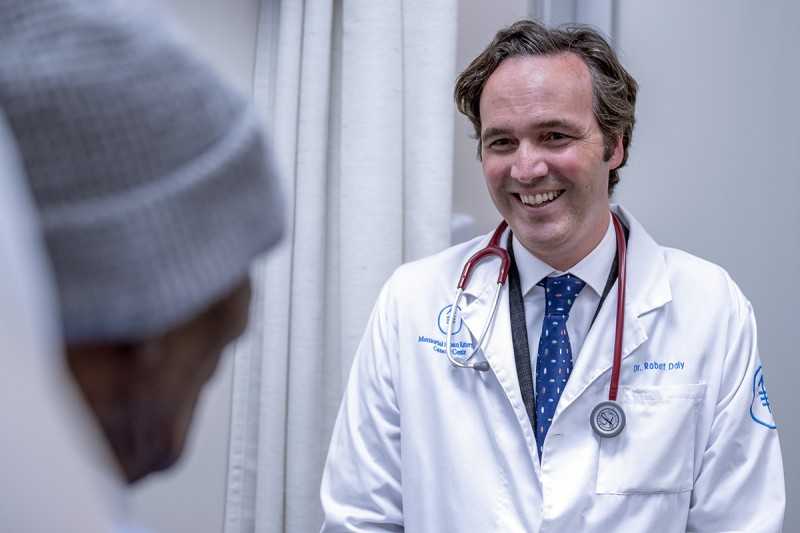
At the heart of clinical trials lies hope.
They are research studies seeking better ways to treat or prevent cancer. They offer a chance to live better and longer. They drive advances that will help future generations. Clinical trials are the bridge between promising scientific discoveries and patients eager to achieve the best possible outcomes.
Participating in a clinical trial is always voluntary. There is never pressure to join a study investigating a new therapy. But in the right circumstances, a clinical trial can make all the difference for patients, as it did for Nisar Hussain Khan, who had been diagnosed with stage 4 non-small cell lung cancer.
Doctors near his home in suburban Dallas said there was little more they could do to treat him. “He was in the hospital for nearly two months,” recalls his daughter, Kay Syed. “He lost so much weight he needed a feeding tube.” A wracking cough made it difficult for him to even talk.
When they sought care at Memorial Sloan Kettering Cancer Center (MSK), their fear was replaced with possibility.
First, they were offered the chance to join a clinical trial, recommended by MSK thoracic medical oncologist Robert Daly, MD, MBA. This ongoing study is investigating Neladalkib, a drug designed to slow cancer growth by blocking the ALK protein, which fuels cancer cells in some tumors. The drug’s development has been led by thoracic medical oncologist Alexander Drilon, MD, Chief of MSK’s Early Drug Development Service, which brings experimental therapies like this one to patients.
“Three days after taking the medication, I was able to talk and laugh again,” Nisar says. “After a week, the terrible cough was nearly gone. I have regained over 20 pounds. My energy and spirits are much better. I can even play ping-pong. It was a miracle.”

Not only did the drug enable Nisar to resume a more normal life, the clinical trial allowed him to receive treatment close to home. He didn’t need to come to New York for treatment — showing how innovative research can reach patients wherever they are.
“We were so worried about the toll that travel would take physically, emotionally, and financially,” says Kay Syed, who juggles caring for her father with a full-time career alongside family life with her husband and two teenage children.
“It was such a huge relief for us,” she says. “This is the best of both worlds, with MSK expertise allowing him to take part in this amazing clinical trial while getting to stay in his own space and sleep in his own bed.”
The Untapped Potential of Clinical Trials
Helping the Khan family participate in the trial is part of a wide-ranging effort at MSK to make clinical trials easier to access, more efficient to run, and faster at bringing new treatments to patients everywhere.
“Clinical trials are crucial to making new, lifesaving therapies for cancer,” says MSK gynecological medical oncologist Dr. Paul Sabbatini, MD, who is the Senior Vice President for Clinical Research. He leads the infrastructure supporting MSK’s robust program of more than 1,800 clinical trials, enrolling some 5,000 people annually in interventional studies, giving patients the opportunity to get the newest approaches, often before they’re available elsewhere.
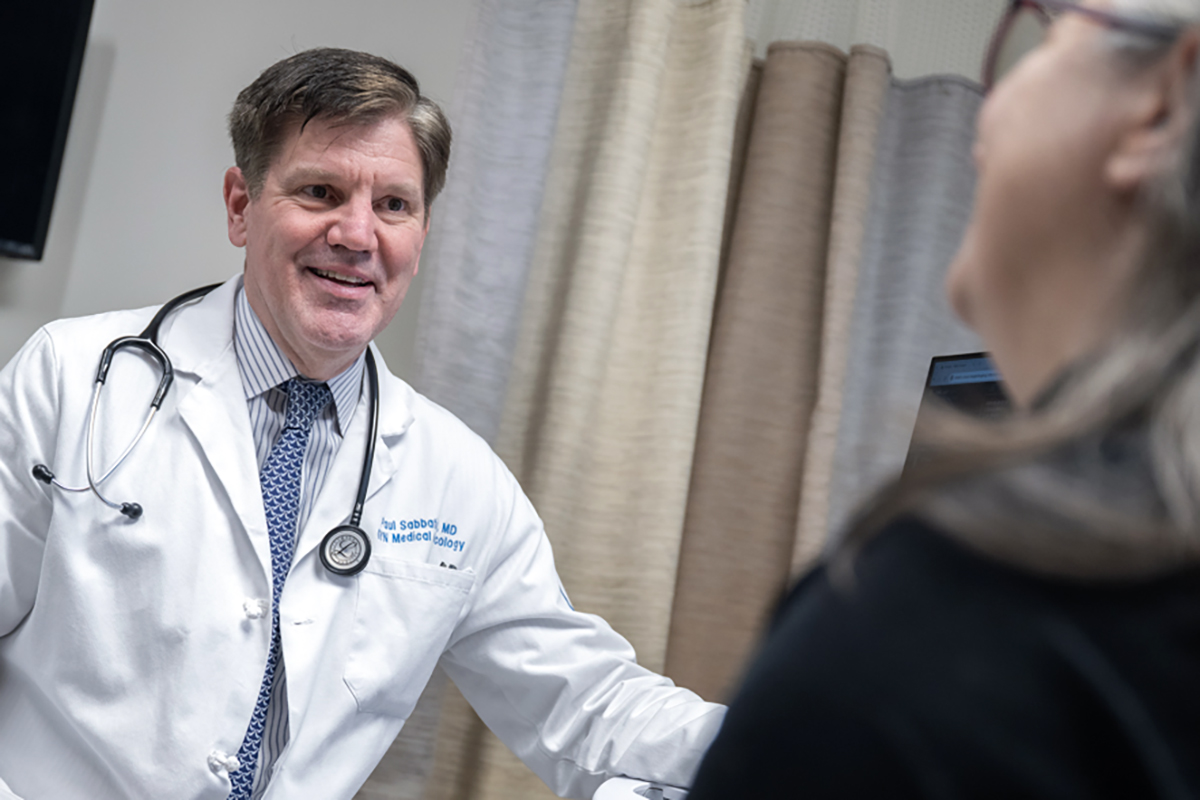
MSK research has resulted in more than 40 approvals of cancer treatments by the U.S. Food and Drug Administration (FDA) in the past five years. In addition, MSK makes advances through noninterventional clinical trials, such as studying new ways to improve quality of life, exploring diagnostics that might identify cancer early, and learning from standard treatments in real-world evidence studies.
But these research studies aren’t reaching as many patients as they could.
“Only 7% of cancer patients in America participate in clinical trials evaluating new treatments,” Dr. Sabbatini says. “That’s too low and we want more people to benefit from the latest advances.”
To encourage more people to take advantage of clinical trials, MSK has embarked on a sweeping effort that encompasses every aspect of cancer research, from patient care to new applications for advanced technologies and new methods of running clinical trials.
The Challenges for Patients Joining Clinical Trials
It’s clear that serious barriers currently prevent many people from participating in clinical trials.
Patients may be reluctant, wondering:
- Where do they begin to find a clinical trial that’s right for them?
- Will it cost them money to participate? Even if the cost of the drug being investigated is covered, what about tests and other treatments needed because of the trial?
- How big a time commitment is involved?
- Do they need to live close to the clinical trial location or travel long distances for care?
How MSK Is Helping More People With Cancer Enroll in Clinical Trials
To overcome these barriers, MSK is constantly innovating through initiatives including:
- Using artificial intelligence (AI) to match people with clinical trials that may be a good fit. This saves valuable time for the patient’s care team and helps doctors and patients stay current on the latest advances.
- Easing overly strict eligibility requirements. MSK is working to expand the criteria to join certain clinical trials, to allow more people to participate safely in research studies that often exclude people who have diseases in addition to cancer, such as diabetes and heart disease.
- Extrapolating discoveries from just a few patients. For rare cancers where patient populations are limited, MSK is using advanced analytics to reduce the size of clinical trials required for conclusive results.
Decentralized Clinical Trials
Another way to expand access is to change the way they are managed. Through what are called “decentralized clinical trials,” MSK leads research studies that are run simultaneously at many community sites, with MSK providing special skills and infrastructure, including clinical trial nurses, principal investigators, regulatory personnel, specialized pharmacists, AI technologies, and more.
For example, when Nisar Hussain Khan joined the MSK clinical trial, his care was overseen by Dr. Daly using telemedicine along with local labs and imaging centers in Texas. The experimental drug was shipped to his home.
“MSK has unique expertise that many other hospitals don’t have,” Dr. Sabbatini says. “MSK can move clinical trials beyond our own sites and expand them into other communities in a way we’ve never done before.”
Participating in a Clinical Trial From Home
Another way to improve access is by creating what Dr. Daly calls a “hospital at home,” when there’s a requirement that patients be hospitalized to closely monitor their responses to a new drug.
“Many people don’t have a hospital like MSK near their homes, especially in rural areas,” Dr. Daly points out. “And being hospitalized can cause major disruptions for patients and their families, including high costs.”
To help, Dr. Daly and his team designed an innovative way to check in on patients in their own homes, by using telehealth appointments, in-person visits from carefully selected community paramedics, at-home lab testing, and clear instructions for caregivers living with the patient. The program — Making Telehealth Delivery of Cancer Care at Home Effective and Safe (MATCHES) — is funded by a grant.
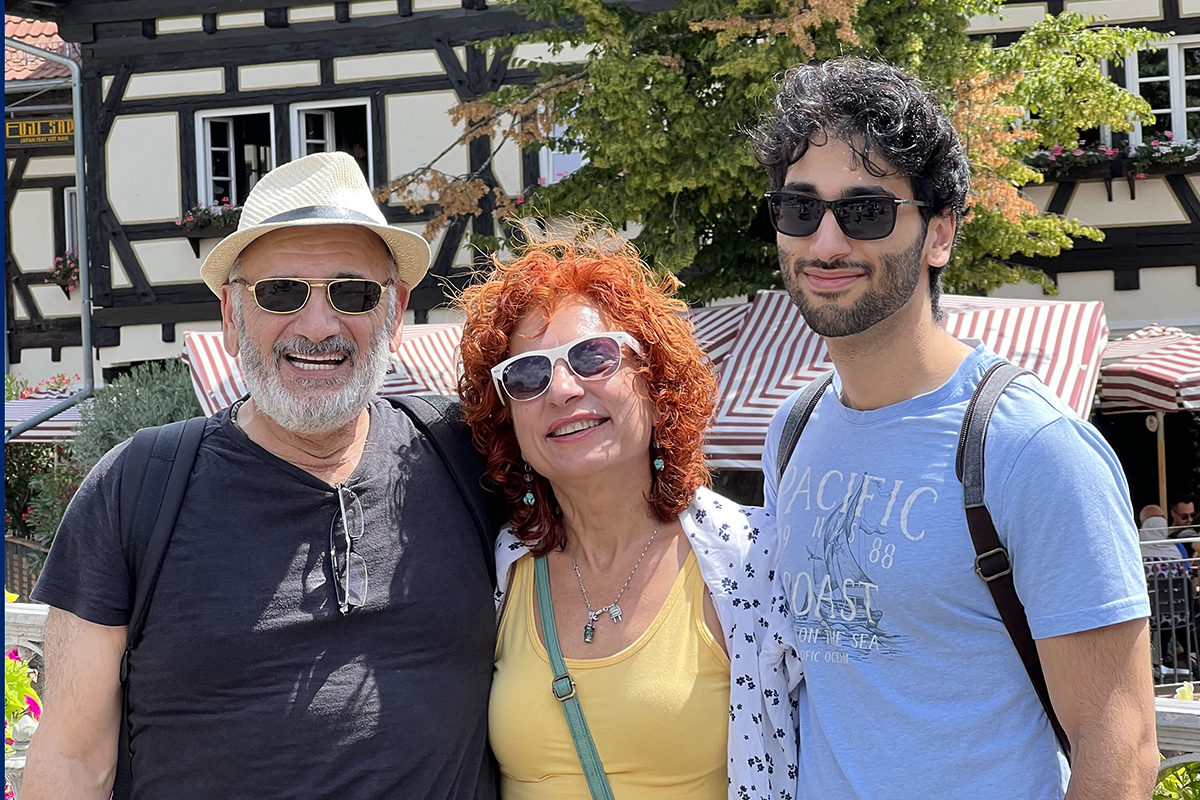
This new “hospital at home” approach made all the difference for Tengo Shautidze, who came to Dr. Daly with a diagnosis for small cell lung cancer, a less common but aggressive subtype of the disease.
Dr. Daly told Tengo and his wife, Nino Gharibashvili, about a promising drug called tarlatamab (Imdelltra®), an exciting new form of immunotherapy.
In some patients, however, immunotherapy given to fight cancer cells causes the immune system to go into overdrive, causing a side effect called “cytokine release syndrome.”
As a result, the FDA mandated an overnight stay in a hospital after the immunotherapy is given so the patient’s response to the drug can be monitored.
Dr. Daly, who has been at the forefront of approaches to treating cancer at home, felt that tarlatamab would be a good candidate for testing the “hospital at home” approach. “We knew that most people had little problem with the drug, and most reactions were usually mild, such as a low-grade fever,” Dr. Daly explains.
For Tengo and his wife, receiving tarlatamab at their home in Brooklyn has not only been effective, it’s been less disruptive.
“Getting medicine this way is much more convenient because you are at home and it’s easier on you and your family,” explains Tengo. “It’s also better psychologically — you don’t feel as sick.”
“My husband feels so much better — and is doing so much better — on this immunotherapy,” says Nino.
The FDA later approved the therapy, in November 2025 — thanks in part to clinical trials led by MSK thoracic medical oncologist Charles Rudin, MD, PhD.
Dr. Daly stresses that MSK clinical trials not only research promising new cancer drugs but also new ways to deliver treatment that is both safe and convenient. “Thanks to technology like telehealth and remote monitoring of patients’ vital signs,” says Dr. Daly, “We have the potential to help more patients — and make cancer care less disruptive to their lives.”
Kay, whose father continues to participate in a study from their home in Texas, agrees: “MSK made this incredible clinical trial something human. The trial fit into life rather than taking it over.”
Dr. Drilon’s research is supported by the MSK donor community, including Nonna’s Garden Foundation, The Gibbons Scattone Family Foundation, Keren Phillips and Deborah Kazis-Taylor for the Earle and Judy Kazis Foundation Fund, Stephen J. Squeri, the LesLois Shaw Foundation and Stage4Hope.
Dr. Sabbatini’s research is supported by the MSK donor community, including the Estate of Joan G. Toepfer and The Society of MSK.
Clinical trial research is supported by the MSK donor community, including the Steven A. Greenberg Charitable Trust.