This article was originally published on June 5, 2022 and most recently updated on October 19, 2026, to reflect FDA approval.
The U.S. Food and Drug Administration (FDA) approved a pioneering new approach to treating rectal cancer developed at Memorial Sloan Kettering Cancer Center (MSK) by gastrointestinal medical oncologists Luis Diaz, Jr., MD, and Andrea Cercek, MD.
The method treats select cases of rectal cancer using only immunotherapy, which harnesses the body’s own immune system to fight cancer.
This allows some patients to skip standard of care treatment for rectal cancer which includes surgery, radiation, and chemotherapy, and can have life-altering consequences including infertility, incontinence, and more.
The FDA approved the use of an immunotherapy called Jemperli (dostarlimab), made by GSK, in people with stage 2 and 3 rectal cancer whose tumors have specific genetic characteristics known as mismatch repair-deficient (MMRd) or microsatellite instability-high (MSI-H).
These are genetic mutations inside rectal tumors. They occur in 5% to 10% of the nearly 50,000 people diagnosed with rectal cancer each year in the United States. The MMRd and MSI-H mutations make it easier for immunotherapy and the immune system to recognize cancer cells and attack them.
The AZUR-1 clinical trial using immunotherapy for rectal cancer treatment
The FDA approval is based on interim data from the AZUR-1 clinical trial led by Dr. Cercek. The trial involved more than 150 patients who were treated at hospitals in 10 countries. They received an intravenous infusion of Jemperli every three weeks for six months.
The investigators found that:
- Nearly 3 out of 4 people showed no sign of cancer one year after completing the immunotherapy treatment without needing to undergo surgery, radiation, or chemotherapy.
- Side effects from the immunotherapy, which is already approved to treat endometrial cancer, were manageable and generally mild, with the most common being rash, diarrhea, and pruritus (itchy skin). See here for the full label information.
- People can remain cancer free long after finishing treatment, with some of the first people treated with this approach being healthy for five years, which is considered an important milestone to reduce the risk that rectal cancer will come back (recur).
- Full data from the AZUR-1 interim analysis will be presented at the European Society for Medical Oncology (ESMO) Congress in late October 2026.
The FDA also considered another analysis of the interim data from the AZUR-1 trial, conducted by a different group of reviewers who were not investigators on the study and did not physically examine patients.
Their separate analysis concluded that about half of patients saw their tumors disappear after treatment with immunotherapy alone.
“The separate review felt that more time was needed for a subset of patients before they could determine if the tumor was gone,” Dr. Cercek explains. “So the data they considered was less mature and will be updated in the future.”
In announcing their approval, the FDA said the approach developed at MSK “represents a groundbreaking option that avoids surgery, radiation, and chemotherapy. This represents a significant benefit for patients and their families.”
What immunotherapy means for rectal cancer patients with MMRd and MSI-H tumors
Dr. Cercek came up with this approach with Dr. Diaz, a physician-scientist who has made major contributions to defeating cancer with immunotherapy, including the major breakthrough that MMRd/MSI-H tumors respond to immunotherapy.
They set out in 2019 to find a way to reduce the often life-altering consequences that many rectal cancer patients face when treated with standard of care options.
“Our first duty is to save our patient’s life,” Dr. Cercek says. “But the standard treatment for rectal cancer with surgery, radiation, and chemotherapy, while often effective, can be particularly hard on people because of the location of the tumor. They can suffer life-altering bowel and bladder dysfunction, incontinence, infertility, sexual dysfunction, and more.”
“Obviously,” Dr. Diaz adds, “that can lead to a lot of self-esteem and psychiatric issues as well.”
To avoid these toxicities, many approaches to rectal cancer try to shrink the tumor as much as possible to facilitate surgery. Drs. Cercek and Diaz surmised that immunotherapy in MMRd patients could similarly shrink the tumor to enable a more successful surgery.
But Dr. Cercek proposed going further: In patients where the immunotherapy caused the cancer to completely disappear, doctors would omit chemotherapy, radiation, and surgery — and, instead, closely monitor for any signs of recurrence.
Dr. Diaz says this decision by Dr. Cercek was “a world-class moment” that promised to change the lives of patients — if it worked.
The doctors knew a form of immunotherapy called checkpoint inhibitors helped shrink MMRd/MSI-H rectal tumors in people whose cancer had metastasized (spread). They wanted to see if people with less advanced rectal cancer could also benefit from a checkpoint inhibitor and designed a clinical trial using Jemperli.
The results surprised even Drs. Cercek and Diaz.
“The immunotherapy shrank the tumors much faster than I expected,” says Dr. Cercek. “My research nurse practitioner, Jenna Sinopoli, would tell me, ‘The patient has only received one treatment and already they’re not bleeding anymore and their terrible pain has gone away.’ ”
“Patients came to my office after just two or three treatments,” Dr. Cercek recalls, “and said, ‘I feel normal again.’ ”
“We saw one patient after another whose rectal cancer was gone after the immunotherapy and didn’t need anything else,” Dr. Diaz says. “That’s incredible.”
Today, Dr. Cercek reflects on what the approach has meant to people with rectal cancer who benefited from being treated with only immunotherapy.
“It’s incredibly rewarding,” says Dr. Cercek, “to get these happy tears and happy emails from the patients who finish treatment and realize, ‘Oh my God, I get to keep all my normal body functions that I feared I might lose to radiation or surgery.’ ”
Because patients were able to retain their fertility — nearly impossible with standard treatment — there has even been a mini baby boom.
“Two of the women had large tumors. Treatment with radiation would have induced immediate menopause, among other challenges,” Dr. Cercek says. “Instead, they were able to have babies and move on with their lives into the next generation.”
Dr. Cercek was thrilled to meet one of the newborns just days after her birth.
“It’s really exciting,” says Dr. Diaz. “I think this is a great step forward for patients.”
How a small clinical trial went global
The approach began with a small clinical trial of 18 patients that made a big impact. In 2022, Dr. Cercek announced at the ASCO (American Society of Clinical Oncology) Annual Meeting that every patient in the trial had responded completely to immunotherapy, with no other treatment needed.
Experts called the 100% positive outcome unprecedented, and The New England Journal of Medicine simultaneously published the results.
Two years later, the MSK trial grew to more than 40 patients, all of whom had the same complete response to immunotherapy.
Dr. Cercek cautions, however, that the larger AZUR-1 trial couldn’t be expected to maintain the 100% success rate, as the number of patients more than tripled and the trial expanded to hospitals across three continents.
“We know the biology of some rectal tumors will resist immunotherapy,” she explains. “And there will always be variables when other hospitals are learning this approach.”
Different hospitals possess different skill sets. MSK has been a leader in an approach called “watch and wait” for rectal cancer treatment. Over two decades, MSK specialists have refined the use of chemotherapy and radiation to shrink a patient’s rectal tumors, followed by carefully monitoring the patient every few months.
Surgery is only performed if absolutely necessary, “which gives us a chance to preserve the patient’s quality of life without compromising the outcome,” says colorectal surgeon Julio Garcia-Aguilar, MD, PhD, Chief of the Colorectal Service. “At MSK, probably half of the people with rectal cancer do not undergo surgery and so they do not have their rectums removed.”
However, doctors at some hospitals in the AZUR-1 trial who were less experienced in this kind of surveillance decided to remove the rectum after immunotherapy — only to discover afterwards that the surgery was not needed because the immunotherapy had worked. Sadly, those patients underwent an unnecessary and very serious surgery with a long and complicated recovery.
Dr. Cercek believes that more experience with the approach will improve other hospitals’ ability to use it to its fullest.
The growing rate of rectal cancer — especially among younger people
Expanding the capacity of this approach is particularly important because many people with MMRd tumors have an inherited condition called Lynch syndrome, which puts them at much higher risk of colorectal and other cancers that do not respond well to standard treatment.
There is also an alarming rise in the incidence of rectal cancer, reversing decades of decline, according to 2026 research by the American Cancer Society.
This growth is especially notable among younger people, whose rates of diagnosis are going up, particularly between the ages of 20 and 49.
Understanding why rates of colorectal and other cancers are rising is a special focus of Dr. Cercek’s work. She co-directs MSK’s Center for Young Onset Colorectal and Gastrointestinal Cancer, the first center in the world devoted to the specific needs of younger adults with these cancers.
Success with the very first patient
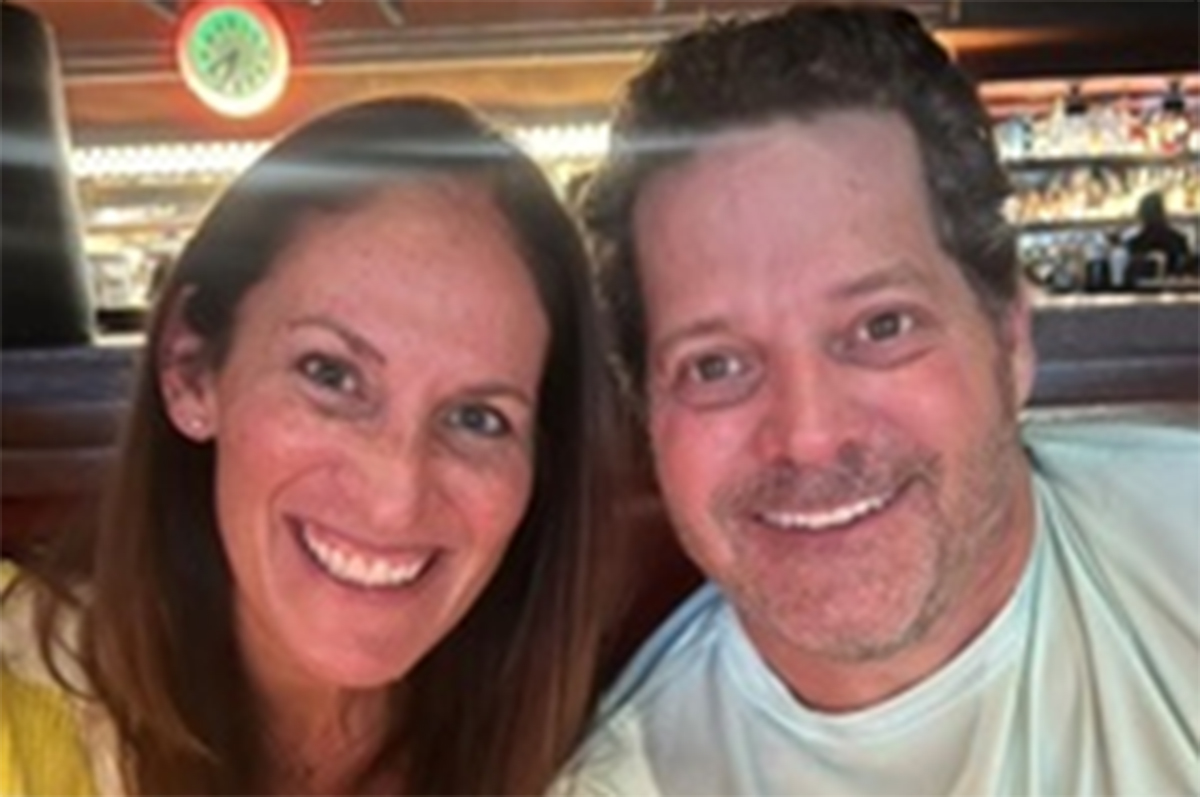
All these factors came together in the very first patient treated with the approach, Washington DC-area resident Sascha Roth.
Sascha was 38 when she was diagnosed with rectal cancer. She traveled to MSK for a second opinion and learned to her shock that her cancer was driven by Lynch syndrome — making her less likely to respond to chemotherapy and surgery — and that her tumor was MMRd.
She was referred to Dr. Cercek, who explained the new approach she and Dr. Diaz were investigating. Sascha agreed to participate in their clinical trial.
After six months of immunotherapy treatment with dostarlimab, Dr. Cercek called Sascha at home with remarkable news.
“Dr. Cercek told me a team of doctors examined my tests,” recalls Sascha. “They couldn’t find any signs of cancer. I was stunned and ecstatic — I was so happy. I’ve been cancer free ever since.”
Sascha has now passed the five-year mark since treatment ended. “I’m so excited by this milestone,” she says. “It means that instead of getting scans and tests several times a year, I’ll just get a colonoscopy every year.”
“I feel so incredibly fortunate,” Sascha says. “Both my parents passed from cancer, and I saw the toll of surgery and chemo and radiation on them, on top of the cancer.”
In comparison, she says, “the same day I got immunotherapy infusions I could drive back home from the New York area. I could go to work the same day and even work out.”
Today, she lives a full life with her fiancé and runs Urban Country, her family’s interior design and home furnishings business in Maryland, which opened a second location around the same time the FDA announced the approval in fall 2026.
“I have such confidence and trust in MSK and the team taking care of me, including Dr. Cercek and her nurse, Jenna Sinopoli,” she says. “They care about me as a person, and so does everyone at MSK — you can literally feel the warmth from everyone who works there.”
Next steps in the immunotherapy approach
As more rectal cancer patients with MMRd tumors benefit from immunotherapy, MSK has also expanded the approach to other cancers with similar genetic signatures.
Drs. Cercek and Diaz are leading a trial for patients with MMRd tumors instomach (gastric), colon, esophageal, urothelial, and other cancers.
In the trial, most people needed only immunotherapy to see their cancer disappear.
“This is very exciting and shows that a broad range of tumors with the MMRd mutation can be treated with immunotherapy replacing surgery, radiation, and chemotherapy, giving patients better quality of life,” Dr. Cercek says.
Ultimately, she says, “I want to see if we can bring this approach to people who do not have the MMRd mutation, to help as many people facing cancer as possible.”
Sascha feels that the commitment to always improve helps set MSK apart.
“I feel such gratitude to the team that took care of me, and such gratitude for the science that saved me,” she says. “MSK is such a warm and welcoming place, I feel like I found not just a hospital, but friends I could trust and rely on.”
Key Takeaways
The FDA approved the immunotherapy Jemperli to fight certain types of rectal cancer. This means some patients can avoid surgery, chemotherapy, and radiation, which can cause serious problems like infertility, incontinence, and sexual dysfunction.
The approved treatment is for patients with MMRd or MSI-H genetic mutations — found in 5% to 10% of rectal cancer patients.
Nearly 3 out of 4 people in an international clinical trial showed no signs of cancer after one year of immunotherapy without needing surgery or other treatments. The first patient treated using this approach has been cancer free for over five years.
Younger people, especially ages 20 to 49, are getting rectal cancer at increasing rates. The new immunotherapy approach makes it possible for patients to preserve their fertility, particularly important for younger people undergoing cancer treatment. People treated with this approach have gone on to have children.
Side effects, including rash, diarrhea, and itchy skin, were manageable.
Dr. Cercek holds the Ford Family Chair.
Dr. Diaz holds the Grayer Family Chair.
This research receives essential philanthropic support from the MSK Giving community, including Cycle for Survival, The Society of MSK, Bob and Anna Lou Schaberg, the Frechette Family Foundation, and Jackie and Richard Emmet (Cercek), and Kate and Andrew Davis, The Shelby Cullom Davis Charitable Fund, Stand Up To Cancer, and Swim Across America (Diaz).
Funding and Disclosures
The study was supported by the Simon and Eve Colin Foundation, GSK, Stand Up To Cancer, Swim Across America, and the National Cancer Institute of the National Institutes of Health (awards R21CA252519 and NCI-P30CA008748).
Dr. Cercek’s disclosures:
Advisory role: Amgen, Abbvie, Agenus, Daiichi Sankyo, Merck, GSK, Pfizer, Roche, Janssen, Summit, 3T Biosciences, Urogen and Regeneron, Boehringer Ingelheim
Institutional research grants: GSK, Pfizer
Learn more at her physician biography.
Dr. Diaz’s disclosures can be found on his physician biography


