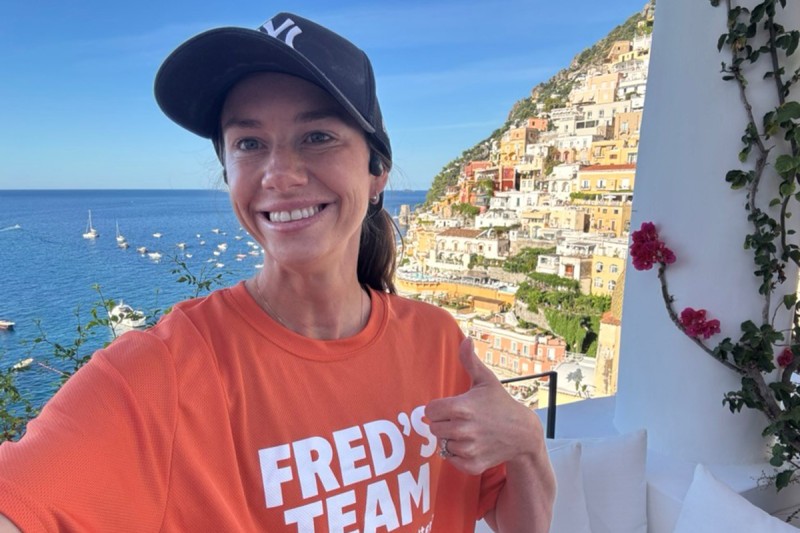
For years, Adrianna Gildner had dismissed the bump on the front of her neck as harmless, joking that it was an Adam’s apple. She even had a biopsy in 2020, and the results came back benign. But in late 2024, seemingly out of nowhere, she was hit with unbearable anxiety.
“I basically gave myself a panic attack over Christmas,” she says. “I was thinking, ‘What if they missed something? It wouldn’t go away.’ ”
In March 2025, Adrianna got a second biopsy at a Manhattan hospital and was crushed to learn her worst fears were valid: She had thyroid cancer at age 30.
“It didn’t make any sense — apart from the anxiety, my health was fine,” she says. “I had always been very active. I was on my college soccer team. When I got the results, I had just been to a workout class.”
Although thyroid cancer is typically easy to treat with surgery, Adrianna had an unusually difficult case. Genetic testing showed her cancer was a rare, fast-growing type driven by an abnormality in the NTRK3 gene. In addition, a CT scan showed the tumor had grown into her larynx (voice box).
“It was a perfect storm of complexity,” she says. “The doctors said they had never seen an NTRK3 tumor at that location. The surgeon was afraid to operate because there was a chance I would need a permanent breathing tube.”
Fearing surgery, finding innovative thyroid cancer treatment
The prospect of impaired speaking and swallowing for the rest of her life was not something Adrianna could easily accept. Further complicating matters, she also was diagnosed with Graves’ disease, an autoimmune disorder that causes the immune system to stimulate the thyroid gland and make it overactive.
Given the complexity of her case, Adrianna knew she needed a hospital with the highest level of expertise, so she made an appointment at Memorial Sloan Kettering Cancer Center (MSK).
The decision saved Adrianna from a dramatically altered life. The specialists on MSK’s head and neck cancers team designed an innovative treatment plan that cured her seemingly intractable cancer while enabling her to get back to normal life.
“I feel so lucky I ended up at MSK,” she says. “I had the feeling right away it was where I needed to be — everyone is so smart, constantly pushing the boundaries of medicine and surgical techniques.”
MSK’s expert team for thyroid cancer
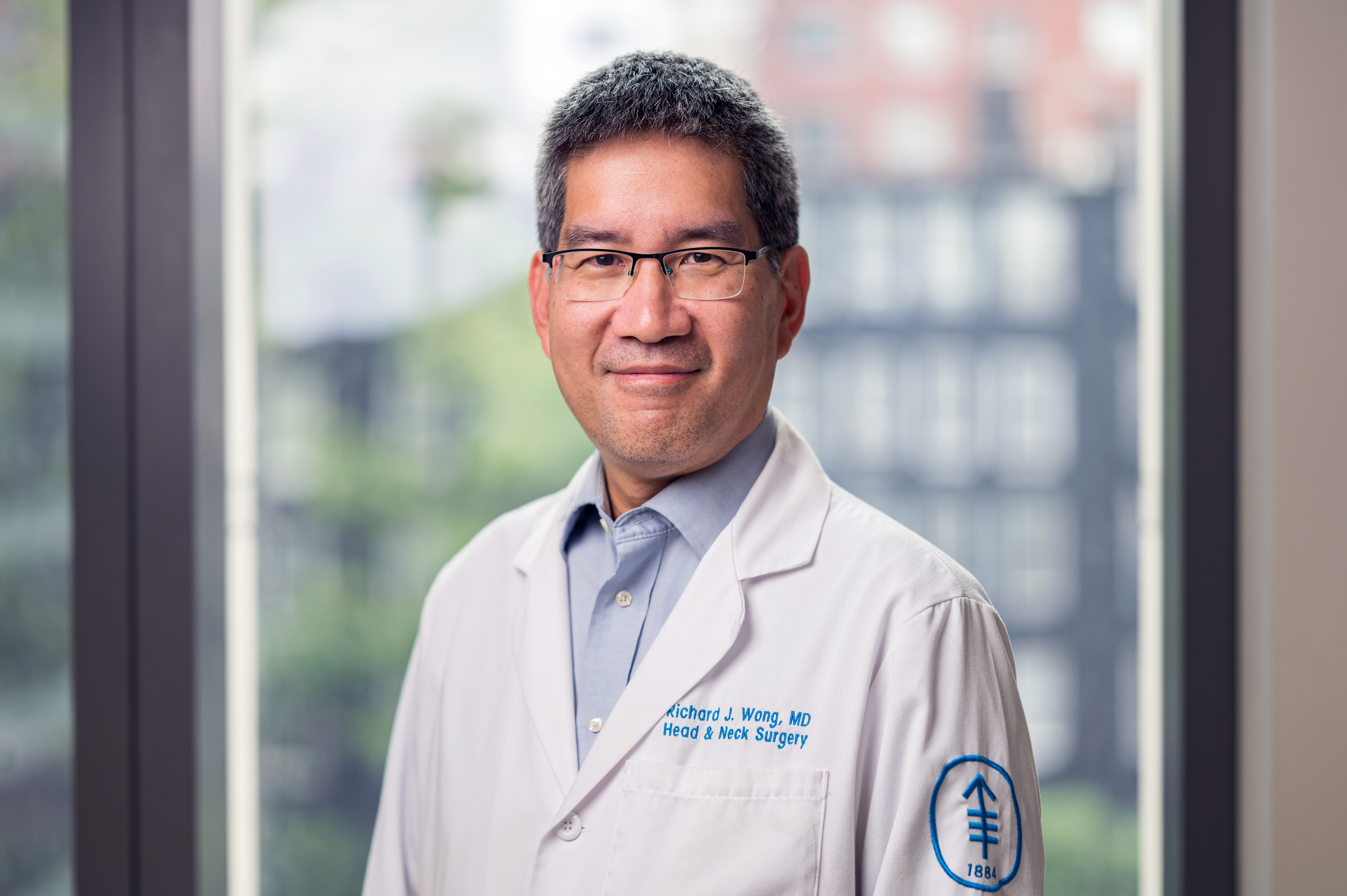
Adrianna met first with MSK head and neck surgeon Ashok R. Shaha, MD, and MSK medical oncologist Alan Ho, MD, PhD. They recognized the unique challenges of her tumor and presented the case at the tumor board, a biweekly meeting of MSK specialists to develop plans for difficult cases. The doctors agreed that surgery would be very difficult and might result in the removal of part of the voice box, which could affect Adrianna’s speech and might require the placement of a temporary breathing tube.
An out-of-the-box use of larotrectinib
Drs. Ho and Shaha consulted with head and neck surgeon Richard Wong, MD, Chief of MSK’s Head and Neck Service. Dr. Wong has extensive experience in treating thyroid cancer — including giving drugs before surgery (called neoadjuvant therapy) to shrink a tumor and make the procedure less difficult.
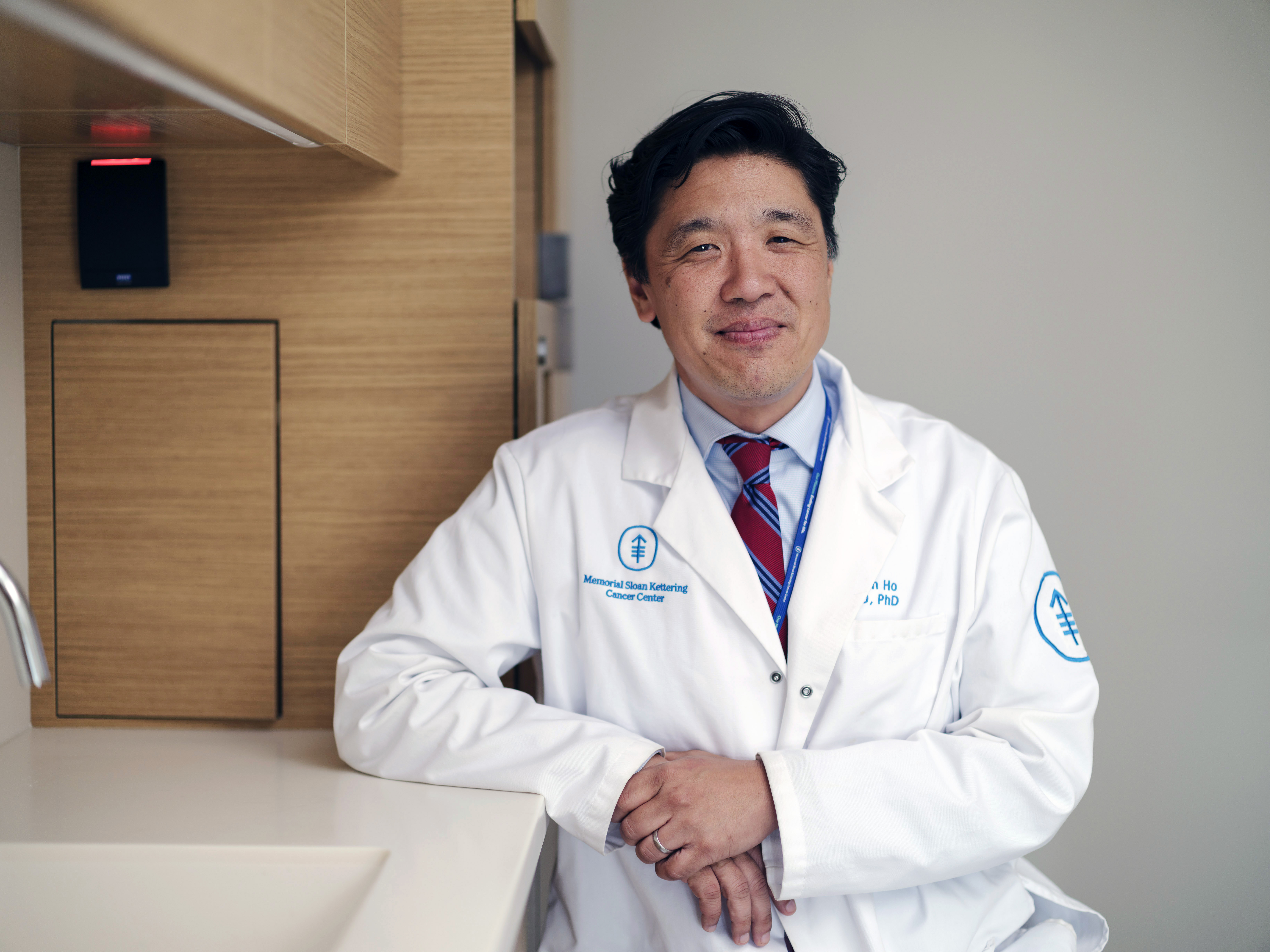
After careful review of the case, Dr. Wong proposed treating the tumor with a targeted therapy called larotrectinib (Vitrakvi®), which can be effective against cancers with NTRK mutations. First approved by the FDA in 2018, larotrectinib was developed under the leadership of MSK thoracic medical oncologist and early drug development specialist Alexander Drilon, MD, and was the first treatment to be approved based solely on its ability to target a specific genetic mutation, rather than the tumor’s location in the body.
Dr. Wong’s approach was unconventional: Doctors usually give larotrectinib to patients with advanced or recurrent thyroid cancer, not before surgery.
“This was outside-the-box thinking for a unique clinical situation,” Dr. Ho says. “It would require very close collaboration among our highly specialized team — surgeons, oncologists, and endocrinologists — to map out the exact timing of the medication and surgery.”
Adrianna was immediately on board, hoping this treatment plan would reduce the odds she would wind up with a breathing tube. Given a low theoretical risk to fertility, Adrianna froze her eggs before starting the drug. She also continued working full-time as a marketing strategist for a major credit card company.
“I just had to compartmentalize, do my job from 9 to 5, go to all my appointments, control what I could control, and try to keep perspective,” she says.
Carefully coordinated treatment
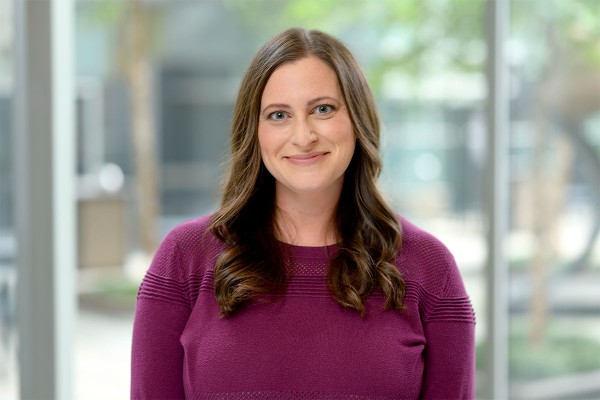
Adrianna began treatment in July 2025, under the care of Dr. Ho and endocrinologist Samantha Newman, MD.
- She took larotrectinib twice a day, exactly 12 hours apart.
- To bring her Graves’ disease under control, she also took a thyroid blocker called methimazole. (High thyroid levels can make surgery risky, even causing life-threatening complications.)
The next few months were nerve-wracking for Adrianna. There was a limit to how much doctors could expect the tumor to shrink. They hoped it would recede from the larynx, but it was impossible to predict.
“They say early on is when you see the most progress from the drug,” Adrianna says. “After three months, the CT scan seemed to show it was shrinking off my airway, exactly where they needed it to, which was such a relief.”
By five months, the tumor had shrunk enough to attempt a less-radical operation, and her thyroid levels had stabilized. Dr. Wong said it was time.
Much less invasive surgery, best possible results
Adrianna had the operation in early January 2026.
“Her response to the larotrectinib put us in a great position to do a less radical procedure,” says Dr. Wong, “but we always prepare for whatever is necessary — including having to repair an opening into the larynx — so I wanted her to be aware of that possibility.”
Adrianna was still hoping for the best. “I asked Dr. Wong, ‘What if the medicine worked so well, we don’t have to open the airway?’ ” she says. “He told me, ‘I love the attitude, but you should be prepared if it doesn’t work out that way.’ ”
Adrianna’s wish came true. It turned out the surgery was not as extensive as they feared it might be. Dr. Wong removed a small part of the larynx, but he was able to maintain a membrane that protected the airway. This reduced risk of complications like severe air leaks and infections.
“It was still a very challenging procedure, but larotrectinib enabled us to reduce the extent of the operation and made it possible for the healing to be very quick, with no breathing tube needed and no change to her voice,” he says.
“I woke up, and Dr. Wong joked, ‘I’m sorry I doubted you,’ ” Adrianna says. “I was able to talk, and I left the hospital after one day. It was a miracle of a surgery.”
Guarding against recurrence using radioactive iodine treatment
With the tumor removed, the next decision was whether Adrianna needed additional treatment to wipe out any stray cancer cells. Drs. Wong and Newman agreed she should receive radioactive iodine (RAI).
Radioactive iodine, taken in pill form, enters the bloodstream from the stomach and intestine and is absorbed (taken up) by thyroid cells. It destroys any remaining normal thyroid tissue and certain types of thyroid cancer cells while sparing most other body tissues.
“We typically give radioactive iodine in a single dose after surgery to reduce the risk of the thyroid cancer recurring,” Dr. Newman says. “Some thyroid cancers, including Adrianna’s, are susceptible to this treatment because the cells retain their ability to take up the iodine. Knowing how these cells behave lets us deliver the radiation selectively to the residual thyroid cancer cells.”
“I swallowed my dose in March and had to stay about five feet away from everyone for three days,” she says. “I had my husband take our dog and stay with his dad, so I was alone during that time. I was a little nauseated in the morning, but otherwise the biggest problem was getting bored.”
Life after cancer
Six months after finishing all treatment, Adrianna has no evidence of cancer and has resumed her active life. Her experience has given her new things to conquer.
Although she’s never considered herself a distance runner, she plans to run the New York City marathon in November with Fred’s Team — the official running program of MSK, which raises money for cancer research and clinical trials. Adrianna was inspired by a friend who ran the marathon in 2025, after being treated for thyroid cancer by Dr. Wong.
“I told myself, ‘If I get through this operation OK, I want to do it,’ ” she says. “It’s an iconic New York moment and a challenge I can take control of — close out this chapter in my life and give back to MSK and the head and neck department. However I do it, running or walking, I just want to finish. I think I will cry all the way through.”

Her other aspiration could be more life changing. Beyond the marathon, Adrianna plans to explore ways to get more involved in healthcare, particularly oncology.
“Having cancer has given me a new perspective on life and opened my eyes to possibilities I might not have otherwise considered,” she says. “It’s also given me a deeper appreciation for the people who dedicate their lives to caring for others.”
In the meantime, she and her husband, Tyler, enjoy traveling — including a trip to Italy in September — exploring new restaurants, and walking around the Battery Park neighborhood with their Bernedoodle, Millie.
Adrianna remains grateful for the support of her husband and extended family, friends, and work colleagues who helped her through diagnosis and treatment.
“You have to learn to give yourself grace and lean on people to help you pick up the pieces when you’re not able to do it yourself,” she says. “Most of all, I want to give a massive thank you to MSK, because I would not have the same quality of life if it wasn’t for Dr. Wong, Dr. Ho, and Dr. Newman — my all-star care team. I don’t think this outcome would have been possible anywhere else.”
Key Takeaways
- A patient had a rare, aggressive form of thyroid cancer that had grown into her larynx, making it difficult to treat without damaging her vocal cords or airway.
- MSK head and neck specialists designed an innovative treatment plan to remove the tumor while minimizing the risk of life-altering changes to her speaking and swallowing.
- They used a targeted therapy, larotrectinib, to shrink the tumor before surgery. This was an unconventional approach, as the drug is usually given for metastatic disease.
- The approach worked, shrinking the tumor — the complex surgery was a success, preserving the patient’s airway and voice.
- Six months after treatment, which included a dose of radioactive iodine to help prevent recurrence, the patient is cancer free and has resumed her active life.