Endocrinologist Dr. R. Michael Tuttle talks with a patient as she sits on an exam table.
MSK's Guide To

Thyroid Cancer

Overview of thyroid cancer

No one should go through thyroid cancer alone. MSK’s team of thyroid cancer experts is here for you.

You may be reading this because you or someone you care about has learned they have thyroid cancer. Or maybe you’re curious about your risk of getting thyroid cancer.  

It’s important to get to know the signs of thyroid cancer. Thyroid cancer can be easier to treat when we catch it early. At MSK, we have treatment options for thyroid cancer at every stage.   

This guide is a good place to learn about what causes thyroid cancer and thyroid cancer prevention. You can also learn about the signs and symptoms of thyroid cancer.  

This information can help you get ready to talk with your healthcare provider and understand your next steps. 

Meet MSK’s thyroid cancer experts  

What is thyroid cancer?

Thyroid cancer is a type of head and neck cancer. When cells in the thyroid gland grow without stopping, they form a nodule (NAH-jool). A nodule is a mass, growth, or lump that may be cancer or benign (not cancer).  

Thyroid nodules are very common, and almost all are benign. Only 1 out of 10 thyroid nodules are malignant (cancer). 

Thyroid cancer can be hard to catch at first because many thyroid tumors do not cause symptoms.

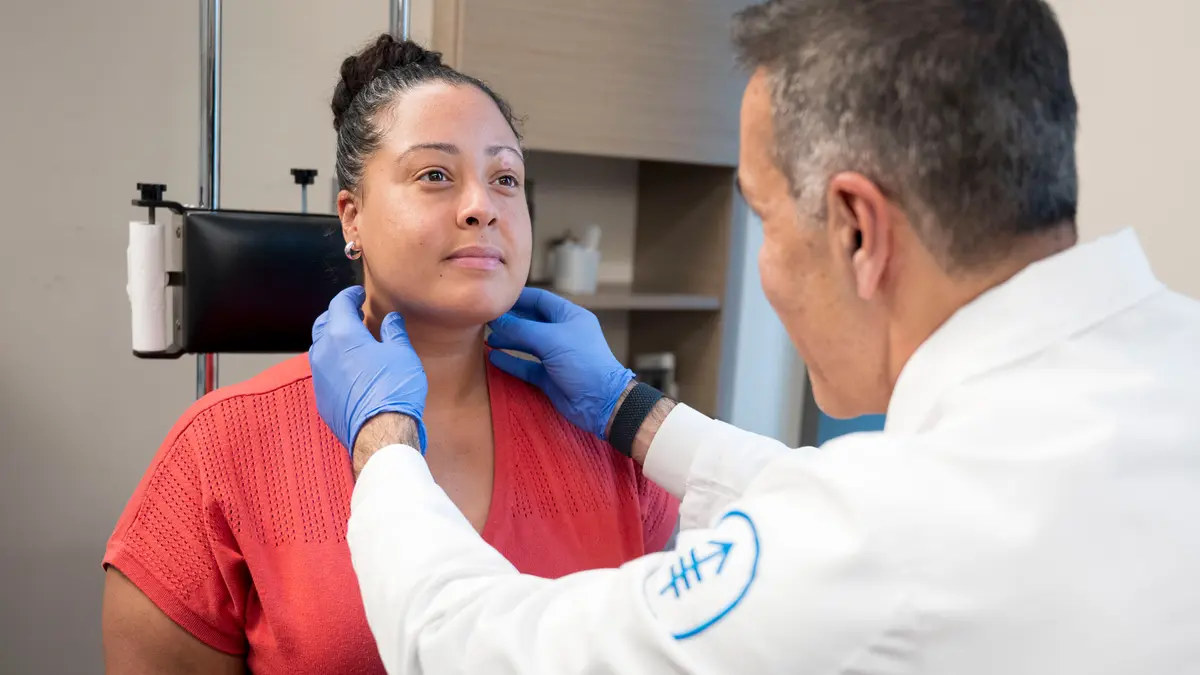
Head and neck surgeon Dr. Babak Givi uses his gloved hands to examine the throat of his MSK patient.
What are the signs of thyroid cancer?

A lump in the front of the neck can be a sign of thyroid cancer. Other signs include voice changes and trouble swallowing or breathing. Many people with thyroid cancer do not have any signs or symptoms. 

Head and neck medical oncologist Dr. Alan L. Ho, Chief of MSK’s Head and Neck Oncology Service, points to a scan image on a computer monitor as he talks with his patient.
How is thyroid cancer diagnosed?

An imaging test you had for something else may by chance show signs of thyroid cancer. Your doctor may order an ultrasound to see if you need a biopsy or more imaging tests. 

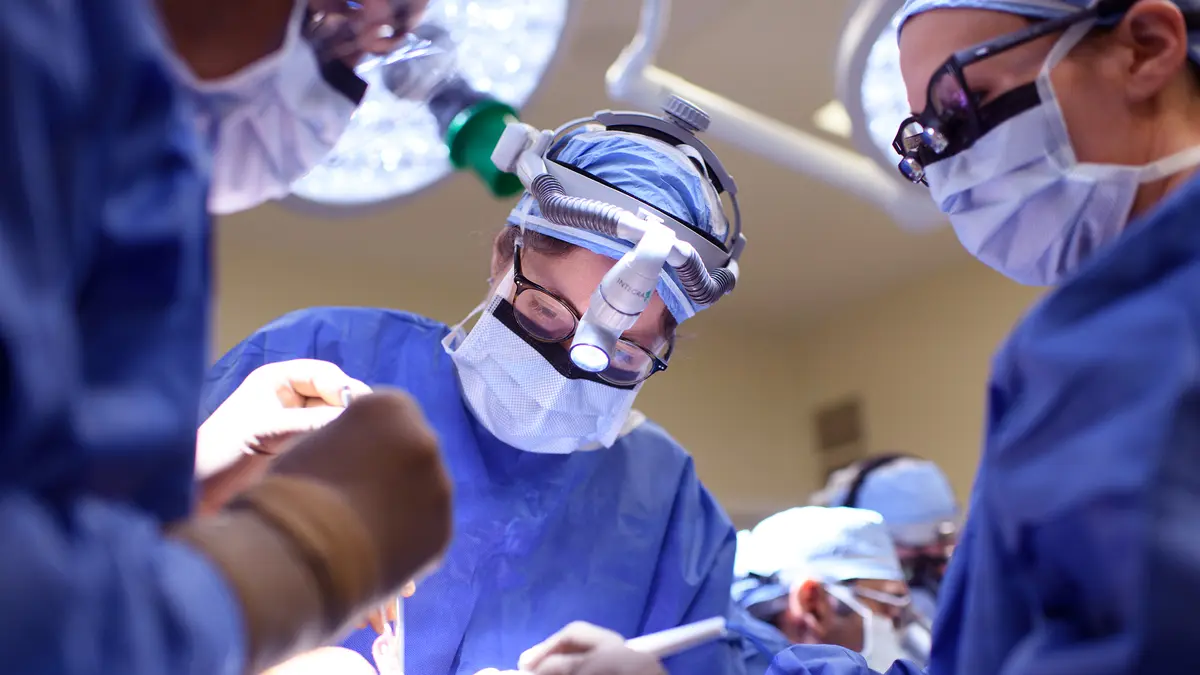
Head and neck surgeon Dr. Jennifer R. Cracchiolo, with 2 other surgeons, during surgery to rebuild a patient’s jaw.
How is thyroid cancer treated?

Surgery is a common treatment for thyroid cancer. Other thyroid cancer treatments are radioactive iodine, chemotherapy, targeted therapy, immunotherapy, radiation, or active surveillance (monitoring). 

Request an appointment

Talk with an MSK Care Advisor. We're here 24 hours a day, 7 days a week. 

Anatomy of the thyroid

What is your thyroid? Knowing your thyroid’s anatomy can help you better understand where thyroid cancer starts. Anatomy (uh-NA-toh-mee) means the parts of a structure, such as the thyroid. 

Where does thyroid cancer start?

Thyroid cancer starts in the cells of your thyroid. The thyroid is a small gland below your voice box, in front of the neck. The thyroid looks like a butterfly and has 2 lobes (parts).  

Your thyroid gland makes hormones that affect your: 

  • Heart rate (how fast or slow the heart beats). 
  • Body temperature (keeping it steady when the weather changes). 
  • Brain development, or growth. 
  • Metabolism (meh-TA-buh-lih-zum), which is how your body breaks down food into energy. 

When cells in the thyroid gland grow out of control, they form a nodule. A nodule is a mass, growth, or lump that may be cancer or benign. 

Illustration of the thyroid gland, including the location of the larynx, lymph nodes, and parathyroid glands.
MSK Dialog Window
Illustration of the thyroid gland, including the location of the larynx, lymph nodes, and parathyroid glands.

The thyroid gland, including the location of the larynx, lymph nodes, and parathyroid glands. 

The thyroid gland, including the location of the larynx, lymph nodes, and parathyroid glands. 

Risk factors and prevention

What causes thyroid cancer?

A risk factor is anything that raises your chance of getting a disease, such as cancer.   

There are some risk factors that you cannot control. These include your age, race, or the genes you were born with.  

There are other risk factors you can change. Research shows that having healthy habits can lower your risk for cancer.  

Risk factors for thyroid cancer depend on the type of thyroid cancer. A few risk factors can raise your risk for getting thyroid cancer.  

Risk factors for papillary thyroid cancer
  • Exposure to radiation as a child. 
  • A family history of colon growths because of an inherited gene mutation (change). An example is familiar adenomatous polyposis
  • A few papillary thyroid cancers are linked to family history. This means people related to you by blood (a parent, brother, sister, or child) have had this cancer. 
  • Gender. People assigned female at birth are nearly 3 times more likely to get papillary thyroid cancer. This could be related to some female hormones. While this cancer is rarer in people assigned male at birth, it often grows and spreads faster. 
MSK RECOMMENDS

If you have papillary thyroid cancer, it’s important to choose the right care team and treatment. These tumors grow slowly and may not need surgery now, or even later. MSK's active surveillance program may be right for you. You'll get a personal schedule for check-ups, imaging tests, and support. 

Risk factors for follicular thyroid cancer
  • A diet low in iodine. This can happen in places where iodine is not added to salt used in food. In the United States, iodine is often added to salt (iodized salt). 
  • If you have a disease caused by inherited gene mutations (changes), such as Werner’s syndrome or Cowden’s syndrome. 
Risk factors for medullary thyroid cancer (MTC)
  • Family history. About 1 out of every 4 people with MTC have the RET gene mutation. 
THE MSK DIFFERENCE

MSK’s Thyroid Nodule Assessment Program offers a fast, precise diagnosis if you have a lump (growth) in your thyroid. You do not need a referral from your doctor, or tests before your visit.  For an appointment, call 800-525-2225, Monday through Friday, to 5:30 p.m. 

Who is at higher risk for thyroid cancer?

You may have a higher chance of getting thyroid cancer if: 

  • You were assigned female at birth. Women are nearly 3 times as likely to get thyroid cancer than people assigned male at birth. 
  • You had head or neck radiation treatments when you were a child or young adult. 
  • You have a family history of thyroid cancer in people related to you by blood (a parent, brother, sister, or child). Most people who get thyroid cancer have no family history. 
  • You’re aged 20 through 55.  
  • You have some hereditary (passed on from your parents) diseases. It’s less common, but a small number of thyroid cancers are linked to inherited issues. 

Can I lower my risk for thyroid cancer?

Most people who get thyroid cancer do not have risk factors. There also are some risk factors that you cannot control.  

If medullary thyroid cancer runs in your family, genetic testing and counseling is an option. About 1 out of every 4 people with medullary thyroid cancer inherited a gene mutation.  

Getting genetic testing during childhood can show if you also have the mutation. Some people with the mutation choose to remove their thyroid gland to prevent thyroid cancer. 

Research shows that some healthy habits can lower your risk. Making healthier choices in your everyday life can help. For example, eat fruits and vegetables, and aim for a healthy weight. 

MSK RECOMMENDS

MSK nutrition experts recommend we eat mostly plants, lots of fiber, and less saturated fat. They explain a healthy diet, based on years of research. Learn about the:    

Truth About Seed Oils  
Truth About the New Federal Dietary Guidelines  
Connection Between Diet and Cancer  
Lowdown on Sugar and Cancer  

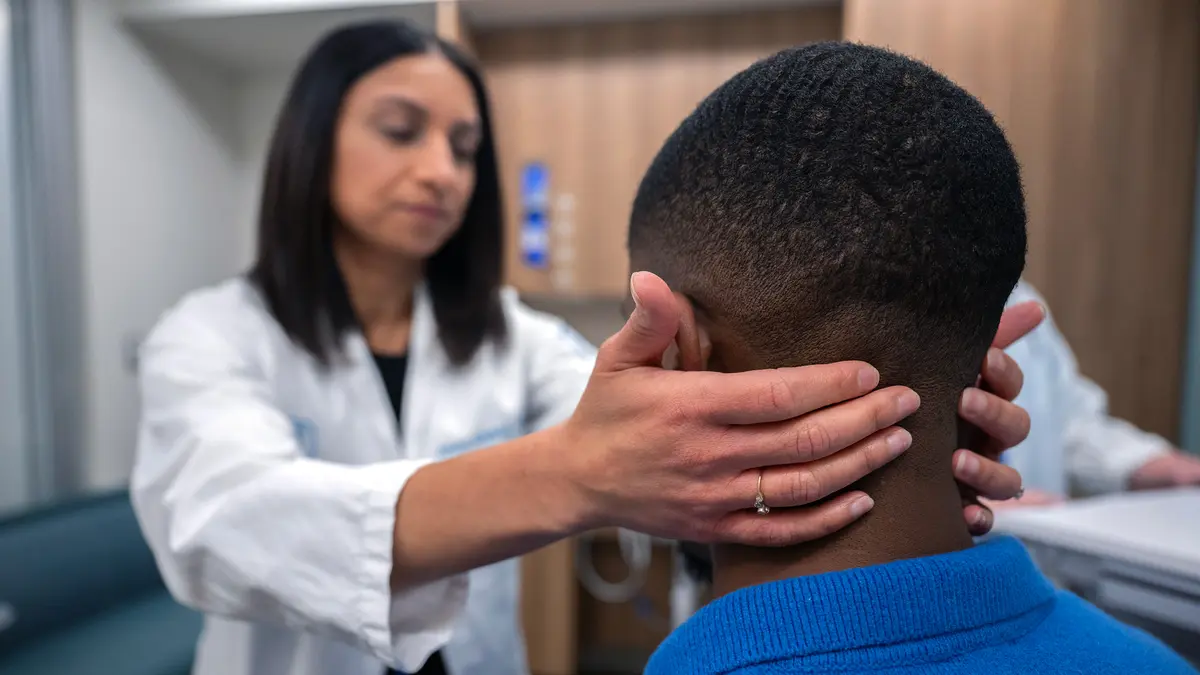
During an exam, Dr. Kriplani faces her patient with her hands on the back of his neck.

Head and neck medical oncologist Dr. Anuja Kriplani sees patients at MSK Westchester and MSK Bergen. 

Screening for thyroid cancer

What is thyroid cancer screening?

Screening means getting routine tests to find cancer even before you have any signs or symptoms. The goal of regular screening is to find cancer early, when it’s easier to treat.    

There’s no solid scientific evidence about whether screening prevents deaths from head and neck cancer. Researchers are studying this in clinical trials, also known as research studies.  

If you’re at low or average risk for thyroid cancer: 

  • During a regular check-up, your healthcare provider may spot signs of early thyroid cancer
  • If you notice a lump or swelling in your neck, see your healthcare provider.  
  • Sometimes thyroid cancer shows up on imaging tests, like ultrasound, that you got for another health problem.  

If you’re at higher risk for thyroid cancer: 

  • Your doctor may do a physical exam or order an ultrasound of your thyroid. 
THE MSK DIFFERENCE

MSK has more than 70 head and neck cancer experts. We see more people with rare types of head and neck cancer than many other cancer centers. We’re experts in diagnosing and treating rare salivary gland, mouth, and thyroid cancers. That’s why many people with rare head and neck cancers come to MSK each year.   

Signs and symptoms

What are the signs and symptoms of thyroid cancer?

Many people do not notice any symptoms of thyroid cancer. Everyone may not have the same symptoms. 

You or your healthcare provider may notice a small, painless lump or swelling in front of your neck. These are called nodules. Most thyroid nodules are not cancer. 

Your doctor may recommend a thyroid biopsy if an ultrasound of the nodule shows: 

  • The nodule does not have smooth borders 
  • The nodule has little bright white spots called microcalcifications. 

Talk with your healthcare provider if you have any of these thyroid cancer symptoms. 

Early thyroid cancer signs and symptoms

Early and common symptoms of thyroid cancer include: 

  • A lump or nodule in the front of your neck. 
  • Swollen lymph nodes in your neck. 
  • Speech changes. Your voice sounds quieter. Or, it sounds rough or raspy like you’re losing your voice. 
  • Trouble swallowing or breathing. 
  • Pain in your throat or neck that does not go away. 
Advanced thyroid cancer signs and symptoms

Late-stage symptoms of thyroid cancer include: 

  • A mass (lump) in your neck. 
  • Loss of appetite (you do not feel hungry). 
  • Losing weight without trying. 
  • A cough that does not go away, or you’re coughing up blood.