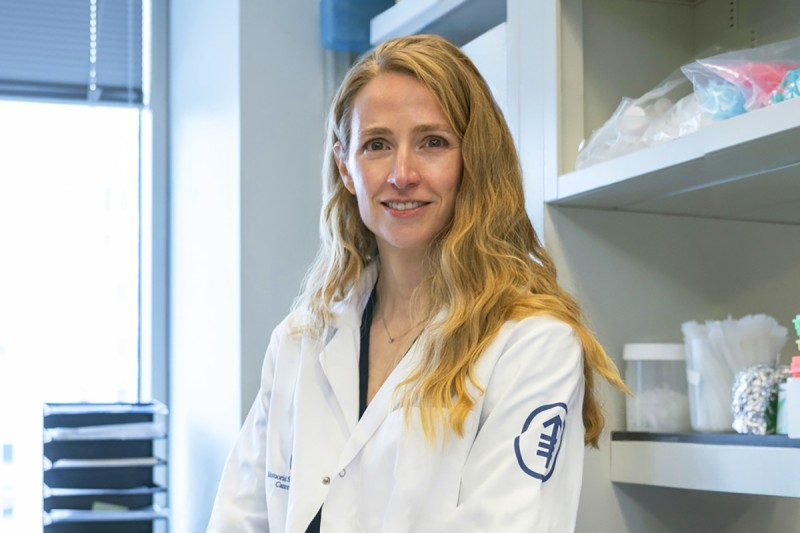
At its most fundamental level, cancer is a disease of cells doing things they’re not supposed to do, says Memorial Sloan Kettering Cancer Center (MSK) biologist Lydia Finley, PhD.
Cancer cells keep multiplying when they shouldn’t. They ignore normal signals to cease and desist. They remake their local environment to suit their needs and protect themselves from attack by the immune system. They travel to new parts of the body. They spontaneously develop resistance to the medicines we attack them with.
“To understand what happens in cancer, we first have to understand how normal cells are supposed to function and what makes things go wrong,” says Dr. Finley, an associate member of the Cell Biology Program at MSK’s Sloan Kettering Institute.
That’s why MSK, which is known for its world-class patient care and advanced clinical trials, also has dozens of research laboratories working on answers to fundamental questions in human biology. Together, they generate insights that will ultimately shape how we understand and treat cancer (and other diseases).
“Many of the drugs we use against cancer target fundamental processes in cells that have gone haywire — affecting how they function, how they grow, how they stay alive,” Dr. Finley says. “So we have to know, in great detail, how these processes work if we want to develop new therapies.”
Her lab’s research focuses on cell metabolism — that is, how cells convert nutrients into the various molecules that they need to function.
“In simple terms, it’s how cells use food to grow,” she says. “And without access to the right food, cancer cells won’t be able to survive.”
Rewriting Textbook Biology
Even when a research question doesn’t point straight to a new treatment, this type of science is vital: It can uncover new drug targets, telltale markers of disease, and unexpected connections.
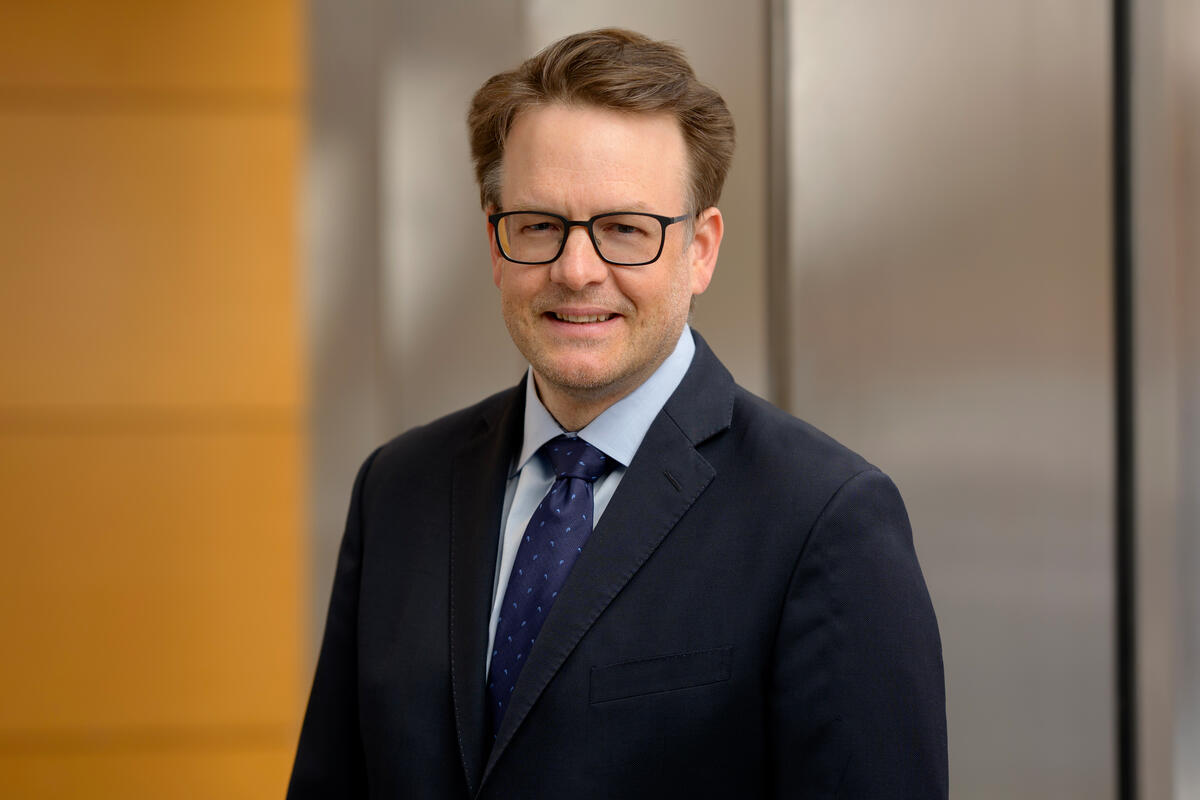
“Some people might ask, ‘Why not just study cancer?’ ” says Tobias Walther, PhD, Chair of the Cell Biology Program, who studies how cells manage and store fats — and how failures in those systems contribute to cancer, metabolic disease, and neurodegeneration. “But there’s still a lot we don’t know about human biology. And we won’t know what will unlock powerful new treatments until we ask the questions.”
One discovery from Dr. Finley’s lab is rewriting textbook biology. Scientists have long understood that the Krebs cycle, also known as the tricarboxylic acid (TCA) cycle, is responsible for how cells burn sugars to make energy. But Dr. Finley and her colleagues found that cells have other ways to make the energy they need to survive.
While we understand the basic road map for how cells use fuel, she says, “we are learning that not all those roads are accessible at all times and in all contexts. We also found that there were routes we didn’t know anything about.”
The lab’s continuing research has led Dr. Finley to believe that all of this may be very important in cancer.
Teaming Up With Clinicians To Tackle a Rare Childhood Cancer
At MSK, scientists and clinicians often team up on research projects in ways that would be difficult at a hospital without a strong laboratory science enterprise.
That’s how Dr. Finley used her expertise in cell metabolism to help find a way to potentially target a type of aggressive childhood cancer known as pediatric rhabdomyosarcoma — a rare soft tissue cancer that develops in the muscles and for which there are currently no effective treatments. “Kids shouldn’t get cancer,” she says. “Unlike with adults, there aren’t genetic changes that have built up over a lifetime. Instead, something has just gone horribly wrong in their cells. We thought there was a good chance cell metabolism played a role.”
Dr. Finley reached out to colleagues specializing in pediatrics at MSK Kids, and soon a collaboration blossomed.
“It’s wonderful how the doctors here are excited to collaborate with scientists to innovate and find new ways to improve patient care,” she says.
Ultimately, the research identified critical nutrients the cancer cells need to survive. The team also showed that one of the oldest, cheapest, and best-studied cancer drugs, methotrexate — which targets cell metabolism — could effectively slow the cancer’s growth in mouse models.
In Metabolism, the Medium Is Also a Message
When cells metabolize nutrients, they create fuel and building blocks called metabolites.
Metabolites can also serve as important signals, Dr. Finley notes — signals that can be harnessed to fight cancer.
One study from her lab — a collaboration with the lab of cancer biologist Scott Lowe, PhD — found that simply giving pancreatic cancer cells a metabolite known as alpha-ketoglutarate could get them to revert to an earlier state and make them less malignant.
“To me, this is one of the most exciting areas of cell metabolism,” Dr. Finley says. “Here the idea is that metabolites are telling the cell something really important, sending a signal. And what we found is that certain metabolites can really change behaviors that drive cancer.”
Dr. Finley says this discovery is exactly why studying fundamental cell biology is so important, because it shows how a cell’s metabolism can be harnessed against cancer.
“It also means that cancer cells aren’t necessarily permanently trapped in this malignant identity,” she says. “They’re receiving signals that are pushing them toward malignancy, and if you can know what those signals are, if you can undo them, then that cell can come back to a much more normal state.”
For Dr. Finley, Cancer Is Also Personal
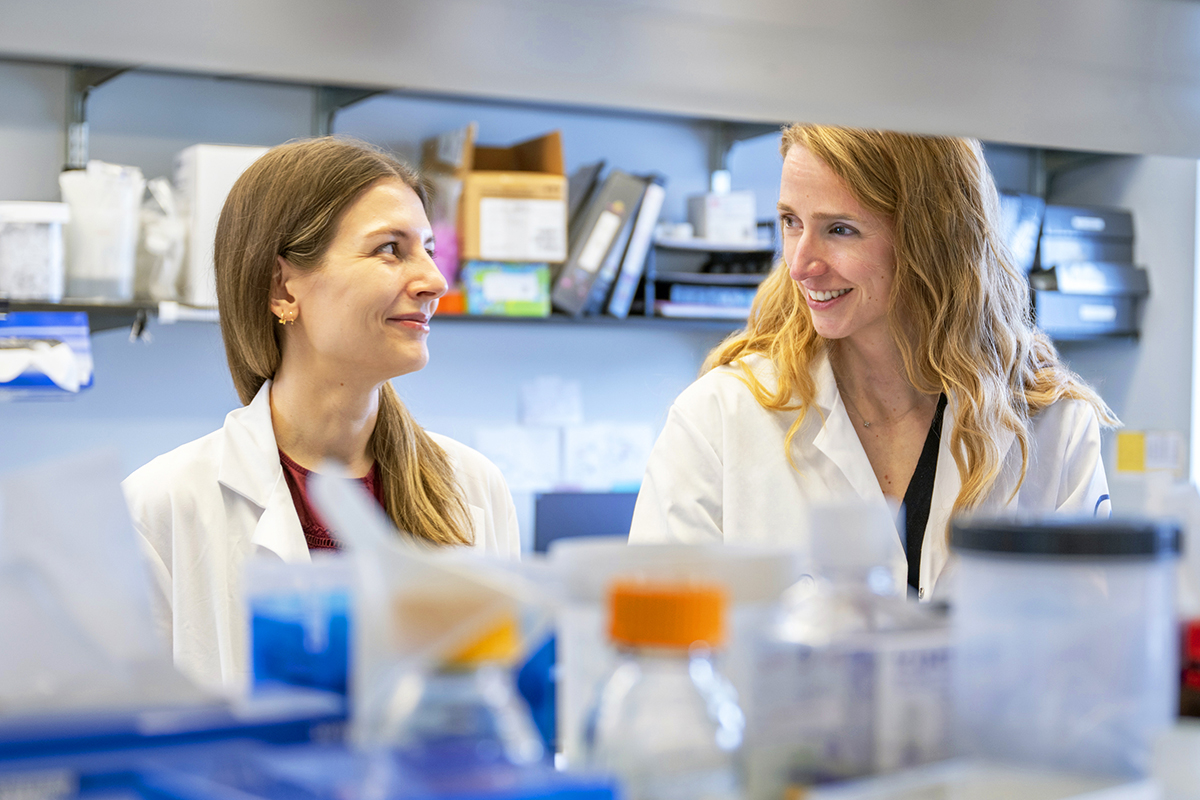
For Dr. Finley, studying cancer isn’t just a job, it’s also personal. During her time as a postdoctoral fellow at MSK, she was treated here for thyroid cancer. Both of her parents have also been patients at MSK — her mother for amyloidosis, a condition that was treated with a bone marrow transplant, and her father for a rare bladder cancer. In each case, the treatment was a resounding success.
“I’ve seen this institution from the perspective of the patient and from the perspective of someone sitting next to the patient,” she says. “I’ve seen it from the standpoint of somebody in the laboratory looking at patient samples that have been generously provided for research. And what I’ve seen in all of these different perspectives is an absolute commitment to patient care. This is a place that finds excellence at every single moment, and I am very proud to be a part of it.”
Dr. Finley’s research is supported by the MSK donor community, including The Pershing Square Foundation, Richard and Atlanta Warke, and The Edward Mallinckrodt, Jr. Foundation.
Dr. Finley holds a Geoffrey Beene Junior Faculty Chair.