This story was originally published June 5, 2026. It was most recently updated September 11, 2026.
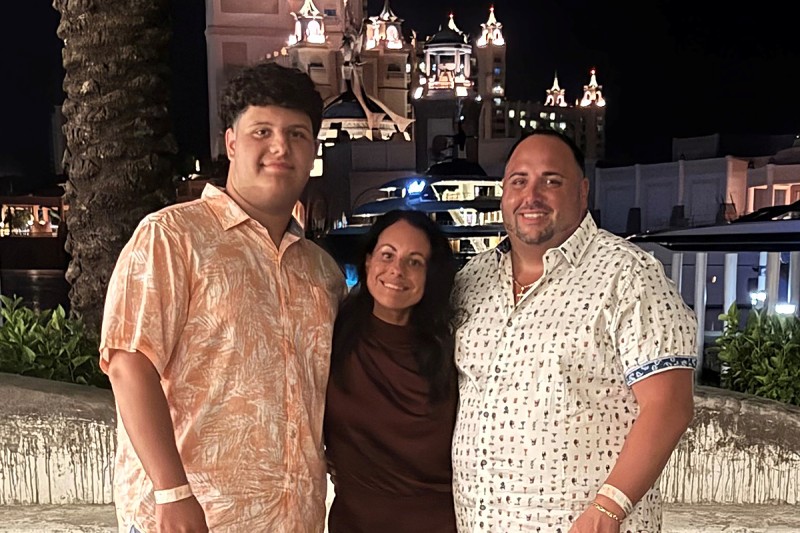
Joanne Ferrari-Mautino sensed something was wrong as soon as the X-ray ended.
“We’d like you to wait so a doctor can speak with you,” the technician told her.
“I’ve been a nurse for 20 years,” Joanne says. “I knew it was not a good sign.” Joanne, 50, had been prescribed an X-ray for a persistent cough and shortness of breath while exercising.
More tests at her local hospital revealed tumors throughout her body. Days later, she and her mother met with a general oncologist. “He told me I had stage 4 non-small cell lung cancer and 18 months to two years to live,” she recalls. “My mom passed out in the doctor’s office.”
With a teenage son, a boyfriend, and a happy life in small-town Connecticut — including a flock of chickens she dotes on — Joanne’s world turned upside down overnight.
But she says what happened next felt like divine intervention.
First, tests pinpointed the gene malfunction causing her cancer — called a ROS1 fusion. Then she was told about a world-renowned physician who studies this particular fusion — Alexander Drilon, MD, at Memorial Sloan Kettering Cancer Center (MSK). She got an appointment with Dr. Drilon, which changed everything for her.
Joanne would come to experience firsthand the power of MSK’s drug development program, which not only creates new medicines but also constantly improves them to stay ahead when cancer develops resistance.
To Joanne, this MSK research “feels like a miracle,” she says. “I live a normal life. Sometimes people don’t even know I have cancer.”
Taking Aim at ROS1 Fusions, Like Luke Skywalker
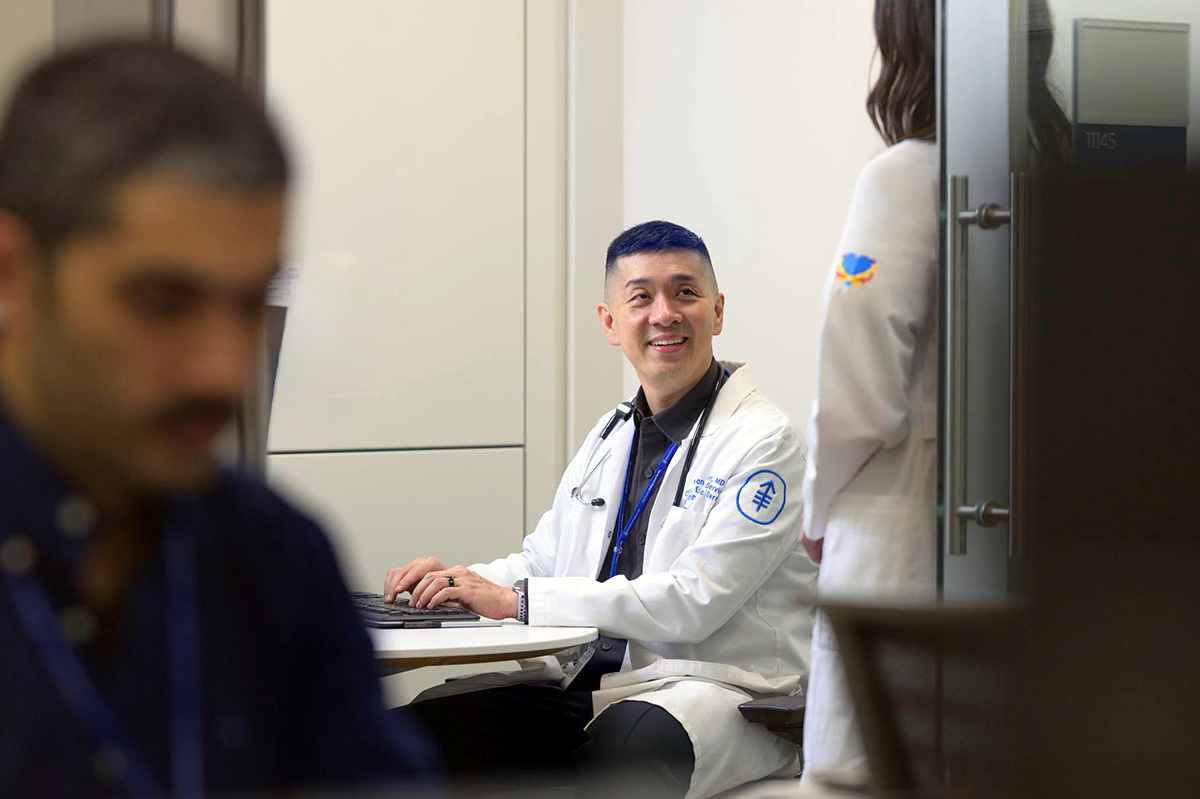
Nearly a decade before Joanne was diagnosed, Dr. Drilon was at work trying to understand the ROS1 fusion. Although this fusion is rare, it ruthlessly powers the growth of cancer cells in a subset of patients, most often those with lung cancer.
As Chief of Early Drug Development at MSK and a thoracic medical oncologist, Dr. Drilon’s research has focused on fusions that drive cancer. The ROS1 fusion is squarely in his crosshairs.
To form a ROS1 fusion, a piece of one gene breaks off and attaches itself to the ROS1 gene.
“We don’t know exactly what causes this kind of gene change,” Dr. Drilon says. “But what happens after one gene hooks up with a second gene is that the fusion goes hyperactive. This rewires a normal cell into a cancer cell that grows out of control.” But the gene fusion has a weak spot. “The protein created by the fusion gene has a little pocket,” Dr. Drilon explains. “Drug designers have created medicines — called inhibitors — that bind to this pocket.”
Dr. Drilon compares the result to a famous scene in Star Wars. “Think of the pocket like the small hole on the Death Star that Luke Skywalker fires a bomb into. Hit the pocket, and you shut down the fusion gene and the bad effects of the hyperactive protein.”
Based on this understanding, in 2016, Dr. Drilon led a clinical trial for an early version of a ROS1 inhibitor called entrectinib (Rozlytrek).
“Most people saw their lung tumors shrink,” Dr. Drilon says. “Symptoms like pain or difficulty breathing decreased, improving their quality of life.”
The success of Dr. Drilon’s trial led the U.S. Food and Drug Administration (FDA) to grant accelerated approval to entrectinib in 2019.
Staying Ahead of Cancer Drug Resistance
Dr. Drilon and his team were not satisfied, however.
“Entrectinib was better than an older ROS1 inhibitor, but we thought it could be improved.”
Cancer treatment is an arms race. “Cancer is smart,” says Dr. Drilon. “The pocket in the ROS1 fusion adapts in some patients to become smaller and narrower. That prevents the drug from binding, and the cancer becomes resistant.”
Dr. Drilon and his team thought the solution might be a new, second-generation inhibitor. This is where MSK’s reputation and collaboration with researchers in the larger scientific community is invaluable.
“I discussed the problem with the scientist at the pharmaceutical company who designed the drug, Dr. Jean Cui,” Dr. Drilon says. “She said, ‘I made something smaller to fit into the tighter pocket.’ ”
Sure enough, the new version of the drug better fit the pocket in lab studies, paving the way for Dr. Drilon to lead a clinical trial for patients with this second-generation ROS1 inhibitor, called repotrectinib (Augtyro).
Matching Patients With Precision Medicines
One of the most important elements in MSK’s success in developing new medicines is a test called MSK-IMPACT®. It was developed by the MSK Molecular Diagnostics Service, which is part of the Marie-Josée and Henry R. Kravis Center for Molecular Oncology.
MSK-IMPACT analyzes tumors to detect changes in more than 500 genes of common and rare cancers. After sequencing a tumor and identifying possible fusions or mutations to target, a computer matches the patient with the clinical trials most likely to help them.
This matching system results in faster, more efficient research. Most importantly, says Dr. Drilon, “We can connect with patients as early as possible, when they are strongest and most likely to benefit from a new therapy.”
That’s how Dr. Drilon’s clinical trials were able to find patients with ROS1 fusions. Many patients were able to join the repotrectinib trial at MSK, and it turned out to be much better than the earlier inhibitor entrectinib.
“Patients’ cancer symptoms improved,” says Dr. Drilon, “and the drug helped people for a longer time than entrectinib when given as their first treatment.”
This second-generation inhibitor was granted accelerated approval by the FDA in 2023.
Third Time Is the Charm
After this second-generation drug was approved, Dr. Drilon set out to find an even better inhibitor for patients. Drugs strong enough to overpower cancer can have unintended side effects. For some people, repotrectinib presented a challenging trade-off.
“It turned out that the drug inhibited not just the ROS1 protein, but also another protein that is important for daily functions of the nervous system,” Dr. Drilon explains. Some people on repotrectinib experienced dizziness, pins and needles in their hands, and other nerve-related side effects.
“We were thrilled that this drug could help more patients, but we knew this side effect problem had to be solved,” he says.
For the third time, Dr. Drilon and his team set out to improve ROS1 inhibitors.
“We met with a different pharmaceutical company, and they designed a drug called zidesamtinib in the lab,” says Dr. Drilon. “It was the most precisely targeted inhibitor that science could create, and the results have been really good in patients.”
This new and improved version can work with a lower rate of neurological side effects observed with the second-generation drug. It even works on tumors that have developed resistance to the first two generations of ROS1 inhibitors. And it can penetrate the blood-brain barrier to help patients with brain metastasis.
Again, after the successful clinical trial led by Dr. Drilon, the FDA gave the drug Breakthrough Designation, speeding its path to patients.
“The story here is really about persistence,” says Dr. Drilon. “Chasing leads on one molecule after another for our patients.”
Resistance Fighter
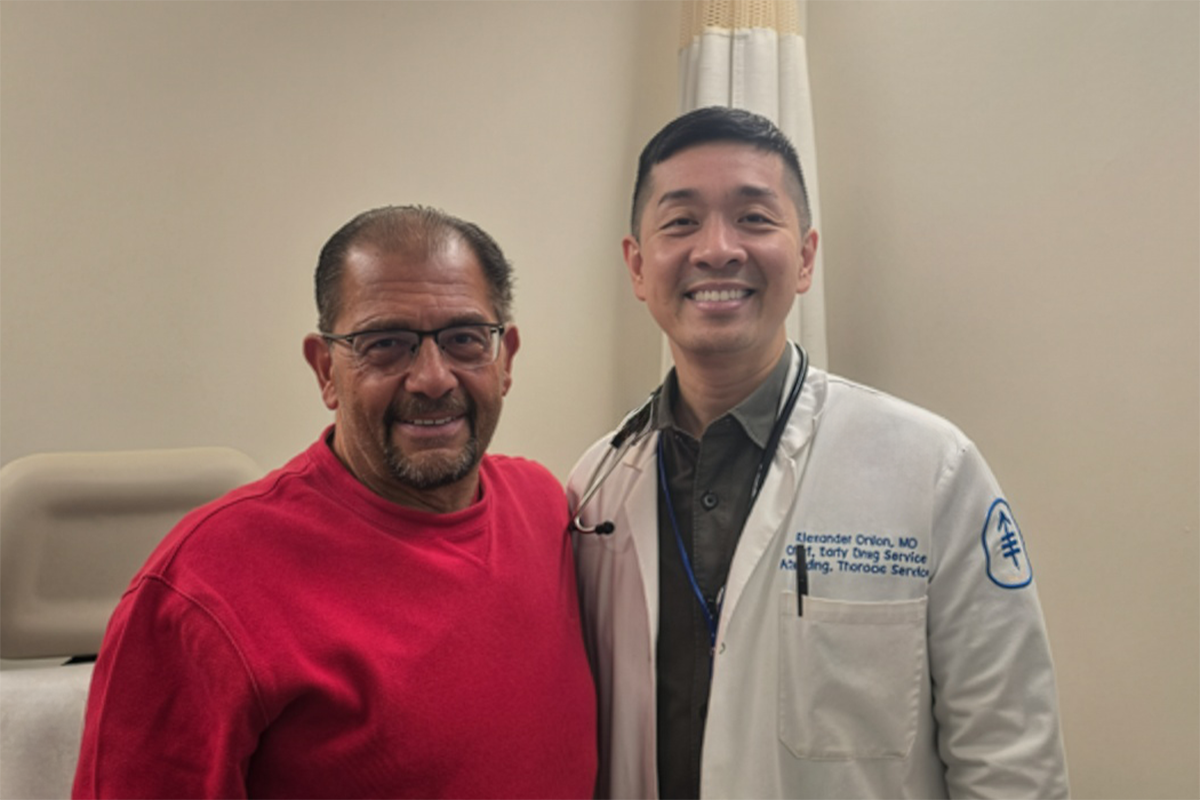
This constant pursuit of a better medicine has made a huge difference for Joanne — and also for Anthony Valente, 63.
Anthony came to MSK after a routine exam found tumors in his lungs. For Anthony, it was a full-circle moment. A few years before his diagnosis, his family’s company had delivered concrete for the construction of MSK Koch in Manhattan.
“I was impressed by the building,” Anthony recalls. “It turns out I went there for treatment. It’s amazing, and so are the people working there.”
Standard therapy worked at first under the care of thoracic medical oncologist Gregory Riely, MD, PhD.
But the tumors began to grow again. Dr. Riely strongly recommended that Anthony join Dr. Drilon’s third-generation clinical trial.
“After I started zidesamtinib, the cancer shrunk and shrunk and shrunk,” says Anthony. He credits the clinical trial team — and Andrea Valente, his wife of 40 years — with carrying him through. “She’s been my constant companion during cancer,” he says. “And thanks to Dr. Drilon’s clinical trial, I actually feel better now than before I had cancer.”
By participating in the trial, Anthony had early access to zidesamtinib, which was approved by the FDA in July 2026 and is now available to more patients.
Searching for the Next Breakthrough
Dr. Drilon and his team are relentless.
Efforts are already underway to create a fourth-generation ROS1 inhibitor. MSK research fellow Matteo Repetto, MD, is using data analysis, AI, and related computational skills to design an even better drug. “Our idea is to anticipate the next step the cancer takes to become resistant,” Dr. Repetto says. He’s studying new ways to make an inhibitor fit into the ROS1 pocket, even after resistance to third-generation inhibition. He’s also exploring possible combinations with other medicines to make the drug stronger.
Dr. Repetto, a medical oncologist from Italy, came to MSK in 2022. “We have the best oncologists, the best pathologists, the best laboratories, and the latest technologies here. It’s amazing,” he says.
A World-Class Researcher and a Great Guy
For Joanne and Anthony, the compassion at MSK stands out as much as the science.
“As a nurse, I work with doctors every day,” Joanne says. “I didn’t expect a top research expert to be so kind. He and his team really care about me, not just my cancer. To me, these world-class researchers have become family.”
“Every time I see Dr. Drilon, we give each other a high five,” Anthony says, laughing. “He’s such a great guy.”
Anthony and Joanne say they look forward to continuing to live the lives they love, thanks to research that never stops pushing forward.
Dr. Drilon’s research is supported by the MSK donor community, including Nonna’s Garden Foundation, The Gibbons Scattone Family Foundation, Stage4Hope, Keren Phillips and Deborah Kazis-Taylor for the Earle and Judy Kazis Foundation Fund, Sam K. Simon, Stephen J. Squeri, LesLois Shaw Foundation, and Break Through Cancer.
Dr. Drilon holds the Carol Bassok Lowenstein Chair.
Editors Note: This article has been updated to include that Dr. Drilon is a paid consultant and member of the scientific advisory board of Nuvalent, the company which makes zidesamtinib.