This information explains how to give an emergency Solu-Cortef injection (shot). Solu-Cortef is a medicine that has cortisol.
About cortisol
Cortisol is a hormone your body needs to work the right way. Cortisol helps:
- Your body heal itself when you’re sick or when you get hurt.
- Maintain your blood pressure and heart function.
- Control your blood sugar levels.
Cortisol is made by your adrenal glands. Your adrenal glands are above your kidneys.
About adrenal insufficiency
Adrenal insufficiency is when your adrenal glands don’t make enough cortisol. If you have adrenal insufficiency, you need to take medicine every day to replace the cortisol your body is missing. Read Adrenal Insufficiency to learn more.
Sometimes your body needs extra cortisol. This can be when you’re sick or have a serious injury. When this happens, you may need to take a higher dose of your medicine for a short time. This is called stress dosing. Your doctor will tell you how and when to do this.
Do not change the dose of your medicine without talking to your doctor. When you feel better, your doctor will tell you how to go back to your normal dose.
About adrenal crisis
If your body does not have enough cortisol, you can have something called an adrenal crisis. This is a medical emergency and can be life-threatening. This means you can die from it if you do not get medical treatment.
If you have an adrenal crisis, you need to give yourself an emergency shot of a medicine called Solu-Cortef®. Your doctor will give you a prescription for this medicine and teach you how to use it. After you give yourself the shot, call 911 or have a caregiver take you to a nearby emergency room. You may need more medical care.
Signs of an adrenal crisis
Call your doctor right away if you have any of these:
- More nausea (feeling like you’re going to throw up) than usual.
- Vomiting (throwing up).
- Diarrhea (loose, watery poop).
- Feeling dizzy or lightheaded (like you might faint).
- Abdominal (belly) pain.
- Confusion.
- Low blood pressure.
- Feel faint or like you’re going to pass out.
When to give yourself an emergency Solu-Cortef shot
Give yourself an emergency shot of Solu-Cortef if you:
- Have a serious injury, such as breaking a bone or losing a lot of blood.
- Are vomiting.
- Feel faint or like you’re going to pass out.
- Are too sick to take your daily cortisol medicine.
There may be other times when you should give yourself an emergency shot. Follow your healthcare provider’s instructions.
You’ll need to make an emergency injection kit. Make sure your kit is always ready in case you need it. Call your healthcare provider’s office if you have any questions.
Make an emergency Solu-Cortef injection kit
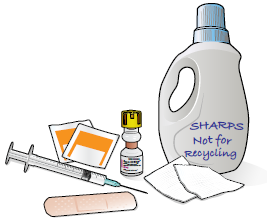
You’ll need to make and maintain an emergency injection kit (see Figure 1). Your emergency injection kit should include:
- A Solu-Cortef Act-O-Vial bottle.
- 2 alcohol wipes.
- A sterile 3 to 5 milliliter (mL) syringe with a needle.
- A gauze pad.
- A bandage (such as a Band-Aid®).
- A disposable sharps container, such as an empty laundry detergent bottle with a screw-on cap. Label the container “Home Sharps – Not for Recycling.”
How to give an emergency Solu-Cortef shot
Follow the instructions below to give an emergency Solu-Cortef shot.
Your caregiver should know how to give you a Solu-Cortef injection in case you cannot do it yourself. After practicing in the hospital with your nurse, you and your caregiver should review these instructions together.
Get ready to give the shot
- Open your emergency injection kit and take out all your supplies. Set them on a clean surface.
- Check the expiration date on the Solu-Cortef Act-O-Vial. If the medicine is expired, do not use it. Expired medicine may not work well. Check if you have another vial that is not expired. If you don’t, call 911.
-
Clean your hands with soap and water or an alcohol-based hand sanitizer.
- If you’re using soap and water, wet your hands and apply soap. Rub your hands together for at least 20 seconds, then rinse. Dry them with a paper towel and use that same towel to turn off the faucet.
- If you’re using an alcohol-based hand sanitizer, cover all parts of your hands with it. Rub your hands together until they’re dry.
-
Push down on the vial’s yellow cap so the liquid in the top section mixes with the powder in the bottom section (see Figure 2).
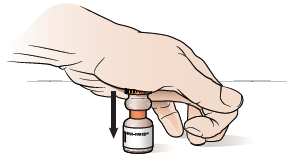
Figure 2. Pressing the cap -
Turn the vial upside down a few times until the medicine turns clear. That means it’s fully mixed.
- Do not use the medicine if it stays cloudy. Try another vial or call 911 if you don’t have one.
-
Take off the yellow tab on the top of the vial (see Figure 3). You’ll see an orange rubber stopper underneath.
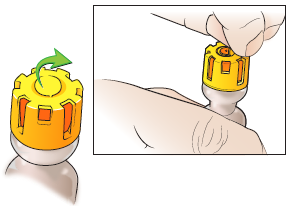
Figure 3. Removing the yellow disc -
Clean the top of the vial with an alcohol wipe (see Figure 4). Let it dry.

Figure 4. Cleaning the top of the vial - Pick up the syringe and take the cover off the needle.
-
Turn the vial upside down. Stick the needle into the middle of the orange rubber stopper (see Figure 5). Make sure the needle tip is in the liquid.
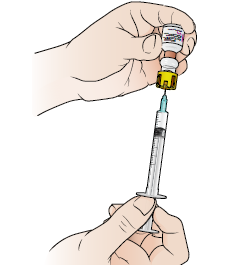
Figure 5. Drawing the Solu-Cortef into the syringe - Gently pull the plunger back to fill the syringe with all the medicine in the vial. Then pull the needle out of the vial.
-
Check the syringe for air bubbles. If you see any, hold the syringe with the needle pointing up. Tap it with your fingers until the air bubbles rise to the top, near the needle (see Figure 6). Slowly push the plunger up to force the air bubbles out of the syringe. Be careful not to push out any medicine.
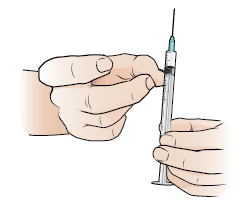
Figure 6. Tapping out air bubbles from syringe - Put the cap back on the syringe. Place the syringe on a clean surface.
-
Use the other alcohol wipe to clean the injection site. The injection site is about halfway up your thigh towards the outer part of your thigh (see Figure 7).

Figure 7. The injection site
Give the shot
- Pick up the syringe and take the cover off. Hold the syringe in your fist, making sure your thumb is not on the plunger.
- With your other hand, press down on your skin around the area where you’re giving yourself the shot.
-
Put the needle straight down into your thigh in one quick motion (see Figure 8). Your nurse will tell you how deep to place the needle.
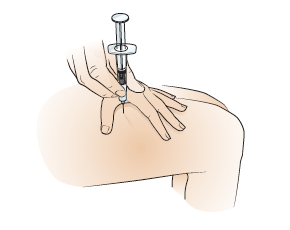
Figure 8. Putting the needle into your thigh -
Move your thumb to the plunger. Slowly push down the plunger to inject the medicine into your thigh (see Figure 9).
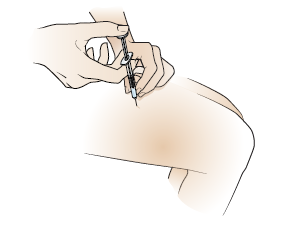
Figure 9. Pushing the plunger to inject the medicine - Keep the needle in your thigh for 10 seconds so the medicine goes into your body. Then, pull it straight out and set it aside.
- Press down on your thigh with gauze for a few seconds. Cover the injection site with a bandage.
- Drop the syringe and needle into the sharps container.
Call 911 or have your caregiver take you to a nearby emergency room after giving yourself the shot. You may need more medical care.
Check your local health department’s instructions for how to safely throw away your sharps. Read How To Store and Get Rid of Your Home Medical Sharps to learn more.
MedicAlert® jewelry
You should also wear a MedicAlert bracelet or necklace stating that you have adrenal insufficiency. This way, if you’re ever seriously ill or hurt, medical professionals will know that you may need an emergency shot.
Visit the MedicAlert website at www.medicalert.com to learn more. You can also call MedicAlert at 800-432-5378.
MSK’s After-Hours Telephone Triage call center
The After-Hours Telephone Triage (AHTT) is a call center for MSK patients who have urgent symptoms related to their cancer care.
The AHTT is available 7 days a week when doctors’ offices are closed. You can call your doctor’s office and follow the prompts to reach the AHTT call center. You can also call the MSK operator at 212-639-7900.
Call when you have an urgent symptom or medical problem that needs attention right away. The AHTT lets you talk with a healthcare provider when your problem cannot wait. Read to learn more about the AHTT.
Learn about our Health Information Policy.