Thyroid Nodule Assessment Program

MSK is among the first cancer centers to delay or avoid thyroid surgery by watching nodules for signs of cancer.
Overview of the Thyroid Nodule Assessment Program
The thyroid is a small gland in front of your neck. Thyroid nodules (NAH-jools) are very common. Thyroid nodules happen when cells in the thyroid grow out of control and form a lump or mass.
MSK thyroid experts are leaders in treating and monitoring thyroid issues. We’re among the first cancer centers to delay or avoid thyroid surgery by watching nodules for signs of cancer.
Thyroid nodule active surveillance
Not everyone with a lump in their thyroid needs surgery. MSK may suggest active surveillance for:
- Small thyroid cancers.
- Small high-risk thyroid nodules.
Surveillance (ser-VAY-lents) means monitoring or watching. We'll watch for any changes in the nodules. You’ll get regular ultrasounds on this schedule:
- Every 6 months for 2 years.
- Then once a year for 2 to 3 years.
- Then every 18 to 24 months.
Thyroid nodule observation
Some nodules are low risk or do not need a biopsy. To observe these nodules, you’ll get ultrasounds on this schedule:
- Once a year for a few years.
- Then every other year.
Talk with an MSK Care Advisor. We're here 24 hours a day, 7 days a week.
What are thyroid nodules?
The thyroid is a small gland below your voice box, in front of the neck. It looks like a butterfly and has 2 lobes (parts).
A thyroid nodule forms when cells in the thyroid gland grow without stopping. A nodule is a growth, mass, or lump that may be cancer or benign (not cancer).
Thyroid nodules are very common. Only 1 out of 10 are malignant (cancer), so most thyroid nodules are not cancer.

Types of thyroid nodules
There are many types of thyroid nodules, including:
- Colloid nodules: A lump in the thyroid filled with a thick fluid that’s like jelly.
- Goiter: When the whole thyroid gets bigger than normal.
- Multinodular goiter: When the thyroid is bigger and has more than 1 lump in it.
- Thyroid adenoma: A lump that grows in the thyroid and is not cancer.
- Toxic adenoma: A lump in the thyroid that makes too much hormone.
- Thyroid cancers: A lump in the thyroid that is cancer. Some types of thyroid cancer can spread to other parts of the body.
- Thyroid cysts: A lump in the thyroid filled with fluid but most often is not cancer.
What does the thyroid gland do?
Your thyroid gland makes hormones that affect your:
- Heart rate.
- Body temperature.
- Brain.
- Metabolism (how your body breaks down food into energy).
You may not notice the symptoms of thyroid cancer. Some people feel swelling or a lump in front of the neck. But many people have no signs. If you have any changes, do not ignore them. Talk with your healthcare provider right away.
Thyroid cancer signs and symptoms
- A hoarse voice (it sounds raspy or strained).
- Trouble swallowing or breathing.
- Feeling pain in your throat or neck that does not go away.
- A chronic (long lasting) cough.

Thyroid Nodule Assessment Program details
Experts in MSK’s Thyroid Nodule Assessment Program can give you a precise diagnosis about thyroid nodules. We'll create a treatment plan that fits your needs.
You do not have to be a patient at MSK to see us. You do not need a referral or tests before your visit.
MSK experts offer second opinions when you have a test result that’s not normal.
What happens at my visit, and will I need a thyroid biopsy?
Before your visit with a thyroid nodule expert, you will get an ultrasound at MSK. The ultrasound checks for thyroid nodules or lumps. After the ultrasound, we’ll schedule a visit to review your results. If a nodule looks normal or low risk, we may suggest active surveillance. We’ll monitor you for any changes with regular imaging tests.
If needed, we'll do a fine needle aspiration (FNA) biopsy of the thyroid nodule. A doctor will use a thin needle to take a small sample of cells. We’ll look at the cells to see if they’re normal or cancer.
What happens if the thyroid nodule biopsy shows a high risk?
If a thyroid nodule biopsy shows high-risk cancer, you'll meet with an MSK surgeon. They'll talk with you about taking out part or all of your thyroid gland, a procedure called a thyroidectomy (THY-roy-DEK-toh-mee).
- Endocrinology (EN-doh-krih-NAH-loh-o-gee), the treatment of glands and organs that make hormones.
- Nursing
- Pathology
- Radiology
- Surgery
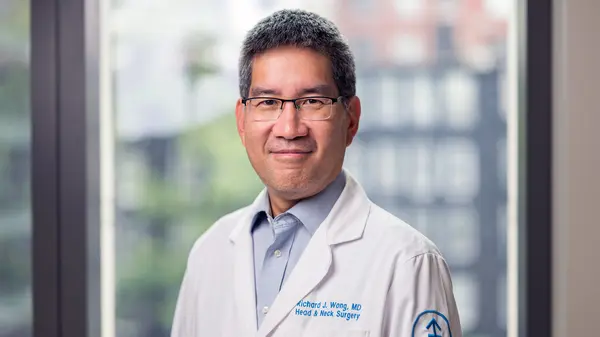
Dr. Richard Wong
Chief, Head and Neck Surgery
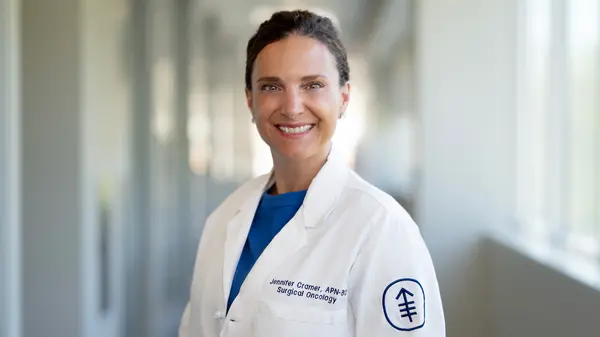
Jennifer Cramer
Nurse practitioner

Allyson Gillespie
Manager, Advanced Practice Providers
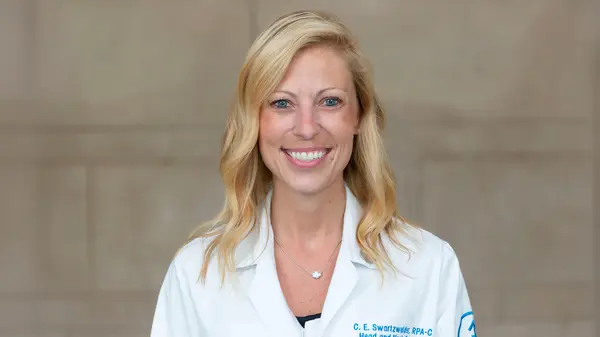
Christina Swartzwelder
Physician assistant
MSK makes it easier to get care close to home. Our thyroid nodule experts can see you at our locations in Manhattan and in Monmouth and Basking Ridge in New Jersey. Get your ultrasound at MSK and we can review your results during a telemedicine visit.
Common questions about MSK’s Thyroid Nodule Assessment Program
Active surveillance and observation are treatments. Active surveillance is not the same as doing nothing about your thyroid nodule. You’ll have regular scans.
Your testing schedule is based on research studies that predict how your low-risk cancer will behave. Active surveillance and observation may let you avoid other treatments, such as surgery.
Some people find active surveillance stressful. MSK has experts in helping you cope with any fear or uncertainty about this treatment. We offer individual counseling and supportive programming for people in active surveillance.
You’ll get an ultrasound at MSK even if you had one somewhere else because MSK ultrasounds give more details. We check your entire neck, and not every imaging place does this.
We use the latest diagnostic and imaging methods to look for abnormal (not normal) signs in the nodule. We also check nearby lymph nodes for any abnormal signs. You can get a thyroid ultrasound at all MSK locations.
Your MSK care team has thyroid nodule experts with special training and experience in thyroid nodules. They see many thyroid nodules cases and make very accurate diagnosis.
A precise diagnosis means we can choose the best treatments for you.
Yes, an MSK telemedicine lets you meet with your healthcare provider from home or wherever is most convenient for you.
If you got your ultrasound at MSK, our thyroid experts can go over the results during a telemedicine visit.
Telemedicine uses video technology to connect you to your MSK care team on your desktop computer, laptop, smartphone, or tablet.
For most people in active surveillance, small tumors remain stable or grow very slowly over 5 to 10 years.
A few tumors get bigger very slowly, mostly during the first or second year of follow-up. Based on how fast the tumor grows and other things, you may be able to stay in active surveillance.
