Nigeria
In 2010, Memorial Sloan Kettering Cancer Center (MSK) partnered with Obafemi Awolowo University Teaching Hospitals Complex (OAUTHC) in Nigeria and identified colorectal cancer as a national cancer priority. Drs. Peter Kingham and Isaac Alatise founded the African Research Group for Oncology (ARGO) in 2013 to foster multidisciplinary cancer research and improve cancer care through sustainable collaboration.
Recognized by the National Cancer Institute (NCI), ARGO has grown into a multidisciplinary consortium of 45 member institutions across Nigeria, bringing together surgeons, medical oncologists, pathologists, radiologists, epidemiologists, nurses, and other healthcare professionals. The consortium continues to be supported through multiple National Institutes of Health (NIH) grants and international collaborations.
Originally established to advance colorectal cancer research, ARGO expanded its scientific portfolio to include breast cancer in 2015 and now supports multidisciplinary research across additional disease areas, including immunotherapy, digital pathology, artificial intelligence, and implementation science. Through collaborative research, education, and capacity-building initiatives, ARGO has helped strengthen clinical research infrastructure and cancer care throughout Nigeria.
MSK and ARGO continue to host scientific symposia and educational programs that convene physicians, scientists, trainees, and healthcare professionals from across West Africa to share research findings, discuss advances in cancer management, and foster future collaborations. Current collaborative studies are available on the Research page.
Kenya
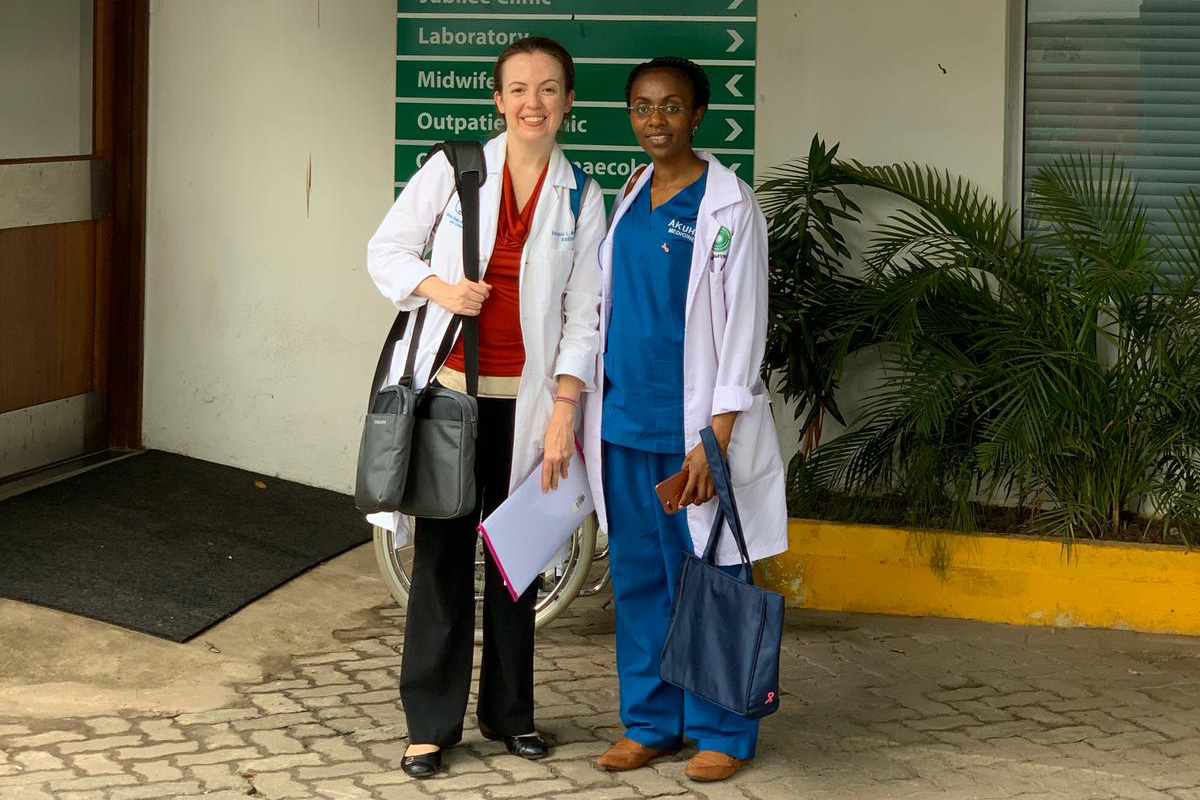
GCRT has collaborative partnerships in Kenya focused on education, clinical care, and research to improve breast cancer imaging and diagnosis.
In partnership with Dr. Rose Ndumia, Breast Imaging Section Head at Aga Khan University Hospital in Nairobi, and supported by an American Society of Clinical Oncology (ASCO) Conquer Cancer International Innovation Grant, Dr. Victoria Mango and collaborators are evaluating the diagnostic performance of artificial intelligence–assisted breast ultrasound to support clinical decision-making. This work complements Dr. Mango’s leadership in the RAD-AID Kenya program and reflects GCRT’s commitment to advancing innovative technologies that improve cancer diagnosis in resource-limited settings.
Building on educational activities initiated during the COVID-19 pandemic, GCRT continues to provide virtual and in-person educational programming that strengthens multidisciplinary collaboration and supports ongoing professional development for healthcare providers in Kenya.
Tanzania
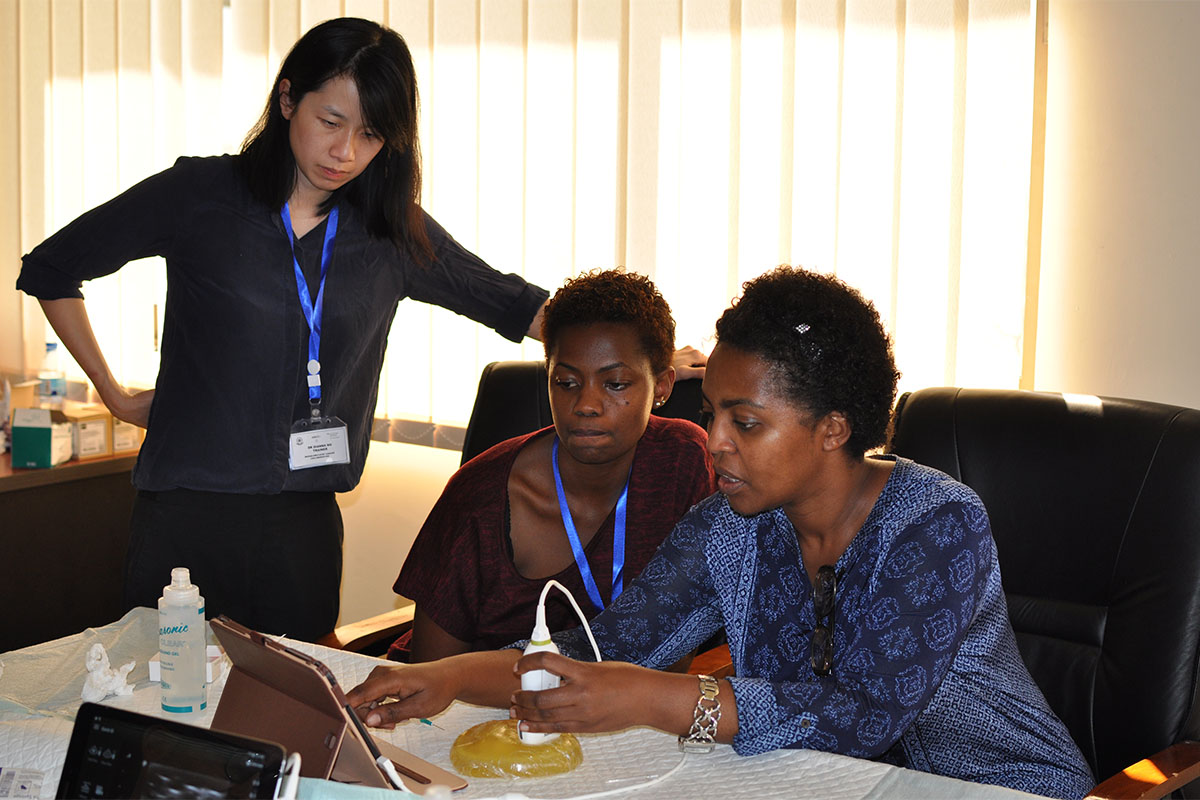
GCRT maintains longstanding pathology research collaborations and capacity-building initiatives in Tanzania that focus on improving cancer diagnosis through innovative technologies, education, and research mentorship.
At Muhimbili University of Health and Allied Sciences, Dr. Dianna Ng collaborates with Dr. Edda Vuhahula to evaluate near-point-of-care approaches for determining breast cancer biomarker status using fine needle aspiration biopsy specimens. Additional collaborative projects explore digital pathology, molecular diagnostics, and other technologies that improve diagnostic accuracy and expand access to pathology services.
Through NIH-supported mentorship programs, including the GloCal Health Fellowship, Tanzanian investigators have developed independent research programs addressing locally relevant challenges in cancer diagnosis and pathology. GCRT also collaborates with Kilimanjaro Christian Medical Centre to strengthen synoptic tumor reporting, immunohistochemistry, and pathology quality improvement initiatives that support sustainable cancer care.