This article was updated on August 26, 2026, to reflect FDA approval of daraxonrasib — which will be sold under the trade name Rasonque — for patients with metastatic pancreatic adenocarcinoma who no longer respond to at least one other form of treatment or are not candidates for multiagent systemic therapy.
Originally published on May 31, 2026
The U.S. Food and Drug Administration (FDA) approved the highly publicized drug daraxonrasib for pancreatic cancer, after a clinical trial found it doubled median survival time for patients compared with chemotherapy. The therapy will be sold under the brand name Rasonque and is made by Revolution Medicine.
FDA approval of new treatments means they can be used by oncologists nationwide. FDA approval also means that many insurers, as well as Medicare, will cover the cost of the new therapy or subsidize it.
In addition to longer survival with daraxonrasib, people in the trial also tolerated side effects from the new drug better than chemotherapy, which is the current standard of care when the disease has metastasized (spread to other parts of the body).
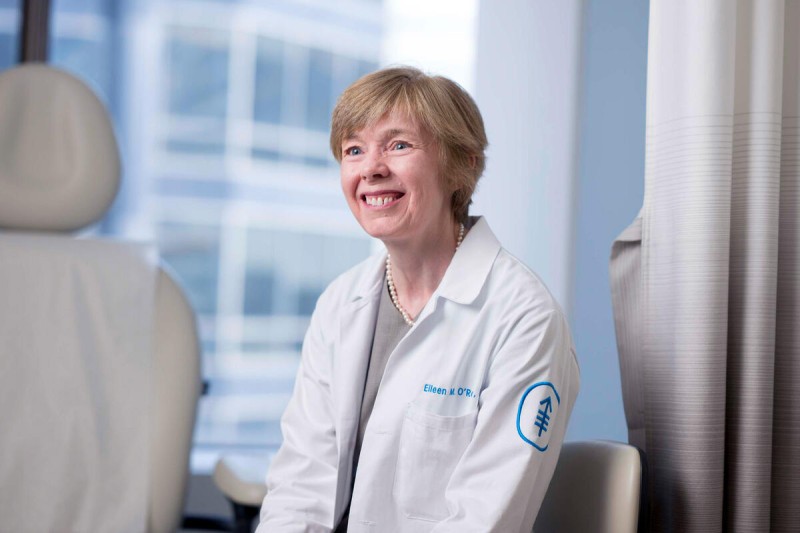
“To date in my career, I have not seen this level of benefit from any single anti-cancer drug in this disease,” says MSK gastrointestinal medical oncologist Eileen O’Reilly, MD, a renowned expert on pancreatic cancer. Dr. O’Reilly led the phase 3 clinical trial of the drug at MSK for people with metastatic pancreatic cancer.
On daraxonrasib, she says, “people live better for longer,” giving new hope to people facing one of the most aggressive cancers and potentially opening a whole new era of treatment options for pancreatic cancer.
The FDA approval of Rasonque is for patients with metastatic pancreatic adenocarcinoma — the most common type of pancreatic cancer — who no longer respond to at least one other form of treatment or are not candidates for multiagent systemic therapy.
Targeting the driver of nearly all pancreatic cancer
Pancreatic cancer specialists say a key to the success of daraxonrasib is that the drug targets the RAS gene, particularly the family of KRAS mutations.
KRAS mutations drive over 90% of pancreatic cancers by sending signals that cause uncontrolled cell growth.
Until now, no therapies have been able to effectively target RAS in pancreatic cancer despite decades of work.
Because daraxonrasib directly targets KRAS mutations and shuts down the signals that cause cancer cells to grow, “patients usually feel the difference quite quickly,” Dr. O’Reilly says. “Their pain is better. They eat better and feel less fatigued.”
“This is happening across a broad selection of patients because KRAS mutations are present in nearly every pancreatic cancer case and are important to the growth and metastasis of this disease,” she says. “It’s very encouraging that we are seeing these kinds of results for people with pancreas cancer on a large scale.”
Genetic sequencing tests such as MSK-IMPACT and MSK ACCESS can identify which patients will benefit from daraxonrasib. These tests are available at MSK in Manhattan and other locations in New Jersey and New York. Patients should speak to their oncologist about getting RAS testing and the timeframe for getting results.
Learn more about how daraxonrasib blocks RAS mutations from driving cancer
The clinical trial that led to FDA approval of daraxonrasib for pancreatic cancer
The international phase 3 trial involved a total of 500 patients who were diagnosed with metastatic pancreatic cancer and had been treated previously:
- Roughly half were randomly assigned to receive daraxonrasib, and the other half received chemotherapy of the investigator’s choice.
- Median overall survival was 13.2 months with daraxonrasib and 6.7 months with chemotherapy.
- Median progression-free survival — meaning the length of time cancer didn’t get worse — was 7.2 months with daraxonrasib and 3.6 months with chemotherapy.
- The drug’s side effects, including skin rashes and gastrointestinal issues, were mostly manageable. They were severe enough to stop treatment in 1.2% of daraxonrasib patients compared with 11.2% of those on chemotherapy.
Revolution Medicine, which developed daraxonsarib and funded the clinical trial, released the survival results in April 2026.
Dr. O’Reilly is lead author of the paper on the clinical trial that was published in The New England Journal of Medicine in May 2026. Dr. O’Reilly also joined colleagues from other institutions to announce the results in the prestigious plenary session of the 2026 American Society of Clinical Oncology (ASCO) Annual Meeting, the country’s largest cancer conference.
“I want to extend our sincere gratitude to all of the patients who enrolled in this trial, supported by their families,” Dr. O’Reilly says. “Their participation in this research has paved the way for many more people to benefit from this drug in the future.”
MSK patient says daraxonrasib is easier to tolerate than chemotherapy

Helene Rubin joined Dr. O’Reilly’s clinical trial in February 2026.
A vibrant 83-year-old mother and grandmother who worked as an urban planner, she was told by an oncologist near her home in New Jersey that she should look for a clinical trial after pancreatic cancer spread to her lungs.
When Helene started the daraxonrasib trial, she endured gastrointestinal side effects that forced a short hospital stay. “But I wanted to stick it out,” she says, “both to see if the drug could help me and to contribute to helping other people with this disease.”
After Dr. O’Reilly and her team reduced Helene’s dosage, her condition improved significantly. “The lung nodules have shrunk,” Helene says, “and the difference in side effects was amazing. On chemo, I couldn’t get off the couch and I was always nauseous and lost a ton of weight.”
“I still have some side effects with daraxonrasib,” she says, “but they don’t interfere with what I do or how I feel most of the time. I’m really grateful for the clinical trial because the drug has worked terrifically for me.”
Controlling the side effects of daraxonrasib
Mary Larsen, MSN, RN, OCN, is part of Helene’s care team at MSK and a clinical trials nurse, a specialty that puts Larsen on the front lines of investigating potential treatment advances.
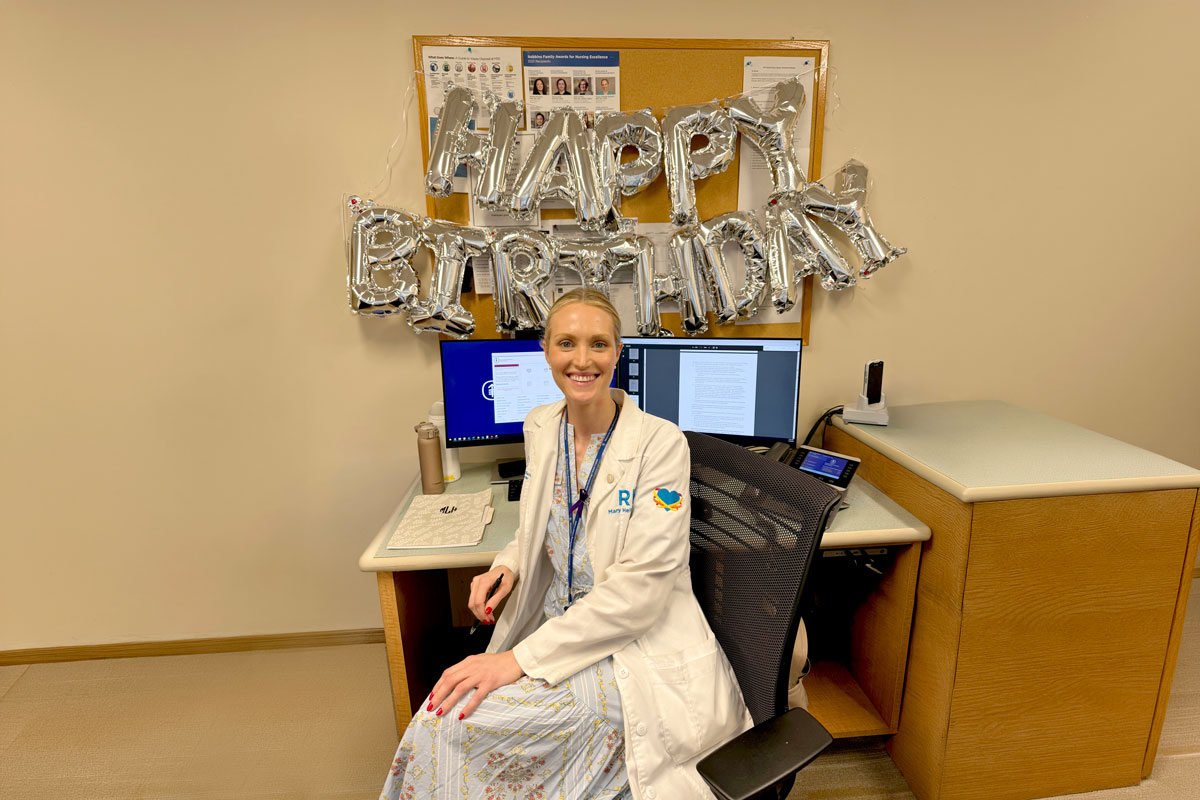
In addition to her work on the phase 3 trial of daraxonrasib, Larsen was part of the earlier trials of the drug at MSK: a trial led by MSK gastrointestinal medical oncologist Wungki Park, MD, MS, for patients who stopped responding to chemotherapy, and a separate trial led by Dr. O’Reilly for people who had not yet been treated with any therapy.
Because pancreatic cancer is challenging and hard to treat, “you learn to keep your expectations modest when testing a new therapy in a clinical trial,” Larsen says.
But she was amazed when the very first patient in the trial led by Dr. Park had a remarkable response.
“I had never seen a turnaround like that,” Larsen recalls. “And the next patient also did really well on the drug. It gave us chills to see people feeling so much better.”
Larsen has seen people who respond well to the drug resume traveling and other activities that once seemed impossible. Other patients are thrilled to celebrate family milestones they feared they wouldn’t live to see.
“It feels like we’re helping give people back some of their lives,” Larsen says. “They can live like a person and not just as a cancer patient.”
Managing the rash
The drug does have side effects, however. “Daraxonrasib often causes a rash that can be a real challenge,” Larsen says. “It can be very inflamed and sore, and it can cause bleeding on the face, which is distressing for patients and tough for clinicians to manage.”
To help, the clinical trials care team uses topical creams and consults with their colleagues in MSK’s Dermatology Service for more advanced treatments. “The rash can be tough, there’s no question,” Larsen says, “but patients say that even when it’s severe, it’s not as bad as the nausea and fatigue that often accompany chemotherapy.”
What’s next for daraxonrasib
Drs. O’Reilly and Park and nurse Larsen stress that daraxonrasib is not a cure — pancreatic cancer is often detected only when it has spread to other organs, making it harder to treat.
“This drug is a sea change, but we are just at the beginning,” cautions Dr. O’Reilly.
Dr. O’Reilly believes that the drug has potential to be more effective in combination with other treatments.
“Because the drug targets the KRAS mutations that drive nearly all cases of pancreas cancer and because it is relatively well tolerated by patients, daraxonrasib is a good candidate to work in concert with other treatments,” she says.
Combining daraxonrasib with other treatments
Combination therapies may also reduce the chances of developing resistance — when cancer cells evolve to find ways to outsmart treatment. Dr. O’Reilly says several treatments that might be used in combination with daraxonrasib are under discussion or in the earliest stages of testing, including:
- Immunotherapy, which uses the body’s own immune system to identify and destroy cancer cells — this includes vaccines designed to promote an immune response in the pancreatic cancer setting.
- Other targeted combinations that focus on specific subtypes of KRAS mutations and other vulnerabilities of the tumor.
- Cancer drugs called antibody-drug conjugates.
- Chemotherapy in addition to daraxonrasib.
- Using the drug before surgery to shrink the pancreatic tumor or after surgery to reduce the likelihood of the cancer coming back.
Clinical trials of daraxonrasib and other RAS therapies at MSK
Dr. Park is leading a new phase 3 clinical trial investigating how daraxonrasib alone or in addition to chemotherapy compares to chemotherapy alone when given to patients with untreated metastatic pancreatic cancer. Dr. O’Reilly also leads a phase 3 clinical trial investigating how daraxonrasib compares with chemotherapy when given after surgery for pancreatic cancer.
Dr. O’Reilly is hopeful that daraxonrasib can prove effective when pancreatic cancer is caught an at early stage, to help keep the disease from progressing.
MSK will continue to build on many clinical trials targeting RAS mutations in pancreatic cancer and other cancers, including lung and colorectal.
MSK research into RAS mutations in other cancers
MSK scientists have spent more than two decades studying RAS mutations, which are found in many types of cancer and were considered “undruggable” until only a few years ago. Work from the lab of physician-scientist Piro Lito, MD, PhD, has contributed to the development of several approaches to directly target RAS.
These include a targeted therapy approved to treat lung cancers caused by the KRAS-G12C mutation, as well as novel molecules that can block multiple mutated forms of KRAS and others that can restore the protein’s own natural “off switch.” The latter represents the next frontier in MSK’s efforts to develop effective RAS-targeted therapies, with the potential to benefit patients across a broader range of cancers and RAS mutations.
Key Takeaways
- FDA approval: The FDA has approved daraxonrasib for the treatment of pancreatic cancer in people with advanced disease who no longer respond to at least one form of therapy. This means oncologists across the country can use the drug and many insurers, as well as Medicare, will cover or subsidize the therapy.
- A breakthrough in survival rates: A phase 3 clinical trial reports that the drug daraxonrasib doubled the median survival time for pancreatic cancer patients compared with standard chemotherapy. This is a major milestone because pancreatic cancer is one of the deadliest and hardest-to-treat cancers.
- The drug targets the root cause of most pancreatic cancers: Daraxonrasib works by blocking KRAS gene mutations, which are responsible for driving over 90% of pancreatic cancer cases. By shutting down the signals that make cancer cells grow out of control, tumors shrink and patients often experience less pain and fatigue than with chemotherapy.
- Patients experience a better quality of life: Unlike chemotherapy, which commonly causes severe nausea, exhaustion, and weight loss, daraxonrasib’s side effects — mainly a skin rash — are generally more manageable for most patients. Some patients in the trial report being able to return to everyday activities that they thought were no longer possible.
- Daraxonrasib is not a cure but is the beginning of a new treatment era: Researchers are already exploring combining daraxonrasib with other treatments including immunotherapy, chemotherapy, and other targeted treatments to make it more effective. The FDA has granted it “Breakthrough Therapy” designation, fast-tracking its path toward wider availability for patients.
Other key contributors at MSK
Dr. O’Reilly and Dr. Park wish to acknowledge the enormous contributions of their colleagues to RAS-targeting pancreatic therapies, including daraxonrasib. “It takes a big team of dedicated and focused people to make these kind of breakthoughts happen,” says Dr. O’Reilly.
She would like to recognize the MSK solid tumor gastrointestinal oncology team, including GI medical oncologist Anupriya Singhal, MD, PhD; GI medical oncologist Kenneth Yu, MD; GI medical oncologist Michael May, MD; GI medical oncologist Fiyinfolu Balogun, MD, PhD; GI medical oncologist Dr. Joshua Schoenfeld, MD, PhD; and others who are key members of the MSK pancreas team along with the major clinical research team that support these major endeavors.
She also wishes to acknowledge the work of MSK researchers including Tuomas Tammela, PhD, and Marc Hilmi, MD, PhD, as well as MSK’s David M. Rubenstein Center for Pancreatic Cancer Research, whose members are experts in a range of clinical, translational, and basic science specialties.
The pancreatic team is also indebted to MSK colleagues investigating the use of daraxonrasib in other cancer types, including Rona Yaeger, MD (colorectal), Kathryn Arbour, MD (lung), and Yonina Murciano-Goroff, MD, MS (early drug development).
Dr. O’Reilly holds the Winthrop Rockefeller Chair of Medical Oncology.
Dr. Lito holds the Enid A. Haupt Chair of Therapeutic Research.
Additional authors, funding, and disclosures
You can learn about Dr. O’Reilly’s financial disclosures on her physician biography page.
Additional authors, funding, and disclosures can be found in the paper at The New England Journal of Medicine.
This article was originally published May 31, 2026, and has been updated to include the FDA approval of daraxonrasib and the start of a new phase 3 clinical trial of daraxonrasib at Memorial Sloan Kettering Cancer Center (MSK).