
A new technology developed at Memorial Sloan Kettering Cancer Center (MSK) shows promise for improving the detection and treatment of aggressive forms of lung cancer and prostate cancer. The approach uses radioactive agents that bind to a molecule on cancer cells called DLL3, which is highly expressed in small cell lung cancer (SCLC) and neuroendocrine prostate cancer (NEPC).
These cancers are among the most lethal forms of the disease and currently have limited treatment options.
The new radioactive agents are the most effective to date at selectively targeting DLL3-expressing cancer cells while sparing normal tissue. In laboratory studies, the technology significantly improved survival in animal models of neuroendocrine cancers compared with earlier DLL3-targeting approaches.
MSK researchers are now working toward translating the technology into a clinical trial. The findings are published in the Proceedings of the National Academy of Sciences (PNAS).
The Theranostics Approach for Treating Cancer
The work represents another important advance in the rapidly evolving field of theranostics, an approach that combines diagnostic imaging and targeted therapy using radioactive compounds. Theranostic agents allow clinicians to first visualize cancer cells and then deliver radiation directly to those same cells, minimizing damage to healthy tissue.

In a typical theranostic strategy, patients are first infused with a radioactive imaging agent that binds to a specific target on cancer cells. Then the patient gets a PET scan to visualize where the agent accumulates in the body. Once the target is confirmed, patients can receive a therapeutic version of the agent, which carries a radioactive payload designed to kill the cancer cells.
The new study builds on earlier MSK research published in The Lancet Oncology in 2024, which showed that a DLL3-targeting imaging agent could reliably detect neuroendocrine cancers in patients. An accompanying commentary described that work as “a pivotal milestone,” highlighting both its scientific novelty and its potential to improve patient outcomes.
Targeting DLL3 in SCLC and NEPC May Help Improve Treatment Outcomes
The latest advance, developed in the laboratories of radiochemist Jason S. Lewis, PhD, and physician-scientist Charles M. Rudin, MD, PhD, moves the field forward in two key ways:
- First, the imaging antibody — called [⁸⁹Zr]Zr-DFO-TDI-Y-010 — was engineered specifically for neuroendocrine tumors. Compared with prior DLL3-directed agents, it binds more rapidly to tumors, allowing clearer imaging at earlier time points.
- Second, the therapeutic antibody — called [¹⁷⁷Lu]Lu-CHX-A″-DTPA-TDI-Y-010 — demonstrated greater anti-tumor activity and significantly improved survival in animal models.
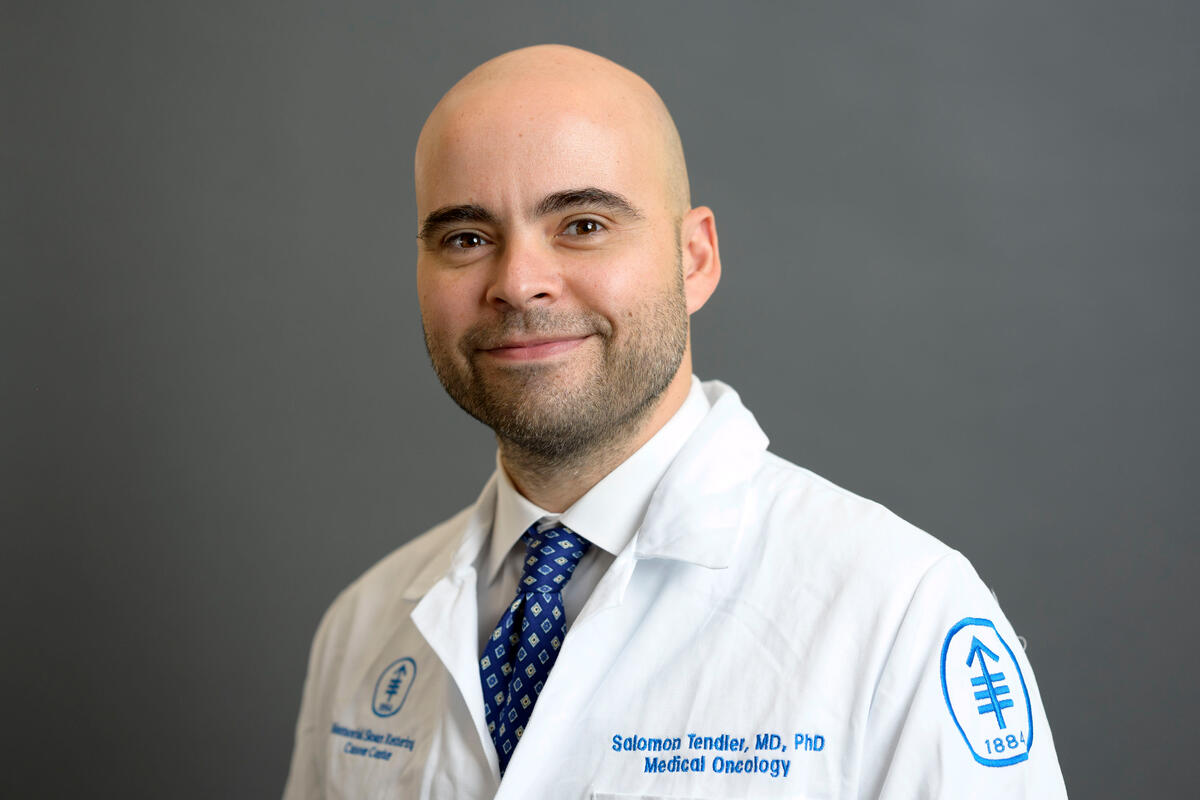
“This work builds directly on our earlier clinical imaging studies showing that DLL3 can be reliably visualized in patients with neuroendocrine cancers,” says Salomon Tendler, MD, PhD, an assistant attending physician-scientist affiliated with the Lewis lab and corresponding author of the study. “Here, we took a first-principles approach to designing antibodies specifically for theranostic use. Our goal is to translate this into a clinical trial.”
Unlike previous DLL3-targeting strategies, which relied on antibodies originally developed for other therapeutic purposes, the new agents were designed from the outset to function together as a theranostic pair. This enabled the team to optimize both imaging performance and therapeutic efficacy.
By creating a unified platform for detecting and treating DLL3-expressing cancers, the researchers hope to open new treatment options for patients with SCLC, NEPC, and other aggressive neuroendocrine tumors.
MSK has been awarded multiple grants to continue developing and validating the DLL3-based technology — most notably an $8 million grant from the Prostate Cancer Foundation to Dr. Lewis and his colleagues.
Nuclear medicine physician Lisa Bodei, MD, PhD, who is Director of Targeted Radionuclide Therapy at MSK, is working with Dr. Tendler, nuclear medicine physician Mark Dunphy, DO, and Dr. Rudin to develop and test other radioactive therapies.
What Are Neuroendocrine Cancers and How Are They Diagnosed?
SCLC and NEPC are neuroendocrine cancers, which develop in cells that produce hormones.
Small cell lung cancer tends to spread quickly to other areas and to the lymph nodes in the chest. The five-year survival rate is 18% if it has already spread outside the lungs at diagnosis.

Neuroendocrine prostate cancer is rare but very deadly with no effective standard therapy. It can arise as a new cancer (called “de novo”). Other times, it results when the more common form of prostate cancer, adenocarcinoma, transforms into NEPC — often in response to treatments such as hormone therapy or chemotherapy.
“NEPCs are difficult to detect and diagnose without biopsies and have become an increasing problem in prostate cancer patients,” Dr. Rudin says.
Building on Success Using Theranostics for Lung and Prostate Cancer
MSK has already made important advances in theranostics. In 2022, the U.S. Food and Drug Administration approved a similar theranostics treatment called 177Lu-PSMA-617. This treatment targets a protein in prostate cancer cells called PSMA (prostate-specific membrane antigen). MSK genitourinary oncologist Michael Morris, MD, helped design, execute, and analyze a clinical trial showing the effectiveness of 177Lu-PSMA-617 in people with metastatic prostate cancer.
“DLL3-targeting technology could be the next generation of theranostics, guiding new treatments for patients with small cell lung cancer or neuroendocrine prostate cancers who otherwise would have run out of options,” Dr. Lewis says.
Dr. Dunphy added it’s important to develop multiple imaging agents that target different proteins on cancer cells.
“A lot of radioactive treatments stop working after a while — often the cancer starts to evolve, and the target disappears,” he says. “For example, 177Lu-PSMA-617 can find and treat prostate adenocarcinoma, but if the disease transforms into neuroendocrine prostate cancer, the tumors will likely lose the PSMA target and no longer absorb the radioactive drug.”
How Team Brainstorming Pushes Lab Discoveries into the Clinic at MSK
Drs. Rudin and Dunphy say MSK offers a unique opportunity for collaboration between basic scientists and clinicians.
“It’s amazing to have the kind of research meetings where all the parties are sitting together,” Dr. Dunphy says. “We have incredible radiochemistry experts who talk about how to design new imaging technologies. And then our oncology experts will say, ‘Don’t chase after that one. Here’s what is clinically relevant to us.’ There’s this constellation of stellar investigators brainstorming a realistic vision of the future.”
Dr. Lewis is the Emily Tow Chair in Oncology
Dr. Rudin is the Sylvia Hassenfeld Chair in Lung Cancer Research
Key Takeaways:
- Small cell lung cancer (SCLC) and neuroendocrine prostate cancer (NEPC) are neuroendocrine cancers, which are especially lethal.
- A new technology developed at MSK shows promise for improving the detection and treatment of these diseases.
- The approach uses radioactive agents that bind to a molecule on cancer cells called DLL3, which is highly expressed in neuroendocrine cancers.
- MSK researchers are now working toward translating the technology into a clinical trial.
Additional Authors, Funding, & Disclosures:
In addition to Drs. Tendler, Lewis, Rudin, Morris, and Bodei, additional authors on the paper include Roberto De Gregorio, Paul Balderes, Alexa L. Michel, Tran T. Hoang, David Bauer, Kathryn M. Tully, Joshua A. Korsen, Ivo C. Lorenz, Abdul G. Khan, Lukas Carter, Olivia Vergnolle, Irina V. Lebedeva, Elizabeth Nyakatura, and John T. Poirier.
This work was supported in part by the National Institutes of Health (R01CA213448, R35 CA263816, U24 CA213274, and R35 CA232130; a Prostate Cancer Foundation TACTICAL Award; the Tri-Institutional Therapeutics Discovery Institute, Druckenmiller Foundation, and NIH Cancer Center Support Grant P30 CA998748. The authors gratefully acknowledge the Memorial Sloan Kettering Cancer Center Anti-Tumor Assessment Core, the Memorial Sloan Kettering Molecular Cytology Core, and the Tri-Institutional Laboratory of Comparative Pathology.
Dr. Lewis reports consulting or advisory roles with Alpha-9 Theranostics, BicycleTX Limited, Clarity Pharmaceuticals, Earli, Evergreen Theragnostics, GrayBio, Inc., HoneyBear Biosciences, Inhibrix, ITM Isotopen Technologien München AG, Juniper Biosciences, Precirix, TRACER B.V and Telix Pharmaceuticals; is a co-inventor on technologies licensed to Diaprost, Elucida Oncology, Theragnostics, CheMatech, Clarity Pharmaceuticals, Daiichi Sankyo, and Samus Therapeutics; is the co-founder of pHLIP; and holds equity in GrayBio, Inc., HoneyBear Biosciences, Telix Pharmaceuticals, Clarity Pharmaceuticals, Evergreen Theragnostics, Oncurie, Inc. and Juniper Biosciences.
Dr. Rudin has consulted on oncology drug development with AbbVie, Amgen, AstraZeneca, D2G, Daiichi Sankyo, Epizyme, Genentech/Roche, Ipsen, Jazz, Kowa, Lilly, Merck, and Syros, and serves on the scientific advisory boards of Auron, Bridge Medicines, DISCO, Earli, and Harpoon Therapeutics.
Dr. Carter reports consulting with Evergreen Theragnostics.
Drs. Tendler, Tully, Khan, Lorenz, Poirier, Rudin, and Lewis are inventors on patent applications related to anti-DLL3 antibodies, including US20240368269A1 (Anti-DLL3 antibodies and uses thereof) and Anti-DLL3 antibodies (Patent No. 63/240,237).
Read the article: “Next-generation anti-DLL3 radiopharmaceuticals targeting high-grade neuroendocrine lung and prostate cancers,” PNAS. DOI: 10.1073/pnas.2505785123