Leukemia Clinical Trials & Research

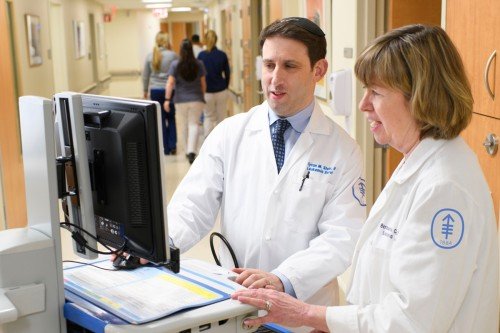
Eytan Stein at a computer with nurse practitioner Bernadette Cuello
Program for Drug Development in Leukemia
The Program for Drug Development in Leukemia offers patients the most advanced treatments available for acute leukemia, myeloproliferative neoplasms, myelodysplastic syndromes, and chronic myeloid leukemia through participation in phase 1 clinical trials.
Learn more

Over the past several years, there has been an explosion in our understanding of the pathogenesis of both acute and chronic leukemia, the number of novel agents with unique mechanisms of action, and other new strategies, including immunologic approaches. Researchers at Memorial Sloan Kettering continue to pursue these and other treatment approaches in our clinical trials. 

Relying in part on the information that is emerging about the genetic basis of leukemia, investigators are pursuing approaches that can kill tumor cells directly, inhibit the body’s production of substances that promote their growth, or enhance the immune response against leukemic cells. 

Here you can find a continually updated listing of Memorial Sloan Kettering’s current clinical trials for adults with leukemia. Our experts can help determine which clinical trial is right for you, including some of our newly opened clinical trials:

For clinical trials for children with leukemia, please visit Pediatric Clinical Trials.

You can also visit our Blood & Marrow Stem Cell Transplantation Clinical Trials.

and/or
12 Clinical Trials found
In this study, researchers want to find the best dose of ABBV-319 to use in people with B-cell cancers. The people in this study have B-cell cancers that keep growing even after treatment. Examples of B-cell cancers treated in this study include:
AZD5492 is called a T cell-engaging antibody. AZD5492 helps the immune system target and eliminate cancer cells.
Researchers are assessing JCAR017 in people with chronic lymphocytic leukemia (CLL) or small lymphocytic lymphoma (SLL). The people in this study have CLL or SLL that came back or keeps growing after treatment.
Researchers are assessing treatment with BGB-16673 in combination with other anti-cancer medications in people with B-cell cancers. These cancers include:
When people have Richter's transformation, their chronic lymphocytic leukemia (CLL)/small lymphocytic lymphoma (SLL) changes into a more aggressive disease. Researchers are assessing a new drug combination for people with Richter's transformation that came back or keeps growing after treatment.
Researchers want to see how well the combination of obinutuzumab, sonrotoclax, and zanubrutinib works against leukemia and lymphoma. The people in this study have chronic lymphocytic leukemia (CLL) or small lymphocytic lymphoma (SLL) that has not been treated.
In this study, researchers are seeking to find the highest dose of the investigational drug BGB-16673 that can be given safely in people with lymphoma and other types of B cell cancers that have come back or continued to grow despite prior treatment. BGB-16673 degrades a protein called BTK, which helps B cells live and grow. By degrading BTK, BGB-16673 may stop or slow the growth and activity of B cells, which could lead to improvement in the symptoms associated with B cell cancers. BGB-16673 is taken orally (by mouth).
The purpose of this study is to assess the safety and effectiveness of combination therapy with zanubrutinib, obinutuzumab, and venetoclax in patients newly diagnosed with chronic lymphocytic leukemia (CLL) or small lymphocytic leukemia (SLL).