Read about the latest MSK research to make CAR T therapy effective against solid tumors.
Memorial Sloan Kettering Cancer Center (MSK) today announced the following awards and appointments.
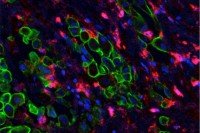
Learn how researchers engineered CAR T cells to work better by using a mutation in a gene called c-KIT that drives cancer cell growth.
In the Clinic
Results from a clinical trial indicate that an experimental CAR therapy for mesothelioma is safe.
Researchers identify a biomarker that could predict which lung cancer patients will respond to chemotherapy.
Researchers at MSK pioneered many discoveries in 2023. Read about some of the most important findings.
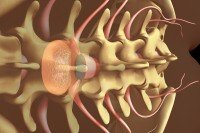
Clinical Update
The routine use of epidural analgesia for patients with non-small cell lung cancer who undergo a minimally invasive lobectomy is not warranted.
— Researchers from Memorial Sloan Kettering Cancer Center (MSK) have shown early promising results in using a chimeric antigen receptor (CAR) T cell therapy that targets the protein mesothelin, which is expressed on the surface of cancer cells in patients with diseases of the chest cavity — namely malignant pleural mesothelioma but also metastatic lung and breast cancer. The results from a phase I clinical trial were presented as part of the press program at the American Association for Cancer Research (AACR) Annual Meeting 2019. The findings showed tumor reduction in patients who participated in the study and no evidence of toxicity.
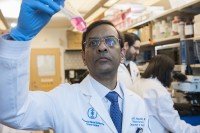
The preliminary results of our ongoing trial investigating CAR T cell therapy to treat patients with malignant pleural disease, including mesothelioma, show “encouraging clinical outcomes”
In the Clinic
Learn why surgery is still a good option for older patients with early-stage lung cancer.
Snapshot
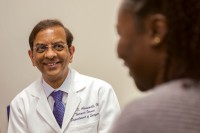
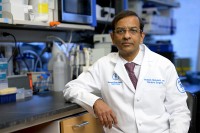
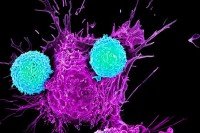
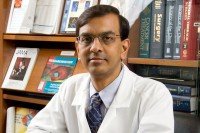
MSK physician-scientist Prasad Adusumilli is focused on developing more-effective immunotherapy approaches for treating tumors in the chest.
The effects of adoptive T cell therapy on mesothelioma and metastatic lung and breast cancers are the focus of a new Memorial Sloan Kettering Cancer Center trial, which, compared to some existing trials of therapy, offers some important differences for patients.
Combining checkpoint blockade with engineered T cells may lead to longer-lasting results in patients with breast cancer, lung cancer, and other solid tumors.
A study in mouse models suggests how modified T cells may be used to treat tumors in the area just outside the lungs.
New research from MSK offers new proof-of-concept compounds against acute myeloid leukemia; reports results from a phase 1 clinical trial appraising two drugs against low- grade glioma; examines MSK’s first-in-the-nation program integrating herbal medicine into oncology care; and identifies how high-grade histologic patterns in lymph node metastases could better predict lung cancer outcomes.