Soft Tissue Sarcoma Clinical Trials and Research

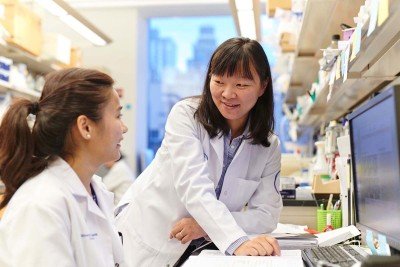
Sarcoma expert Ping Chi meets with research technician Makhzuna Khudoynazarova
Physician-scientist Ping Chi develops clinical trials to personalize treatment for people with sarcoma.

Memorial Sloan Kettering doctors are constantly working to improve treatment for people with soft tissue sarcoma through clinical trials. Participating in a clinical trial may give you access to treatments that are not widely available elsewhere. These studies may offer additional options if the cancer has returned after standard treatment.

Our experts can help determine which clinical trial is right for you. Browse our listing of clinical trials that are currently enrolling new patients.

and/or
19 Clinical Trials found
Mirdametinib blocks proteins called MEK1 and MEK2, which play an important role in cancer cell growth and survival. By blocking MEK1 and MEK2, mirdametinib may slow or stop the growth of your cancer.
Pembrolizumab takes the brakes off the immune system so immune cells can find and hopefully attack cancer cells. It is given intravenously (by vein).
Researchers want to see how well tebentafusp works in people with clear cell sarcoma that has spread. This cancer grows deeply into soft tissues of the arms and legs. The people in this study have clear cell sarcoma that is inoperable (cannot be surgically removed) or has spread.
In this study, researchers want to learn if tigilanol tiglate is safe and works well against advanced soft tissue sarcoma. When injected into a tumor, tigilanol tiglate stops the blood supply to the cancer, which starves the tumor of nutrients. It may also make the immune system target and kill cancer cells.
Researchers are comparing treatment with doxorubicin chemotherapy and pembrolizumab immunotherapy to doxorubicin alone for advanced sarcoma. The people in this study have undifferentiated pleomorphic sarcoma (UPS) or a related poorly differentiated sarcoma. Their cancers have metastasized (spread) or are inoperable (cannot be taken out with surgery).
The purpose of this study is to find the highest dose of the investigational drug codrituzumab that can be given safely in children and young adults with solid tumors that came back or continued to grow despite treatment. Codrituzumab works by targeting a protein called GPC3, which can drive the growth of some forms of cancer that affect children and young adults. It is given intravenously (by vein).
The purpose of this study is to assess the safety and effectiveness of giving the investigational immunotherapy drug INCMGA00012 in combination with gemcitabine and docetaxel in patients with inoperable or metastatic soft tissue sarcoma. Gemcitabine and docetaxel are standard treatments for this disease; researchers believe that adding INCMGA00012 may make treatment more effective.
This study is assessing the safety and effectiveness of ASTX727 in people who have malignant peripheral nerve sheath tumors (MPNST) with a mutation in a gene complex called PRC2 (EED or SUZ12). ASTX727 is a combination of two drugs (cedazuridine and decitabine) that have been designed to target cancer cells with a PRC2 complex genetic mutation and disrupt the cells' ability to survive and grow.
Isolated limb infusion (ILI) is a way to give anticancer drugs directly into an arm or leg to treat a sarcoma. However, despite this treatment, sometimes the cancer still spreads to other parts of the body. In this study, researchers want to see if adding the immunotherapy drug pembrolizumab to ILI treatment with the chemotherapy drugs melphalan and dactinomycin can help prevent the spread of cancer and increase the effectiveness of the ILI treatment in people with advanced sarcoma.