Leukemia Clinical Trials & Research

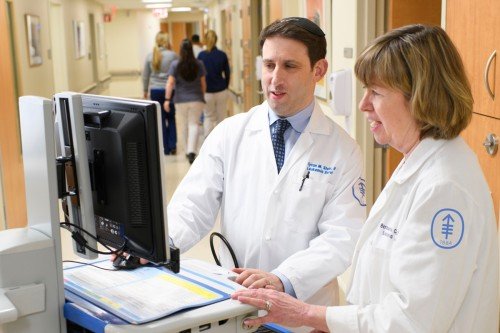
Eytan Stein at a computer with nurse practitioner Bernadette Cuello
Program for Drug Development in Leukemia
The Program for Drug Development in Leukemia offers patients the most advanced treatments available for acute leukemia, myeloproliferative neoplasms, myelodysplastic syndromes, and chronic myeloid leukemia through participation in phase 1 clinical trials.
Learn more

Over the past several years, there has been an explosion in our understanding of the pathogenesis of both acute and chronic leukemia, the number of novel agents with unique mechanisms of action, and other new strategies, including immunologic approaches. Researchers at Memorial Sloan Kettering continue to pursue these and other treatment approaches in our clinical trials. 

Relying in part on the information that is emerging about the genetic basis of leukemia, investigators are pursuing approaches that can kill tumor cells directly, inhibit the body’s production of substances that promote their growth, or enhance the immune response against leukemic cells. 

Here you can find a continually updated listing of Memorial Sloan Kettering’s current clinical trials for adults with leukemia. Our experts can help determine which clinical trial is right for you, including some of our newly opened clinical trials:

For clinical trials for children with leukemia, please visit Pediatric Clinical Trials.

You can also visit our Blood & Marrow Stem Cell Transplantation Clinical Trials.

and/or
68 Clinical Trials found
Researchers want to find the best dose of JNJ-88549968 to use in people with myeloproliferative neoplasms. Examples of these cancers include myelofibrosis and essential thrombocythemia. In addition, their cancers have a change (mutation) in the CALR gene.
Researchers are doing this study is to find the highest dose of a new cell therapy for people with leukemia. The people in this study have acute myelogenous leukemia (AML) that keeps growing even after treatment. They will get the new treatment with atezolizumab, an immune-boosting therapy.
In this study, researchers want to find the best dose of REM-422 to treat leukemia or myelodysplastic syndrome (MDS). The people in this study have acute myeloid leukemia (AML) or higher-risk MDS that keeps growing even with treatment. Higher-risk means the disease has a high chance of coming back or not responding to therapy.
Researchers are seeking the best dose of revumenib (SNDX-5613) to give with chemotherapy in people with acute myeloid leukemia (AML). The people in this study have AML that has not yet been treated. In addition, their cancers have a mutation (change) in the KMT2Ar, NPM1c, or NUP98r gene.
Researchers are assessing two different doses of revumenib to give with azacitidine and venetoclax in young people with leukemia. This study includes children, teens, and young adults with acute myeloid leukemia (AML) or acute leukemia of ambiguous lineage (ALAL) that came back or keeps progressing after treatment.
In this study, researchers want to find the highest dose of the drug abemaciclib that can be given safely with ruxolitinib in people with myelofibrosis that has developed on its own (primary myelofibrosis) or as a complication of the blood diseases polycythemia vera or essential thrombocythemia. In people with myelofibrosis, the bone marrow is not able to make enough blood cells. The spleen is bigger than normal, making the stomach feel very full. Patients may also have fever and night sweats.
Researchers want to find the best dose of TERN-701 to use in people with chronic myeloid leukemia (CML). The people in this study have CML that came back after treatment or could not be treated with standard therapies.
Graft-versus-host disease (GVHD) is a serious condition that can happen after a stem cell transplant from a donor. The donated cells see the healthy tissues in the recipient's body as foreign and attack them. TRX103 is a new drug designed to reduce the risk of GVHD.
Researchers want to find the best doses of ziftomenib to use with other drugs to treat leukemia. The people in this study have acute myeloid leukemia (AML) that keeps growing even with treatment. In addition, they have AML with changes in the NPM1, KMT2A, or FLT3 genes.
Researchers are doing this study to find the best dose of ziftomenib to give with standard chemotherapy in children and young adults with acute leukemia. The people in this study have acute leukemia that keeps growing or came back after treatment. In addition, their cancers have a mutation (change) in the KMT2A, NUP98, or NPM1 genes.