Leukemia Clinical Trials & Research

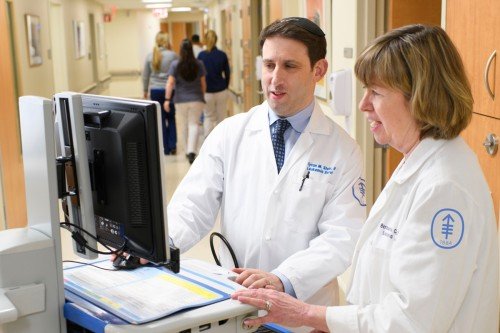
Eytan Stein at a computer with nurse practitioner Bernadette Cuello
Program for Drug Development in Leukemia
The Program for Drug Development in Leukemia offers patients the most advanced treatments available for acute leukemia, myeloproliferative neoplasms, myelodysplastic syndromes, and chronic myeloid leukemia through participation in phase 1 clinical trials.
Learn more

Over the past several years, there has been an explosion in our understanding of the pathogenesis of both acute and chronic leukemia, the number of novel agents with unique mechanisms of action, and other new strategies, including immunologic approaches. Researchers at Memorial Sloan Kettering continue to pursue these and other treatment approaches in our clinical trials. 

Relying in part on the information that is emerging about the genetic basis of leukemia, investigators are pursuing approaches that can kill tumor cells directly, inhibit the body’s production of substances that promote their growth, or enhance the immune response against leukemic cells. 

Here you can find a continually updated listing of Memorial Sloan Kettering’s current clinical trials for adults with leukemia. Our experts can help determine which clinical trial is right for you, including some of our newly opened clinical trials:

For clinical trials for children with leukemia, please visit Pediatric Clinical Trials.

You can also visit our Blood & Marrow Stem Cell Transplantation Clinical Trials.

and/or
70 Clinical Trials found
To learn more about the purpose of this study and to find out who can join, please click here to visit ClinicalTrials.gov for a full clinical trial description.
Cancer and its treatment can cause problems with attention, memory, and learning. These cognitive difficulties may affect your daily activities and worsen your quality of life.
To learn more about the purpose of this study and to find out who can join, please click here to visit ClinicalTrials.gov for a full clinical trial description. 
To learn more about the purpose of this study and to find out who can join, please click here to visit ClinicalTrials.gov for a full clinical trial description.
In this study, researchers are assessing a new way to determine the best dosing of fludarabine. The people in this study are children and young adults getting CAR T-cell therapy for B-cell acute lymphoblastic leukemia (B-ALL). Their cancer has come back or keeps growing despite treatment. They will be getting a CAR T-cell therapy called tisagenlecleucel (Kymriah).
This study aims to obtain a better understanding of the genetic causes of Hodgkin's disease (a kind of lymphoma) and non-Hodgkin's lymphoma, as well as multiple myeloma, leukemia, and related diseases. Together these diseases are referred to as "lymphoproliferative disorders."
Umbilical card blood is rich in healthy, blood-forming cells (stem cells) that are very good at fighting blood cancers. Cord blood transplants (CBT) are a standard treatment for adults with blood cancers who lack a genetically matched stem cell donor. Cord blood is donated by a baby's mother at birth. CBT uses stem cells from cord blood collections to replace cells that have been destroyed by disease or anti-cancer treatment.
Imatinib is a standard long-term therapy for chronic myeloid leukemia (CML). Some people are able to stop taking imatinib after their CML is in remission, but sometimes it comes back and retreatment is needed. In this study, researchers want to see if adding the drug asciminib to imatinib therapy prior to a second attempt at stopping treatment will lead to prolonged treatment-free remission (no evidence of cancer after stopping therapy).