Leukemia Clinical Trials & Research

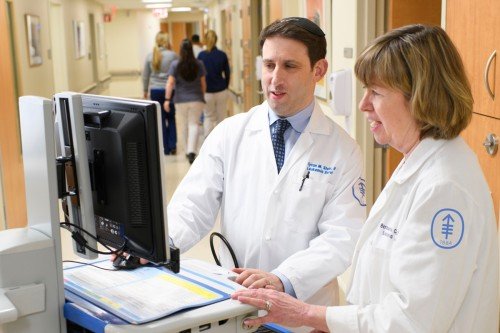
Eytan Stein at a computer with nurse practitioner Bernadette Cuello
Program for Drug Development in Leukemia
The Program for Drug Development in Leukemia offers patients the most advanced treatments available for acute leukemia, myeloproliferative neoplasms, myelodysplastic syndromes, and chronic myeloid leukemia through participation in phase 1 clinical trials.
Learn more

Over the past several years, there has been an explosion in our understanding of the pathogenesis of both acute and chronic leukemia, the number of novel agents with unique mechanisms of action, and other new strategies, including immunologic approaches. Researchers at Memorial Sloan Kettering continue to pursue these and other treatment approaches in our clinical trials. 

Relying in part on the information that is emerging about the genetic basis of leukemia, investigators are pursuing approaches that can kill tumor cells directly, inhibit the body’s production of substances that promote their growth, or enhance the immune response against leukemic cells. 

Here you can find a continually updated listing of Memorial Sloan Kettering’s current clinical trials for adults with leukemia. Our experts can help determine which clinical trial is right for you, including some of our newly opened clinical trials:

For clinical trials for children with leukemia, please visit Pediatric Clinical Trials.

You can also visit our Blood & Marrow Stem Cell Transplantation Clinical Trials.

and/or
70 Clinical Trials found
Venetoclax blocks Bcl-2, a protein that helps cancer cells survive and resist the effects of anti-cancer treatments. By blocking Bcl-2, venetoclax may cause the death of cancer cells or make them more sensitive to other treatments. It is taken orally (by mouth).
Researchers are assessing blinatumomab with dasatinib or imatinib and standard chemotherapy to treat leukemia. The people in this study have Philadelphia chromosome positive (Ph+) or ABL-class Philadelphia chromosome-like (Ph-like) B-cell acute lymphoblastic leukemia (B-ALL).
After a stem cell transplant, some patients develop a condition called graft-versus-host disease (GVHD). This occurs when the donor's healthy immune cells see the recipient's normal cells as foreign and attack them.
The overall goal of this study is to see if adding inotuzumab ozogamicin to standard chemotherapy maintains or improves treatment effectiveness in young patients with high-risk B cell acute lymphoblastic leukemia (B-ALL). Inotuzumab ozogamicin contains an antibody (inotuzumab) linked to a type of chemotherapy (calicheamicin). Inotuzumab attaches to cancer cells in a targeted way and delivers calicheamicin to kill them.
Researchers want to see how well quizartinib works to treat acute myeloid leukemia (AML). The people in this study have AML that does not have a genetic change called FLT3-ITD. In addition, they have not yet had any treatment for AML.
Researchers in this study want to determine if combining the drug venetoclax with standard chemotherapy may be more effective than standard chemotherapy alone in children and adolescents with relapsed acute myeloid leukemia (AML). Venetoclax blocks Bcl-2, a protein that helps cancer cells to survive and resist the effects of cancer treatments. By blocking Bcl-2, venetoclax may kill cancer cells and/or make other treatments more effective.
The goal of this study is to find the best dose of lenalidomide that can be given together with the usual combination chemotherapy in adults with HTLV-associated T-cell leukemia-lymphoma. The usual chemotherapy consists of the drugs etoposide, prednisone, vincristine sulfate (Oncovin), cyclophosphamide, and doxorubicin hydrochloride (hydroxydaunorubicin hydrochloride) and is known as EPOCH. Lenalidomide may help shrink or slow the growth of adult T-cell leukemia-lymphoma.
In this study, researchers are seeking to find the highest dose of the investigational drug BGB-16673 that can be given safely in people with lymphoma and other types of B cell cancers that have come back or continued to grow despite prior treatment. BGB-16673 degrades a protein called BTK, which helps B cells live and grow. By degrading BTK, BGB-16673 may stop or slow the growth and activity of B cells, which could lead to improvement in the symptoms associated with B cell cancers. BGB-16673 is taken orally (by mouth).