Leukemia Clinical Trials & Research

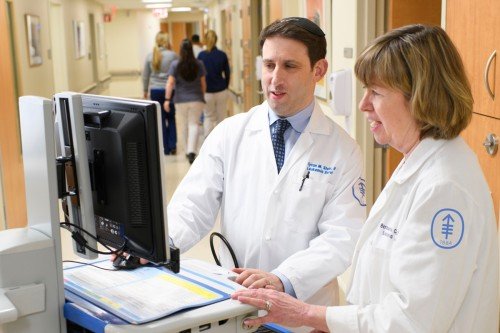
Eytan Stein at a computer with nurse practitioner Bernadette Cuello
Program for Drug Development in Leukemia
The Program for Drug Development in Leukemia offers patients the most advanced treatments available for acute leukemia, myeloproliferative neoplasms, myelodysplastic syndromes, and chronic myeloid leukemia through participation in phase 1 clinical trials.
Learn more

Over the past several years, there has been an explosion in our understanding of the pathogenesis of both acute and chronic leukemia, the number of novel agents with unique mechanisms of action, and other new strategies, including immunologic approaches. Researchers at Memorial Sloan Kettering continue to pursue these and other treatment approaches in our clinical trials. 

Relying in part on the information that is emerging about the genetic basis of leukemia, investigators are pursuing approaches that can kill tumor cells directly, inhibit the body’s production of substances that promote their growth, or enhance the immune response against leukemic cells. 

Here you can find a continually updated listing of Memorial Sloan Kettering’s current clinical trials for adults with leukemia. Our experts can help determine which clinical trial is right for you, including some of our newly opened clinical trials:

For clinical trials for children with leukemia, please visit Pediatric Clinical Trials.

You can also visit our Blood & Marrow Stem Cell Transplantation Clinical Trials.

and/or
70 Clinical Trials found
The purpose of this study is to find the highest dose of the investigational treatment UCART22 that can be given safely in children and young adults with B-cell acute lymphoblastic leukemia (ALL) that has come back or continued to grow despite treatment. UCART22 is a form of CAR T-cell therapy. It is made from white blood cells (T cells) from healthy donors. The T cells are genetically modified in a laboratory to identify and destroy cancer cells containing a protein called CD22.
Inotuzumab ozogamicin is a drug used to treat adults with B-cell acute lymphoblastic leukemia (ALL) that has come back or continued to grow despite prior therapy. In this study, researchers are evaluating its use in children and young adults with recurrent or persistent B-cell ALL.
The purpose of this study is to assess the safety and effectiveness of combination therapy with zanubrutinib, obinutuzumab, and venetoclax in patients newly diagnosed with chronic lymphocytic leukemia (CLL) or small lymphocytic leukemia (SLL).
In this study, researchers are comparing early treatment with venetoclax and obinutuzumab versus delayed treatment with these two medications in patients with newly diagnosed high-risk chronic lymphocytic leukemia (CLL) or small lymphocytic lymphoma (SLL) who are not experiencing symptoms. Starting treatment with these drugs early (before patients have symptoms) may be more effective than delaying treatment until symptoms emerge.
Daunorubicin, cytarabine, and gemtuzumab ozogamicin are different chemotherapy drugs used to treat acute myeloid leukemia (AML). CPX-351 is made up of daunorubicin and cytarabine. It is created in a way that makes the drugs stay in the bone marrow longer and could be less likely to cause heart problems than traditional anthracycline drugs, a common class of chemotherapy drugs used in cancer care.
CAR T-cell therapies are a form of immunotherapy where some of a patient's T cells are removed, modified in the laboratory to recognize a protein on cancer cells, multiplied, and returned to the patient to provoke an immune attack against cancer. Sometimes the new T cells cause side effects related to the immune system's response to the treatment.
Researchers want to see if ASTX727 is practical and safe for people with high-risk clonal cytopenia of undetermined significance (CCUS). With CCUS, there is a mutation (change) in one or more of the genes that help blood cells develop. People with CCUS have low levels of certain kinds of blood cells. CCUS can lead to precancerous conditions such as myelodysplastic syndrome or blood cancers such as acute myeloid leukemia.
The transplantation of stem cells from umbilical cord blood is a treatment for some blood cancers and non-cancerous blood or metabolic disorders. Patients routinely receive high doses of chemotherapy and sometimes radiation before receiving the stem cells to help make room in the bone marrow for new blood stem cells to grow, prevent the body from rejecting the transplanted cells, and help kill any abnormal blood cells in the body. However, the combination of these treatments can have serious side effects.
To learn more about the purpose of this study and to find out who can join, please click here to visit ClinicalTrials.gov for a full clinical trial description.