Common Names
- Huang Qi Gui Zhi Wu Wu Tang
- Huangqi Guizhi Wuwu decoction
- Gui Zhi Wu Wu Tang
- Astragalus and Cinnamon Twig Five-Substance Decoction
- Gōgi Keishi Gobutsu Tō
- Hwanggi gyejiomul‑tang
- Hwanggi Gyeji Omul‑tang
For Patients & Caregivers
Tell your healthcare providers about any dietary supplements you’re taking, such as herbs, vitamins, minerals, and natural or home remedies. This will help them manage your care and keep you safe.
Huang Qi Wu Wu Tang (HWT) is a traditional Chinese medicine (TCM) formula. It’s made up of five different herbs.
HWT is used to treat:
- Neuropathy (nerve damage that can cause pain, tingling, or numbness) related to diabetes or due to cancer treatments
Talk with your healthcare provider before taking herbal formulas. They can interact with some medications and affect how they work. For more information, read the “What else do I need to know?” section below.
Side effects of HWT may include:
- Dry mouth
- Constipation (difficult or infrequent bowel movements)
- Bitter sensation in the mouth
For Healthcare Professionals
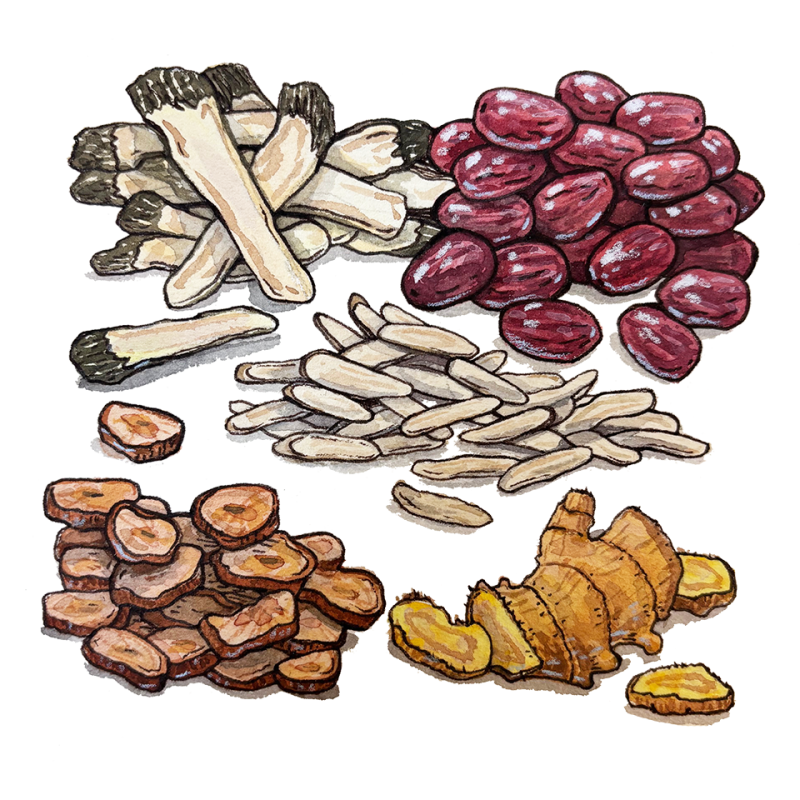
Huang Qi Wu Wu Tang (HWT) is a traditional Chinese medicine (TCM) formula consisting of five different herbs: Huang Qi (Astragali Radix), Gui Zhi (Cinnamomi Ramulus), Shao Yao (Radix Paeoniae Alba), Sheng Jiang (Rhizoma Zingiberis Recens), and Da Zao (Fructus Jujubae). Documented in the classic text Jin Gui Yao Lue (Essential Prescriptions of the Golden Chamber), HWT has been historically used to treat numbness and sensory loss.
Limited data suggest benefits of HWT, used alone or combined with conventional agents, in controlling symptoms of diabetic neuropathy including pain, numbness, tingling and nerve conduction (1) (2) (3) (4) (5). Modified HWT formulations were also found useful in managing symptoms as well as improving sleep and quality of life (6) (7).
In oncology settings, HWT was shown to reduce the incidence and duration of acute oxaliplatin-related neurotoxicity (8) (9) (10). Improvements were also reported with use of topical HWT limb-immersion packs in patients with paclitaxel-related sensory and motor neuropathy (11).
Overall, available findings suggest potential benefits of HWT for diabetic and chemotherapy-induced peripheral neuropathy. However, the current evidence base is limited by small sample sizes and heterogeneity. Larger, high-quality trials are needed to confirm efficacy, define optimal formulations and routes of administration, and determine long-term safety.
- Diabetic neuropathy
- Chemotherapy‑induced peripheral neuropathy
HWT’s therapeutic effects are attributed to its antioxidant, anti-inflammatory, neuroprotective, analgesic, and myelin-regenerative properties.
Preclinical studies indicate that HWT reduces oxidative stress via Nrf2 and Bcl2 pathways (12). In oxaliplatin-induced neuropathic pain models, this formula was found to mitigate hyperalgesia, protect dorsal root ganglion and peripheral nerve cells, and promote myelin regeneration, with these effects mediated via downregulation of pro-inflammatory cytokines (TNF‑α, IL‑1β, IL‑6), suppression of MAPK/NF‑κB signaling, upregulation of myelin proteins (MPZ, PMP22), and modulation of taurine, β-alanine, and neuroactive ligand-receptor pathways (13) (14). HWT also protected against paclitaxel-induced neuropathy by inhibiting TLR4/NF-κB inflammation and activating PI3K/Akt-Nrf2 signaling, while active components such as quercetin, kaempferol, and beta-sitosterol may also modulate AKT1, IL1B, and IL6 via PI3K/Akt and MAPK pathways (15) (16).
None known.
Dry mouth, constipation, and bitter sensation of mouth have been reported (6).
None known.