Leukemia Clinical Trials & Research

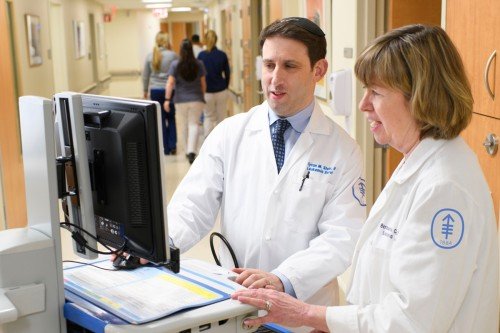
Eytan Stein at a computer with nurse practitioner Bernadette Cuello
Program for Drug Development in Leukemia
The Program for Drug Development in Leukemia offers patients the most advanced treatments available for acute leukemia, myeloproliferative neoplasms, myelodysplastic syndromes, and chronic myeloid leukemia through participation in phase 1 clinical trials.
Learn more

Over the past several years, there has been an explosion in our understanding of the pathogenesis of both acute and chronic leukemia, the number of novel agents with unique mechanisms of action, and other new strategies, including immunologic approaches. Researchers at Memorial Sloan Kettering continue to pursue these and other treatment approaches in our clinical trials. 

Relying in part on the information that is emerging about the genetic basis of leukemia, investigators are pursuing approaches that can kill tumor cells directly, inhibit the body’s production of substances that promote their growth, or enhance the immune response against leukemic cells. 

Here you can find a continually updated listing of Memorial Sloan Kettering’s current clinical trials for adults with leukemia. Our experts can help determine which clinical trial is right for you, including some of our newly opened clinical trials:

For clinical trials for children with leukemia, please visit Pediatric Clinical Trials.

You can also visit our Blood & Marrow Stem Cell Transplantation Clinical Trials.

and/or
68 Clinical Trials found
Acute lymphoblastic leukemia (ALL) in infants (babies under 1 year of age) can be challenging to treat. Researchers in this study are assessing the addition of 2 new drugs to standard chemotherapy for ALL in infants.
AZD5492 is called a T cell-engaging antibody. AZD5492 helps the immune system target and eliminate cancer cells.
Researchers are assessing JCAR017 in people with chronic lymphocytic leukemia (CLL) or small lymphocytic lymphoma (SLL). The people in this study have CLL or SLL that came back or keeps growing after treatment.
Researchers are assessing trametinib and azacitidine alone and with other drugs to treat leukemia in young people. The people in this study have newly diagnosed juvenile myelomonocytic leukemia (JMML).
To learn more about the purpose of this study and to find out who can join, please click here for Substudy 01A or here for Substudy 01C to visit ClinicalTrials.gov for a full clinical trial description.
Researchers want to find the best dose of eganelisib when used alone and with cytarabine to treat leukemia. The people in this study have acute myeloid leukemia (AML) or high-risk myelodysplastic syndrome (HR-MDS) that has come back or keeps growing after treatment.          
In this study, researchers want to find the best doses of 2 different drug combinations. This study is for people with acute myeloid leukemia (AML) that keeps growing even after treatment. You also must have changes (mutations or variants) in the FLT3 gene, and in either the IDH1 or IDH2 genes. The FLT3 gene can cause cancer cells to grow. The IDH1 and IDH2 genes cause low blood cell counts.
For people with newly diagnosed acute myeloid leukemia (AML), the more leukemia cells are destroyed, the better their long-term outcomes. In this study, researchers want to see adding venetoclax to standard chemotherapy (daunorubicin/cytarabine) or giving it with azacitidine works better than standard therapy for getting rid of the small amount of remaining leukemia cells. The people in this study include young adults with intermediate-risk AML.
In this study, researchers are assessing the drug asciminib for people who recently learned they have chronic myeloid leukemia (CML). They will take it twice a day. If after two years they do not respond well to asciminib, they may take the drug nilotinib with asciminib.
Some people treated for acute myeloid leukemia (AML) with induction (initial) chemotherapy are left with minimal residual disease (MRD). With MRD, there is a small number of leukemia cells from the bone marrow remaining in the body. MRD increases the chance that the cancer will come back after a bone marrow transplant from a donor.