このガイドは、MSKでの膵尾部切除術の準備のために役立てていただくものです。 また、回復に向けて何をすべきかについて学んでいただくためにもお役に立つでしょう。
手術までの数日間、このガイドを情報源としてご活用ください。 また、このガイドは手術当日にもご持参ください。 患者さんとケアチームは、患者さんの回復についてより深く理解するために、このガイドを活用します。
膵尾部切除術について
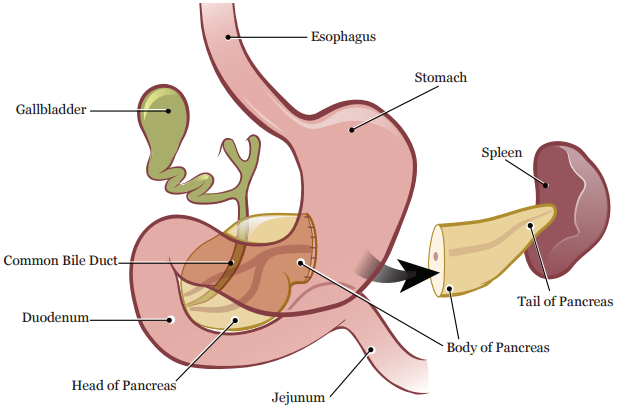
膵尾部切除術は、膵臓体部または尾部から腫瘍を取り除く手術です。 膵臓は腹部(お腹)の後ろ、胃の後ろ、小腸の上にあります(図1参照)。

膵臓と脾臓について
膵臓は、脂肪を含む食べたものの消化を助ける酵素を作ります。 また、血糖値を調整するホルモンであるインスリンとグルカゴンを作ります。 膵臓には頭部・体部・尾部の3つの部分があります。
手術中に膵臓の一部が摘出されるとはいえ、術後にはホルモン(インスリンとグルカゴン)や酵素を作るのに十分な膵臓が残っているのが普通です。
- 手術後、膵臓で消化酵素が十分に作られないと、下痢になることがあります。 その場合は、食事の際に酵素の錠剤を飲む必要があるかもしれません。
- 手術後、膵臓でインスリンが十分に作られないと、高血糖になることがあります。 これは珍しいことです。 手術後に高血糖になった場合は、医療チームがサポートしてくれます。
脾臓は膵臓の隣にあります。 脾臓は、白血球を作り、身体が感染症と闘うのを助けます。 また、血液をろ過し、血球を貯蔵し、古い血球を破壊します。 腫瘍が脾臓に血液を送る血管に浸潤している場合は、脾臓を摘出する必要があります。
手術中
膵切除術はさまざまな方法で行うことができます。 外科医が、どれがあなたに適しているか相談にのってくれるでしょう。 手術の種類にもよりますが、外科医は1カ所以上の切開を行います。
手術中、外科医は膵臓と脾臓を調べ、どの程度摘出するかを決定します。 残った膵臓の部分は、縫合糸(ステッチ)またはホチキスで閉じられます(図2参照)。
手術には2~4時間かかります。
膵尾部切除術前
このセクションでは、手術に向けた準備のために役立てていただくものです。 手術の日程が決まったら、これをお読みください。 手術の日が近づいたら、これをご参考にしてください。 準備のために何をすべきかについて、重要な情報が記載されています。
このセクションを読みながら、医療従事者に尋ねたい質問を書き留めておいてください。
手術の準備
患者さんとケアチームが協力して手術の準備を進めていきます。 患者さんの安全を守るため、これらのいずれかに該当する場合は、ご不明な点がある場合など、その旨をお伝えください。
服用されている薬やサプリメントによっては、手術前に特別な指示が必要な場合があります。 これらの指示に従わない場合、手術が遅れたり、中止になったりする可能性があります。
-
私は処方箋薬を服用しています。 処方薬とは、医療機関の処方箋がなければ手に入らない薬のことです。 例としては、以下のようなものがあります。
- 服用する薬。
- 注射で服用する薬。
- 吸い込む(吸入)薬。
- パッチやクリームで皮膚に貼るあるいは塗る薬。
- 私はパッチやクリームなどの市販薬を使用しています。 市販薬とは、処方箋なしで買える薬のことです。
- 私はハーブ、ビタミン、ミネラル、自然療法や家庭療法などの栄養補助食品を摂っています。
- 私はペースメーカー、自動植込み型除細動器(AICD)、その他の心臓装置を使用しています。
- 私は過去に麻酔による問題が発生したことがあります。 麻酔は、手術や施術の際に眠らせる薬です。
- 私はラテックスを含む特定の薬や素材にアレルギーがあります。
- 私は輸血を希望しません。
- 私はマリファナなどの娯楽用薬物を使用しています。
GLP-1ダイエット内服薬
GLP-1薬を服用している場合は、医療従事者にその旨を伝えることが重要です。 手術や処置の前に、食事や飲み物に関する特別な指示に従っていただく必要があるからです。 これらの指示に従うことは非常に重要です。 これらに従わない場合、手術や処置が遅れるか、または中止になる場合があります。
- 手術や処置の前日には、透明な液体食を摂取してください。 固形物は一切食べないでください。 詳細についてはClear Liquid Dietをお読みください。
- 到着予定時刻の8時間前から何も飲まないでください。 この時間以降は、透明な液体を含め、何も食べたり飲んだりしないでください。 お薬は、少量の水と一緒にお飲みください。
詳細については、Eating and Drinking Before Your Surgery or Procedure When Taking GLP-1 Medicinesをお読みください。
GLP-1薬の例をいくつか挙げます。 他にもありますので、ケアチームが患者さまが服用している薬をすべて把握していることを確認してください。 場合によっては、糖尿病やその他の病気の管理を助けるために処方されることがあります。 一方で、減量を目的として処方されることもあります。
|
|
飲酒について
ご自身の飲酒量について医療提供者と話し合うことは重要です。 そうすることで、当院が患者さんのケアを計画するのに役立ちます。
アルコールを定期的に飲まれる方は、手術中や手術後に問題が発生するリスクがあります。 このような問題には、出血、感染症、心臓疾患、入院期間の長期化などがあります。
アルコールを定期的に飲んでいて、急に止めると、発作やせん妄を起こしたり、死に至ったりすることがあります。 このような問題のリスクがあることが分かっていれば、予防のための薬を処方することもできます。
問題を防ぐために、手術前にできることを以下にご紹介します。
- 飲酒量について医療提供者に正直に話しましょう。
-
手術の日程が決まったら、飲酒を控えましょう。 次に当てはまるものがある場合は、すぐに医療従事者に伝えてください。
- 頭痛がする。
- 吐き気を感じる(吐きそうになる)。
- いつもより不安(緊張や心配)を感じる。
- 眠れない。
これらはアルコール離脱の初期症状で、治療が可能です。
- どうしても飲酒を止められない場合は、そのように医療従事者に伝えてください。
- 飲酒と手術について、担当の医療従事者に質問してください。 患者さんの医療情報は、これまでと同様、すべて非公開です。
喫煙について
タバコを吸ったり、電子タバコを使用したりすると、手術を受けるときに呼吸困難になる可能性があります。 ベイプや電子タバコは電子喫煙装置の一例です。 手術前の数日間だけでも禁煙することで、手術中や術後の呼吸器系のトラブルを防ぐことができます。
タバコを吸われる方には、医療提供者から当院のタバコ治療プログラムが紹介されます。 また、212-610-0507に電話してもお問い合わせすることができます。
睡眠時無呼吸症候群について
睡眠時無呼吸症候群は一般的な呼吸の問題です。 睡眠時無呼吸症候群になると、睡眠中に短時間呼吸が止まります。 最も一般的なものは閉塞性睡眠時無呼吸症候群(OSA)です。 OSAでは、睡眠中に気道が完全にふさがります。
OSAは、手術中および術後に深刻な問題を引き起こす可能性があります。 睡眠時無呼吸症候群をお持ちの方、またはその可能性がある方は、その旨をお知らせください。 CPAP装置などの呼吸補助機器をご使用の場合は、手術当日にご持参ください。
MSK MyChart の利用方法
MSK MyChart(mskmychart.mskcc.org)は、MSKの患者さん向けポータルサイトです。 このアプリを使えば、ケアチームとのメッセージの送受信、検査結果の確認、診察の日時確認などが行えます。 また、介護者の方に独自のアカウントを作成していただくことで、患者さんの介護に関する情報を確認できるようにすることもできます。
MSK MyChartのアカウントをお持ちでない方は、mskmychart.mskcc.orgからご登録いただけます。 また、ケアチームのメンバーに招待状を送ってもらうこともできます。
アカウントに関してご不明な点がございましたら、MSK MyChart ヘルプデスク(電話番号:646-227-2593)までお電話ください。 対応時間は、月曜日から金曜日までの午前9時から午後5時まで(米国東部時間)です。
術後早期回復プログラム(ERAS)について
ERASは、手術後の回復を早めるためのプログラムです。 ERASプログラムの一環として、手術の前後に特定の事項を確実に実行することが重要です。
手術の前に、以下の点を確認し、準備を整えておきましょう。
- このガイドをお読みください。 そうすることにより、手術前、手術中、手術後にどのようなことが起こるのか、あらかじめ把握することができます。 質問がある場合は、それらを書き留めておきましょう。 次回の受診時に担当の医療従事者に尋ねるか、当院にお電話ください。
- 運動をし、健康的な食事を心がけましょう。 そうすることにより、手術に向けて体を整えることができます。
手術後は、以下の点に留意することで、より早く回復します。
- 回復の道のりを読みましょう。 これは、医療従事者から渡される教育リソースです。 患者さんの回復に向けた目標が記載されています。 そうすることにより、毎日何をすべきか、また何が起こるかを把握するのに役立ちます。
- できるだけ早く動き始めましょう。 ベッドから早く起きて歩き始めれば始めるほど、普段の活動に早く戻ることができます。
手術後30日以内
手術前検査(PST)
手術の前にPSTの予約をしていただきます。 予約は、対面での診察またはオンライン診察のいずれかとなります。 担当の外科医のクリニックから、診察の日時と場所が記載されたリマインダーが届きます。 駐車場情報とMSKの全拠点への行き方については、www.msk.org/parkingをご覧ください。
予約日当日は、食事をしたりいつもの薬を服用したりすることができます。
予約の際にこれらのものを持参すると便利です:
- 処方薬、市販薬、パッチ、クリームなど、服用しているすべての薬のリスト。
- 過去1年間にMSK以外で行われた医療検査があれば、その結果。 例えば、心臓負荷検査、心エコー図検査、頸動脈ドップラー検査などの結果。
- 医療従事者の名前と電話番号。
PSTの予約の際には、高度実践医療従事者(APP)と面談します。 彼らはMSKの麻酔科のスタッフと緊密に連携しています。 また、手術や処置の際に麻酔を投与するための特別な訓練を受けた医師たちです。
担当のAPPは患者さんの病歴と手術歴を確認します。 患者さんのケアを計画するために、次のような検査を受けるかもしれません:
- 心電図(EKG)で心臓のリズムをチェックする。
- 胸部レントゲン検査。
- 血液検査。
APPは患者さんに他の医療機関の受診を勧めるかもしれません。 さらに、次のようなことも行います:
- 手術当日の朝、どの薬を服用すべきかについて説明する
- 手術前の飲食について説明する
検査前の注意事項(服薬、食事、飲水に関する指示など)は、MSK MyChartアカウントでご確認いただけます:
- MSK MyChartアカウントにログインしてください。 ホームページで、「Visits(受診)」を選択してください。
- 「Past(過去)」または「Past visits(過去の受診)」のセクションに移動し、PSTの予約を見つけてください。 「View After Visit Summary(受診後の概要を表示)」を選択してください。
- 「After Visit Summary(受診後の要約)」に記載されている「Preprocedure Instructions(処置前の注意事項)」の項目をお読みください。
これらの処置前の指示に従うことは非常に重要です。 これらの指示に従わない場合、手術が延期または中止となる場合があります。
担当の介護者を特定する
介護者は、患者さんの介護において重要な役割を担っています。 手術の前に、患者さんと介護者の方は、医療従事者から手術に関する説明を受けます。 手術後、退院の際には、介護者が自宅まで送ります。 また、自宅でのセルフケアについてもサポートしてくれます。
介護者の方へ
がん治療を受けている患者さんの介護には、多くの責任が伴います。 当院では、それらを管理できるよう、リソースやサポートを提供しています。 詳細については、A Guide for Caregiversをご覧ください。
医療委任状の記入
医療委任状をまだ記入していない方は、今すぐご記入されることをお勧めします。 すでに記入されている場合や、その他の事前指示書をお持ちの場合は、次回の診察時にご持参ください。
医療委任状は法的文書です。 もしご自分の意思を伝えることができない場合は、誰がご自身の代弁者になるのかが書かれています。 この人物を医療代理人と言います。
- 医療委任状やその他の事前指示書については、Advance Care Planning for People With Cancer and Their Loved Onesをお読みください。
- 医療代理人についての詳細は、How To Be a Health Care Agentをお読みください。
医療委任状の記入についてご質問等がある場合は、ケアチームのメンバーにご相談ください。
呼吸や咳の練習をしましょう
手術の前に、深呼吸や咳をする練習をしておきましょう。 医療従事者から、肺活量を増やすためのインセンティブ・スパイロメーターが渡されます。 詳細については、How To Use Your Incentive Spirometerをお読みください。
体を動かす
体を動かすことは、手術のために体をベストな状態にするのに役立ちます。 体を動かすことで回復も早まり、より楽になるでしょう。
毎日、体を動かすように心がけると良いでしょう。 ウォーキング、水泳、サイクリングなど、心臓の鼓動が速くなるような運動なら何でも構いません。 外が寒いときは、家の中で階段を使ったり、モールやショッピングセンターに行くのもいいでしょう。
健康的な食生活を心がける
手術前には、栄養バランスのとれた健康的な食事を心がけてください。 食事療法で助けが必要な場合は、かかりつけの医療機関に臨床栄養士栄養士との面談についてご相談ください。
Hibiclens®などの、4%クロルヘキシジングルコン酸塩(CHG)溶液の消毒用皮膚洗浄剤をご購入ください。
4% CHG溶液は、使用後24時間にわたり細菌を殺菌する皮膚洗浄剤です。 手術前にこれを使ってシャワーを浴びておくと、術後の感染リスクを抑えることができます。 4%CHG溶液の消毒用皮膚洗浄剤は、お近くの薬局で処方箋なしで購入できます。
手術の7日前
アスピリンの服用については、医療機関の指示に従う
アスピリンは出血を引き起こす可能性があります。 アスピリンやアスピリンを含む薬を服用している場合は、手術の7日前から用量を変更するか、服用を中止する必要がある場合があります。 医療提供者の指示に従いましょう。 アスピリンの服用を止めるように言われない限り、止めないでください。
詳細については、How To Check if a Medicine or Supplement Has Aspirin, Other NSAIDs, Vitamin E, or Fish Oilをお読みください。
ビタミンE、マルチビタミン、ハーブ療法、その他の栄養補助食品の摂取を中止する
ビタミンE、マルチビタミン、ハーブ療法、その他の栄養補助食品は出血の原因になることがあります。 手術の7日前から服用を中止してください。 医療従事者から他の指示があった場合は、それに従ってください。
詳細については、Herbal Remedies and Cancer Treatmentをお読みください。
手術の2日前
非ステロイド性抗炎症薬(NSAID)の服用を中止する
イブプロフェン(アドビル®、モトリン®)やナプロキセン(アリーブ®)などのNSAIDsは、出血を引き起こす可能性があります。 手術の2日前から服用を中止してください。 医療従事者から他の指示があった場合は、それに従ってください。
詳細については、How To Check if a Medicine or Supplement Has Aspirin, Other NSAIDs, Vitamin E, or Fish Oilをお読みください。
手術の1日前
手術の時間をご確認ください
手術前日の午後2時以降に、担当スタッフがお電話を差し上げます。 手術が月曜日に予定されている場合は、その前の金曜日にお電話を差し上げます。 午後7時までに連絡がない場合は、212-639-5014までお電話ください。
担当者が、手術のために何時に来院すればよいかを教えてくれます。 また、どこに行けばいいのかも教えてくれます。
場所は以下の通りです。
6階のPresurgical Center(PSC)
1275 York Avenue(East 67th StreetとEast 68th Streetの間)
New York, NY 10065
「B」エレベーターで6階へ
駐車場情報とMSKの全拠点への行き方については、www.msk.org/parkingをご覧ください。
4%クロルヘキシジングルコン酸塩(CHG)溶液入りの皮膚消毒剤(Hibiclens®など)を使ってシャワーを浴びます。
手術前の夜、寝る前に4%クロルヘキシジングルコン酸塩(CHG)溶液入りの皮膚消毒剤を使ってシャワーを浴びます。
- Wash your hair with your usual shampoo and conditioner. Rinse your head well.
- Wash your face and genital (groin) area with your usual soap. Rinse your body well with warm water.
- Open the 4% CHG solution bottle. Pour some into your hand or a clean washcloth.
- Move away from the shower stream. Rub the 4% CHG solution gently over your body from your neck to your feet. Do not put it on your face or genital area.
- Move back into the shower stream to rinse off the 4% CHG solution. Use warm water.
- Dry yourself off with a clean towel.
Do not put on any lotion, cream, deodorant, makeup, powder, perfume, or cologne after your shower.
食事について
手術や処置前の深夜(午前0時)以降は何も食べないでください。 これには、固いキャンディーやガムも含まれます。
食べるのをやめるタイミングについては、医療提供者から別の指示があるかもしれません。 指示があった場合は、その指示に従いましょう。 人によっては、手術や処置の前にもっと長い時間絶食(食事をしないこと)する必要があります。
手術当日
飲み物について
深夜(午前0時)から到着時刻の2時間前までは、以下のリストにある水分のみを摂取することができます。 それ以外のものは食べたり飲んだりしないでください。 到着予定時刻の2時間前から何も飲まないでください。
- 水。
- 透明なアップルジュース、透明なグレープジュース、透明なクランベリージュース。
- GatoradeまたはPowerade。
-
ブラックコーヒーまたはストレートティー。 砂糖は加えても構いません。 他には何も加えないでください。
- 牛乳やクリーマーは一切加えないでください。 これには植物性ミルクやクリーマーも含まれます。
- フレーバーシロップは加えないでください。
糖尿病の方は、飲み物に含まれる砂糖の量にご注意ください。 砂糖不使用、低糖質、砂糖無添加の飲み物を取り入れると、血糖値をコントロールしやすくなります。
手術または処置の前に水分を補給しておくことは有効なので、のどが渇いたら飲んでください。 必要以上に飲まないでください。 手術や処置の間は点滴が行われます。
到着予定時刻の2時間前から何も飲まないでください。 これには水も含まれます。
禁酒のタイミングについては、医療提供者から別の指示があるかもしれません。 指示があった場合は、その指示に従いましょう。
指示通りに薬を服用する
手術当日の朝、どの薬を服用すべきかについては、担当の医療チームから説明があります。 その薬は、水を一口だけ飲んで服用してください。 普段服用している薬によっては、これだけで済む場合もあれば、その一部で済む場合、あるいは全く服用しない場合もあります。
4%クロルヘキシジングルコン酸塩(CHG)溶液入りの皮膚消毒剤(Hibiclens®など)を使ってシャワーを浴びます。
病院へ向かう前に、4%CHG溶液入りの皮膚消毒剤を使ってシャワーを浴びます。 前夜と同じように使ってください。
シャワーの後は、ローション、クリーム、デオドラント、化粧品、パウダー、香水、コロンなどはつけないでください。
留意事項
- 着心地がよく、ゆったりした衣服を着用しましょう。
- コンタクトをしている人は、代わりにメガネをかけてください。 手術中にコンタクトレンズを装用すると、目を傷つけることがあります。
- 金属製のものは身につけないでください。 ピアスを含むすべての宝飾品は外してください。 手術中に使用する器具が金属に触れると、やけどをすることがあります。
- 貴重品は自宅に置いてきてください。
- 月経(毎月の生理)がある場合は、タンポンではなく生理用ナプキンを使いましょう。 必要であれば、使い捨ての下着とパッドをお渡しします。
持参品
- 靴紐のスニーカー。 手術後は足が腫れることがあります。 靴紐のスニーカーは、この腫れでもフィットします。
- 睡眠時無呼吸症候群用の呼吸装置(CPAP装置などをお持ちの場合)。
- インセンティブ・スパイロメーター(お持ちの場合)。
- 医療委任状およびその他の事前指示書(記入されている場合)。
- 携帯電話と充電器。
- 新聞など、ちょっとした買い物に必要なお金だけ。
- 身の回り品を入れるケース(お持ちの場合)。 身の回り品の一例として、眼鏡、補聴器、入れ歯、補装具、かつら、宗教用品などがあります。
- 本ガイド。 手術後のケア方法を学ぶためにご利用いただきます。
病院に着いたら
病院に着いたら、Bエレベーターで6階に移動します。 PSC待合室の受付でチェックインしてください。
スタッフが、患者さんの名前と生年月日を述べるように、また、その正しいスペルについて尋ねます。 これは患者さんの安全のためです。 同じ名前や似た名前の患者さんが同じ日に手術を受けるかもしれないからです。
手術のために着替える時には、病院用のガウン、ローブ、滑りにくい靴下をお渡しします。
For caregivers, family, and friends
Read Information for Family and Friends for the Day of Surgery to help you know what to expect on the day of your loved one’s surgery.
看護師と面談する
手術の前に、看護師と面談を行います。 深夜0時(午前0時)以降に服用した薬があれば、その用量と服用時刻を伝えてください。 その際には、処方薬や市販薬、パッチ、クリームなどについても必ず伝えてください。
看護師は、通常、腕か手の静脈に静脈(IV)ラインを留置します。 看護師が点滴の針を刺さない場合は、麻酔科医が手術室で行います。
看護師が手術後の痛みを和らげる薬を処方することがあります。 その場合は、服用前に薬に関する情報を教えてくれます。
麻酔科医との面談
また、手術前には麻酔科医との面談を行います。 その詳細は次の通りです。
- 患者さんと一緒に病歴を確認します。
- 過去に麻酔で何か問題があったかどうかが尋ねられます。 これには、吐き気(吐きそうになる感じ)や痛みなどが含まれます。
- 手術中の快適さと安全性について、説明してくれます。
- どのような麻酔を受けるかについて、説明してくれます。
- 麻酔に関するご質問にお答えします。
主治医または麻酔科医は、硬膜外カテーテル(細くて柔軟なチューブ)を背骨(背中)に入れることについても相談することがあります。 硬膜外カテーテルは、手術後に痛み止めを投与するもう一つの方法です。
手術の準備
手術の時間になったら、眼鏡、補聴器、入れ歯、人工装具、かつら、および宗教上の装身具を外してください。
手術室に歩いて入っていただくか、スタッフがストレッチャーでご案内します。 手術室チームのメンバーが、手術ベッドに移乗するお手伝いをします。 両下腿にコンプレッションブーツを装着します。 コンプレッションブーツは、下腿の血流を助けるためにゆっくりと膨らんだり縮んだりします。
準備が整い、リラックスできたら、麻酔科医が点滴を通じて麻酔薬を投与し、患者さんは眠りにつきます。 また、手術中と手術後は、点滴を通じて水分を補給することになります。
手術中
患者さんが完全に眠りについた後、ケアチームが呼吸チューブを口から気道に挿入します。 呼吸に役立ちます。 また、膀胱に尿道(フォーリー)カテーテルを留置します。 手術中に尿(おしっこ)を排出するためです。
外科医は手術が終わると、切開した部分をホチキスか縫合糸で閉じます。 また、ステリストリップス(Steri-Strips™)(薄いサージカルテープ)を切開部に貼ることもあります。 切開した部分を包帯で覆います。
通常、ケアチームが、手術室にいる間に呼吸チューブを抜いてくれます。
膵尾部切除術後
このセクションでは、手術後の経過についてご説明します。 入院中も退院後も、手術後の回復を安全に進める方法について学びます。
このセクションを読みながら、医療従事者に尋ねたい質問を書き留めておいてください。
麻酔後回復室(PACU)にて
手術後、目が覚めたらPACUに移動しています。 看護師が体温、脈拍、血圧、酸素濃度を記録します。 鼻の下にチューブを入れて酸素を吸入するか、マスクで鼻と口を覆います。 両下腿にコンプレッションブーツを履いている場合もあります。
鎮痛剤
PACU(麻酔後ケアユニット)にいる間、硬膜外鎮痛薬または点滴による鎮痛薬が処方されます。
- 硬膜外鎮痛薬を使用する場合は、硬膜外カテーテルを通して硬膜外腔に注入します。 硬膜外腔とは、脊髄のすぐ外側にある背骨の空間のことです。
- 点滴で鎮痛薬を投与される場合は、点滴ラインから血液中に注入されます。
自己調節鎮痛法(PCA装置)と呼ばれるボタンで鎮痛薬をコントロールできるようになります。 詳しくはPatient-Controlled Analgesia (PCA)をお読みください。
チューブとドレイン
以下のようなチューブやドレインが1つ以上あります。 主治医または看護師が、どのようなことが予想されるかについてお伝えします。
- 尿道から膀胱に尿道(フォーリー)カテーテルを挿入します。 このチューブで膀胱から尿を排出することで、ケアチームは尿量を把握することができます。 尿道(フォーリー)カテーテルは通常、手術の1~2日後に抜去されます。
- 鼻から胃に経鼻胃管(NGチューブ)が入っていることがあります。 このチューブは、胃に自然に溜まる液体を排出します。 これによって、嘔吐(吐くこと)を抑えてくれます。 NGチューブがある場合、通常は手術後初日に抜去されます。
- 腹部から液体を排出するために、腹部に排液チューブが入っていることがあります。 この排液チューブがある場合、通常は手術後数日で抜去されますが、退院時にまだ残っていることもあります。 詳しくは「チューブとドレインのケア」のセクションをお読みください。
病室への移動
PACU(麻酔後ケアユニット)に数時間滞在する場合もあれば、経過観察のために一晩滞在する場合もあります。 医療チームが、何が期待されかについて教えてくれるでしょう。 PACU(麻酔後ケアユニット)滞在後、スタッフが病室までお連れします。
病室にて
手術後の入院期間は回復具合によって異なります。 膵尾部切除術の後、ほとんどの患者さんの入院期間は3~4日です。
病室では、入院中にお世話を受ける看護師の一人に会います。 看護師がベッドから椅子への移乗を手伝ってくれます。
ケアチームは、手術から回復するまでの間、患者さんご自身をケアする方法を教えてくれます。 ご自身でより早く回復するには:
- 回復の道のりを読む。 まだ回復のための道のりをお持ちでない方には、回復への道のりをお示しします。 これは、回復期に毎日何をすべきか、何を期待するかをについて学ぶのに役立ちます。
- できるだけ早く動き始める。 なるべく早くベッドから起き上がって歩けば、それだけ早く通常の活動に戻ることができます。
痛みの管理
手術後は多少の痛みがあります。 最初は、硬膜外カテーテルまたは点滴ラインから鎮痛薬を投与します。 自己調節鎮痛法(PCA装置)を導入して、鎮痛剤をコントロールできるようになります。 食事ができるようになったら、経口鎮痛剤(飲み込む鎮痛剤)をもらいます。
痛みについてよくお聞きし、必要に応じて薬をお出しします。 痛みが緩和されない場合は、医療従事者に伝えてください。 インセンティブ・スパイロメーターを使ったり、動き回ったりできるように、痛みをコントロールすることが大切です。 痛みをコントロールすることで、回復を早めることができます。
低侵襲手術を受けた場合、肩に痛みがあるかもしれません。 これは関連痛と呼ばれ、よくあることです。 これは、手術中にお腹に入れられたガスが原因です。 肩に痛みがある場合は、医療従事者に伝えてください。
退院前に痛み止めの処方箋がもらえます。 起こりうる副作用については、医療従事者にご相談ください。 いつから市販の鎮痛剤に切り替えるかを聞いておきましょう。
体を動かしたり歩いたりする
体を動かしたり歩いたりすることで、血栓や肺炎(肺の感染症)のリスクを抑えることができます。 また、おならが出たり、排便(うんち)ができるようになるのにも役立ちます。 必要に応じて、担当の看護師、理学療法士、または作業療法士が、移動のお手伝いをいたします。
ウォーキングが回復にどのように役立つかについて詳しく知りたい方は、Frequently Asked Questions About Walking After Your Surgeryをお読みください。
入院中に安全を確保し、転倒を防ぐためにできることを知りたい方は、Call! Don't Fall!をお読みください。
肺のトレーニング
肺が十分に広がるように、肺のトレーニングを行うことが大切です。 これにより、肺炎の予防に役立ちます。
- 起きている間は、1時間ごとにインセンティブ・スパイロメーターを10回ご使用ください。 詳細については、How To Use Your Incentive Spirometerをご覧ください。
- 咳や深呼吸の練習をしましょう。 ケアチームの担当者がその方法をご説明します。
飲食
手術後1~2日間は固形物を食べることができません。 清澄流動食に従っていただきます。 その後、徐々にいつもの食事に戻していきます。 詳細については、道のりを読み、ケアチームと相談してください。
入院中、臨床栄養士が病室を訪問し、退院前に一緒に食事計画を立てます。
チューブとドレインのケア
入院中は、看護師がチューブやドレインのケアをお手伝いします。
腹部に排液チューブがある場合、医療チームはチューブから排出される液体の量を記録します。 十分な量になれったら、チューブを外してくれます。 通常は術後数日後に行われますが、退院時にまだ排液チューブが残っている場合もあります。 医療チームが、何が期待されかについて教えてくれるでしょう。
退院時に排液チューブが残っている場合は、看護師が自宅でのケア方法を指導してくれます。 また、必要な備品も提供してくれます。 ケースマネージャーは、訪問看護師があなたの自宅を訪問するよう手配することもできます。
シャワー
ケアチームのメンバーが、シャワーを浴びても安全な時期を教えてくれます。 手術後初日からシャワーを浴びることができるかもしれません。 シャワーを浴びるのに3~4日待つ必要がある患者さんもいます。 ケアチームのメンバーがお手伝いします。
退院
退院の準備が整う頃には、切開した傷口は治り始めています。 退院する前に、医療従事者の一人と一緒に切開部を確認してください。 切開部がどのように見えるかについて学んでおけば、後で変化に気づくことができます。
退院当日は、午前11時頃の退院予定です。退院前に医療従事者が退院指示書と処方箋を書いてくれます。 退院指示書も渡されます。 退院する前に、医療従事者の一人と一緒に指示書を確認してください。
退院の際に迎えの車がまだ来ていない場合は、患者移行ラウンジでお待ちいただけます。 ケアチームのメンバーが詳しい情報をお伝えします。
自宅
What You Can Do To Avoid Fallingを読んで、自宅やMSKでの診察中に転倒しないように安全に過ごすためにできることについて学びましょう。
手術後の初診は退院後10~14日後になります。 この予約の取り方については、電話番号も含めて看護師から指示があります。
痛みの管理
痛みや不快感を感じる期間は人それぞれです。 ご自宅に帰宅されてからも痛みが残るかもしれませんし、痛み止めを飲むことになるでしょう。 回復するにつれ、切開部の周囲に痛みやつっぱり感、筋肉痛が出る患者さんもいます。 これは何かが間違っているという意味ではありません。 しかし、良くならない場合は、医師の診察を受けてください。
ご自宅で痛みを和らげるために、以下のガイドラインに従いましょう。
- 指示に従い、必要に応じて薬を服用しましょう。
- 処方された薬で痛みが和らがない場合は、担当の医療従事者に連絡してください。
- 処方された鎮痛薬を服用中は、車の運転や飲酒をしないでください。 処方される鎮痛薬の中には、眠気(強い眠気)を引き起こすものがあるからです。 アルコールは眠気をさらに強めることがあります。
-
傷口が治るにつれて、痛みは和らぎ、鎮痛剤の必要量も減っていきます。 市販の鎮痛剤は、痛みや不快感を和らげるのに役立ちます。 アセトアミノフェン(Tylenol®)やイブプロフェン(アドビルまたはモトリン)は、市販の鎮痛剤の例です。
- 処方された鎮痛薬の服用を中止する際は、担当の医療従事者の指示に従ってください。
- どの薬も、飲みすぎないでください。 ラベルに記載されている指示、または医療従事者からの指示に従ってください。
- 服用しているすべての薬の添付文書をよくお読みください。 アセトアミノフェンを服用している場合は、これが非常に重要です。 アセトアミノフェンは、多くの市販薬や処方薬に含まれている成分です。 摂取しすぎると、肝臓に悪影響を及ぼす可能性があります。 担当のケアチームに相談せずに、アセトアミノフェンを含む薬を2種類以上服用しないでください。
- 鎮痛薬は、患者さんが普段の生活に戻れるよう手助けしてくれるはずです。 活動や運動を快適にこなせるだけの量を摂取してください。 活動量が増えてくると、痛みが少し強くなるかもしれません。
- 鎮痛剤を服用した日時を記録しておきましょう。 服用後30分から45分経つと、最も効果を発揮します。 痛みを感じた時点で服用する方が、痛みが悪化するのを待つよりも良いです。
オピオイドなどの処方鎮痛薬の中には、便秘を引き起こすものがあります。 便秘とは、排便の回数がいつもより少ないか、排便がしにくいか、あるいはその両方です。
便秘の予防と管理
便秘の予防と対処法について、医療従事者に相談しましょう。 以下のガイドラインに従うこともできます。
- 毎日同じ時間にトイレに行く。 身体はその時間に行くことに慣れていきます。 でも、行かなければと思ったら、先延ばしにしないでください。
- できるなら、運動をする。 ウォーキングは、便秘の予防と管理に役立つ素晴らしい運動です。
- できるなら、毎日コップ8~10杯(コップ1杯約230ml、全部で約2リットル)の水分を摂る。 水、ジュース(プルーンジュースなど)、スープ、ミルクセーキを選びましょう。 コーヒーや炭酸飲料など、カフェインを含む水分を制限しましょう。 カフェインは余分な液体を体外に出す作用があります。
2日間排便がない場合は、医療従事者に連絡してください。
下痢の管理
膵臓で食べ物を消化するのに十分な酵素が作られないと、下痢をすることがあります。 このような場合は、医師の診察を受けてください。 食事の際に酵素の錠剤を飲む必要があるかもしれません。 医師または看護師が詳しい情報を教えてくれます。
切開部のケア
切開した下の皮膚のしびれはよくあることです。 これは、手術中に神経の一部が切断されたために起こります。 しびれは時間の経過とともに消えていきます。
手術後の最初の診察で、医療担当者が切開部のホチキスを抜きます。 これは通常、退院後2週間程度です。 ホチキスの針が切開部にある間は、切開部に沿って締め付けられるような感じや、引っ張られるような感じがあるかもしれません。 これは正常です。 優しくストレッチをすると、効果的です。
切開部にステリストリップを貼っている場合、緩んで剥がれたり、落ちたりします。 10日経っても剥がれない場合は、剥がしても構いません。
切開部周辺が赤く腫れていたり、切開部からドレナージがある場合は、医師の診察を受けてください。
シャワー
毎日シャワーを浴びましょう。 温かいシャワーを浴びるとリラックスでき、筋肉痛を和らげることができます。 また、シャワーを浴びるときに切開した部分を洗浄します。
シャワーを浴びるときは、石鹸を使って切開した部分をやさしく洗ってください。 シャワーを浴びたら、清潔なタオルで患部を叩くように乾かしましょう。 切開した部分をこすらないでください。 ドレナージがある場合を除き、切開部は覆わないようにします。
手術後の最初の診察で主治医に相談するまで、浴槽入浴はしないでください。
飲食
固形食を食べ始めたばかりの頃は、手術前と同じ分量(量)を食べることができないかもしれません。 1日に4~6回の小食を心がけましょう。
水分をたくさん摂ることも重要です。 毎日8~10杯(コップ1杯約230ml)の水分を摂るようにしましょう。 医師または看護師に相談するまでは、飲酒は控えてください。
帰宅後に臨床栄養士に連絡する必要がある場合は、212-639-7312にお電話ください。
身体活動と運動
切開部は、退院時には外見上は治っているように見えるかもしれません。 しかし、内面は治っていません。 手術後8週間は以下に従いましょう。
- 5ポンド(2.3キログラム)以上の重いものを持ち上げない。
- ジョギングやテニスなど、エネルギーの高い運動はしない。
- フットボールなどのコンタクトスポーツはしない。
これらの活動を行う前に、医師または看護師に相談してください。
ウォーキングや階段昇降などの運動をすることで、体力がつき、気分も良くなります。 お近くのショッピングモールやショッピングセンターでは、屋外でも屋内でも歩くことができます。 徐々に歩く距離を伸ばしていきましょう。 必要に応じて休んだり止まったりしながら、ゆっくりと階段を上りましょう。 また、咳や深呼吸の練習を続けたり、インセンティブ・スパイロメーターを使用することもできます。
疲労感を管理する
疲労感とは、エネルギーが低下したり、いつもより疲れを感じたりすることです。 手術後に疲労感を感じるのは普通のことです。 この症状は手術後6~8週間続きますが、時間の経過とともに徐々に良くなっていきます。
疲労感を管理するために、毎日活動レベルを上げるようにしましょう。 起きて、服を着て、歩きましょう。 日中は昼寝が必要かもしれませんが、夜は眠れるようになるべくベッドで横にならないようにしましょう。
手術後は普段の生活に戻ることが大切です。 活動を一日の間に分散させましょう。 軽い家事をしてもよいでしょう。 皿洗いや軽い食事の準備など、できる範囲でやってみましょう。
あなたの身体は、やりすぎたときにそれを教えてくれる優れた目安となります。 活動量を増やしたら、体の反応を観察しましょう。 午前中や午後の方がエネルギーがあることに気づくかもしれません。 1日のうちで、よりエネルギーがある時間帯に活動を計画しましょう。
運転
切開部が治っている間は、いつもと同じように体をひねることができないかもしれません。 運転が困難になることもあります。 また、眠気を催す可能性のある鎮痛剤を服用している場合は、運転すべきではありません。
手術後の最初の診察で、医師が運転を再開しても安全かどうかを教えてくれます。 退院後はいつでも同乗者として車に乗ることができます。
仕事への復帰
ご自分の仕事について、担当の医療従事者に相談してください。 仕事の内容を踏まえて、いつから安全に仕事を再開できるかについて、医療従事者から説明があります。 頻繁に動き回ったり、重いものを持ち上げたりする場合は、少し長めに休職する必要があるかもしれません。 デスクワークをしているなら、もっと早く職場復帰できるかもしれません。
旅行
長距離を移動している場合は、1時間に1回は立ち上がって歩き回るようにしましょう。 こうすることで、血栓を防ぐのに役立ちます。 移動中でも、毎日コップ8杯(コップ1杯約230ml、全部で約2リットル)程度の水分を摂ることを忘れないようにしましょう。
感情のコントロール
重い病気の手術を受けた後、これまで経験したことのない、動揺するような感情を抱くことがあるかもしれません。 多くの人が、これまでに一度は、涙が出そうになったり、悲しくなったり、心配になったり、緊張したり、イライラしたり、怒りを感じたりしたことがあると語っています。 こうした感情の中には、自分ではどうにもできないものもあるかもしれません。 もしそのような状況になったら、心の支えを求めるのが良いでしょう。 かかりつけの医療従事者から、MSKのカウンセリングセンターを紹介してもらうことができます。 また、646-888-0200に電話してお問い合わせすることができます。
対処するための第一歩は、自分の気持ちを話すことです。 家族や友人が助けてくれるでしょう。 また、私共も皆様を安心させ、支え、導くこともできます。 ご自身やご家族、ご友人の心の状態について、ぜひ私共にお知らせください。 患者さんやご家族が利用できる支援資源は数多くあります。 当院は、患者さんやご家族、ご友人が病気に伴う心の負担に対処できるよう、サポートいたします。 病院におられる場合でも、ご自宅におられる場合でも、私共がお手伝いいたします。
医療従事者に連絡すべき場合
以下の問題が生じた場合は、医療従事者に連絡してください:
- 38℃(100.5 °F)以上の熱がある。
- 悪寒がする。
- 呼吸が苦しい。
- 切開部周辺の皮膚が通常より熱い。
- 切開部周囲の皮膚が赤くなってきた。
- 切開部周囲が腫れ始めたり、さらに腫れてきた。
- 膿のような(濃く乳白色の)ドレナージが見られる。
- 切開部が臭う。
- 急に痛みが増したり、新しい痛みが生じたりした。
- 吐き気と嘔吐がある。
- 下痢をしている。
- 2日間排便がない。
- 何か新しい、あるいは説明のつかない症状がある。
- 質問や不明な点がある。
連絡先
ご質問やご不明な点があるときは、医療従事者にお問い合わせください。 月曜日から金曜日の午前9時から午後5時まで、ケアチームのメンバーが対応します。診療時間外の場合は、メッセージを残すか、他のMSK医療機関にご相談ください。 医師か看護師が常時、待機しています。
医療従事者への連絡方法がわからない場合は、212-639-2000までお電話ください。
サポートサービス
このセクションには、サポートサービスの一覧が掲載されています。 これらは、手術前の準備や術後の回復に役立てていただくものです。
このセクションを読みながら、医療従事者に尋ねたい質問を書き留めておいてください。
MSKサポートサービス
Admitting Office(受付事務室)
212-639-7606
個室のご希望など、入院に関するご質問等がある場合はお電話ください。
Anesthesia
(麻酔)212-639-6840
麻酔についてご質問等がある場合はお電話ください。
献血室
212-639-7643
献血や血小板の提供にご興味のある方は、お電話にてお問い合わせください。
Bobst International Center(ボブスト・インターナショナル・センター)
www.msk.org/international
888-675-7722
世界中から患者さんをお迎えし、さまざまなサポートサービスを提供しています。 海外からの患者さんで、治療の手配についてサポートが必要な場合は、お電話にてご相談ください。
Counseling Center(カウンセリングセンター)
www.msk.org/counseling
646-888-0200
カウンセリングが役に立ったという方々は多いです。 当カウンセリングセンターでは、個人、カップル、家族、およびグループを対象としたカウンセリングを行っています。 当院では、患者さんが不安や憂鬱を感じていたら、薬を処方することもできます。 ケアチームのメンバーに紹介状を依頼するか、上記の電話番号にお電話してご予約ください。
Food Pantry Program(フードパントリー・プログラム)
646-888-8055
がん治療中の困窮している方々に食料を提供しています。 詳細については、ケアチームの担当者にご相談いただくか、上記の電話番号までお電話ください。
Integrative Medicine and Wellness Service(統合医療・ウェルネス・サービス)
www.msk.org/integrativemedicine
統合医療・ウェルネス・サービスでは、従来の医療を補完(併用)するさまざまなサービスを提供しています。 例えば、当施設では、音楽療法、心身療法、ダンス・ムーブメント療法、ヨガ、タッチセラピーなどを提供しています。 これらのサービスのご予約は646-449-1010までお電話ください。
また、統合医療とウェルネス・サービスにおける医療提供者との相談を予約することもできます。 健康的なライフスタイルを築き、副作用を管理するための計画を一緒に考えてくれます。 カウンセリングのご予約は646-608-8550までお電話ください。
MSK Library(MSK図書館)
library.mskcc.org
当図書館のウェブサイトをご覧いただくか、[email protected]宛てにメールをお送りいただければ、図書館の参考資料担当スタッフにご相談いただけます。 これらを活用すれば、特定のがんの種類に関する詳細な情報を得ることができます。 また、当図書館の「Patient Education Resource Guide(患者向け教育リソースガイド)」もご覧ください。
Nutrition Services(栄養サービス)
www.msk.org/nutrition
212-639-7312
当院の栄養サービスでは臨床栄養士による栄養に関するカウンセリングを提供しています。 臨床栄養士が、患者様の食習慣についてお話を伺います。 また、治療中や治療後の食事についてもアドバイスしてもらえます。 ケアチームのメンバーに紹介状を依頼するか、上記の電話番号にお電話してご予約ください。
Patient and Caregiver Education(患者と地域のための教育支援)
www.msk.org/pe
当院の患者・地域向け教育ウェブサイトをご覧いただき、教育資料、動画、オンラインプログラムを検索してください。
Patient Billing(患者様への請求)
646-227-3378
保険会社の事前承認についてご質問等がある場合はお電話ください。 これは事前承諾とも呼ばれます。
Patient Representative Office(患者代表事務局)
212-639-7202
医療委任状に関するご質問や、ご自身のケアに関するご質問等がある場合はお電話ください。
Perioperative Nurse Liaison(周術期看護リエゾン)
212-639-5935
手術中にMSKが情報を公開することについてご質問等がある場合はお電話ください。
Private Duty Nurses and Companions(専属看護師・介護スタッフ)
646-357-9272
病院やご自宅でのケアのために、専属の看護師や介護スタッフを手配することができます。 詳細についてはお電話でお問い合わせください。
Rehabilitation Services(リハビリサービス)
www.msk.org/rehabilitation
がんやがん治療によって、体が弱くなったり、硬くなったり、締め付けられるような感覚になることがあります。 リンパ浮腫(むくみ)の原因になるものもあります。 リハビリテーション医(リハビリテーション科医師)、作業療法士(OT)、理学療法士(PT)が普段の生活に戻るためのお手伝いをします。
- リハビリテーション科医師は、動きや活動に影響を与える問題を診断・治療します。 MSKまたは自宅から近い場所で、リハビリテーション治療プログラムを設計し、調整することができます。 リハビリテーション療法(リハビリテーション医学)の詳細については、646-888-1929までお電話ください。
- 通常の日常生活に支障がある場合は、OT(作業療法士)がお手伝いします。 例えば、日々の仕事を楽にするためのツールを勧めてくれたりします。 PT(理学療法士)は、筋肉の強度と柔軟性を高めるためのエクササイズを指導してくれます。 リハビリテーション療法の詳細は646-888-1900までお電話ください。
Resources for Life After Cancer (RLAC) Program(がん罹患後の生活のためのリソースプログラム)
646-888-8016
MSKでの治療は積極的な治療の後にも続きます。 RLACプログラムは、治療を終えた患者さんとそのご家族を対象としています。
多くのサービスを提供しているプログラムです。 セミナー、ワークショップ、サポートグループ、治療後の生活に関するカウンセリングなどを行っています。 また、保険や雇用に関する問題にも対応します。
Sexual Health Programs(性の健康プログラム)
がんやがん治療が性の健康や生殖機能に与える影響を管理するのに役立ちます。 MSKの性の健康プログラムは、治療前、治療中、治療後の患者様をサポートします。
- 当院の「Female Sexual Medicine & Women’s Health Program(女性の性医学と女性の健康プログラム)」では、早期閉経や不妊症などの性に関する健康上の問題についてサポートいたします。 MSKケアチームのメンバーに紹介状を依頼するか、646-888-5076までお電話ください。
- 当院のMale Sexual & Reproductive Medicine Program(男性の性と生殖医療プログラム)は、勃起障害(ED)などの性に関する健康上の問題についてサポートいたします。 詳細については、ケアチームのメンバーに紹介状を依頼するか、あるいは646-888-6024までお電話ください。
社会福祉事業
www.msk.org/socialwork
212-639-7020
ソーシャルワーカーは、がん患者さんやその家族、友人たちが、がん患者に共通して生じる問題に対処できるよう支援します。 治療期間を通じて、個別カウンセリングやサポートグループを提供しています。 これらは、お子さんやその他のご家族とのコミュニケーションに役立ちます。
また、当団体のソーシャルワーカーは、地域の支援機関やプログラムへの紹介もお手伝いいたします。 請求書の支払いにお困りの場合は、経済的な支援に関する情報も提供いたします。 詳細については、上記の電話番号までお問い合わせください。
精神的なケア
212-639-5982
当施設のチャプレン(スピリチュアルカウンセラー)は、皆様のお話を伺い、ご家族へのサポートを行い、お祈りいたします。 地域の聖職者や宗教団体に連絡を取ったり、あるいは単に安らぎの存在になったり 、精神的な支えとなったりすることもできます。 誰でも精神的なサポートを求めることができます。 特定の宗教に所属している(宗教とのつながりがある)必要はありません。
MSKの宗派を超えた礼拝堂は、メモリアル病院のメインロビーの近くにあります。 1日24時間ご利用いただけます。 緊急の場合は、212-639-2000までお電話ください。 当直のチャプレンをお呼びください。
Tobacco Treatment Program (タバコ治療プログラム)
www.msk.org/tobacco
212-610-0507
禁煙を希望する方には、MSKの専門家がお手伝いします。 詳細についてはお電話でお問い合わせください。
Virtual Programs(仮想プログラム)
www.msk.org/vp
この仮想プログラムでは、患者さんや介護者の方々を対象に、教育やサポートをオンラインで提供しています。 話すだけ、聞くだけのライブセッションです。 がんの診断内容、治療中の注意点、診療の心構えなどを知ることができます。
専門家による個人セッションで、無料です。 仮想プログラムの詳細をご覧になりたい方、またはお申し込みをご希望の方は、当社のウェブサイトをご覧ください。
外部のサポートサービス
Access-A-Ride(アクセス・ア・ライド)
web.mta.info/nyct/paratran/guide.htm
877-337-2017
ニューヨーク市では、MTAが、公共バスや地下鉄を利用できない障がいのある方に向けて、相乗り式のドアツードア配送サービスを提供しています。
Air Charity Network(エア・チャリティ・ネットワーク)
www.aircharitynetwork.org
877-621-7177
治療施設への送迎サービスを提供しています。
米国がん協会(ACS)
www.cancer.org800-ACS-2345
(800-227-2345)
がん治療中に患者や介護者が無料で滞在できる「Hope Lodge」をはじめ、さまざまな情報やサービスを提供しています。
Cancer and Careers(がんとキャリア)
www.cancerandcareers.org
646-929-8032
がんを患っている従業員のための教育、ツール、イベントに関する情報源。
CancerCare(がん医療)
www.cancercare.org
800-813-4673
275 Seventh Avenue (West 25th Streetと26th Streetの間)
New York, NY 10001
カウンセリング、サポートグループ、教育ワークショップ、出版物の提供、および経済的支援を行っています。
Cancer Support Community(がんサポート・コミュニティ)
www.cancersupportcommunity.org
がんに罹患した方々への支援や教育活動を行っています。
ケアギバー・アクション・ネットワーク(Caregiver Action Network)
www.caregiveraction.org
800-896-3650
慢性疾患や障がいを持つ大切な人を介護している方々に対し、教育や支援を提供しています。
Corporate Angel Network(コーポレート・エンジェル・ネットワーク)
www.corpangelnetwork.org
866-328-1313
企業所有のジェット機の空席を活用し、全国どこへでも治療を受けるための無料送迎サービスを提供しています。
Good Days(グッド・デイズ)
www.mygooddays.org
877-968-7233
治療中の自己負担分の支払いに充てるための経済的支援を提供します。 患者さんは、医療保険に加入しており、所得基準を満たし、かつ「グッド・デイズ」の処方薬リストに掲載されている医薬品を処方されている必要があります。
HealthWell Foundation(ヘルスウェル財団)
www.healthwellfoundation.org
800-675-8416
特定の医薬品や治療に関する自己負担額、医療保険料、および免責額を賄うための経済的支援を提供します。
Joe’s House(ジョーズ・ハウス)
www.joeshouse.org
877-563-7468
がん患者とそのご家族のために、治療施設周辺の宿泊施設の一覧を提供しています。
LGBT Cancer Project(LGBTがんプロジェクト)
www.lgbtcancer.com
LGBTコミュニティに対する支援や権利擁護活動を行っており、オンライン支援グループや、LGBTに配慮した臨床試験のデータベースなどを提供しています。
LIVESTRONG Fertility(LIVESTRONG不妊治療)
www.livestrong.org/fertility
855-744-7777
不妊のリスクを伴う医療治療を受けているがん患者やがんサバイバーに対し、生殖に関する情報や支援を提供しています。
「Look Good Feel Better」プログラム
www.lookgoodfeelbetter.org
800-395-LOOK (800-395-5665)
このプログラムでは、自分の外見に自信を持てるようになるための方法を学べるワークショップを開催しています。 詳細情報やワークショップへの申し込みについては、上記の電話番号までお電話いただくか、プログラムのウェブサイトをご覧ください。
国立がん研究所
www.cancer.gov
800-4-CANCER (800-422-6237)
全米高齢者協議会(NCOA)
www.benefitscheckup.org
高齢者向けの情報やリソースを提供しています。 Medicareの「Extra Help」プログラムをはじめとする処方薬支援プログラムを紹介する無料のオンラインツール「BenefitsCheckUp®」を提供しています。
National LGBT Cancer Network(全米LGBTがんネットワーク)
www.cancer-network.org
LGBTのがんサバイバーやがんリスクのある人々を対象に、教育、研修、および権利擁護活動を行っています。
Needy Meds(ニーディ・メッズ)
www.needymeds.org
ブランド薬およびジェネリック薬の患者支援プログラムを一覧で掲載しています。
NYRx
www.health.ny.gov/health_care/medicaid/program/pharmacy.htm
ニューヨーク州の公共部門の雇用主のもとで勤務する、資格要件を満たす従業員および退職者に対し、処方薬給付を提供しています。
Patient Access Network Foundation(PAN:患者アクセス・ネットワーク財団)
www.panfoundation.org
866-316-7263
保険に加入している患者の自己負担分について、支援を行います。
Patient Advocate Foundation(患者支援財団)
www.patientadvocate.org
800-532-5274
医療サービス、経済的支援、保険に関する支援、雇用維持支援へのアクセスを提供するとともに、全国的な保険加入不足者向けリソースディレクトリへのアクセスも提供しています。
Red Door Community(レッド・ドア・コミュニティ、旧ギルダズ・クラブ)
www.reddoorcommunity.org
212-647-9700
がんを患っている人々が、交流会、ワークショップ、講演会、社交活動などを通じて、社会的・精神的な支えを得られる場所です。
RxHope
www.rxhope.com
877-267-0517
経済的な理由で医薬品の購入が困難な人々に対し、医薬品を入手できるよう支援を行っています。
Triage Cancer(トリアージ・キャンサー)
www.triagecancer.org
がん患者とその介護者向けに、法律、医療、および金融に関する情報やリソースを提供しています。
教育リソース
このセクションでは、本ガイドで言及されている教育リソースを一覧で紹介します。 これらは、手術前の準備や術後の回復に役立てていただくものです。
これらのリソースを読みながら、医療従事者に尋ねたい質問を書き留めておきましょう。
- Advance Care Planning for People With Cancer and Their Loved Ones
- Call! Don't Fall!
- How To Check if a Medicine or Supplement Has Aspirin, Other NSAIDs, Vitamin E, or Fish Oil
- Herbal Remedies and Cancer Treatment
- How To Use Your Incentive Spirometer
- Patient-Controlled Analgesia (PCA)
- What You Can Do To Avoid Falling
- Common Questions About MSK's Recovery Tracker
Learn about our Health Information Policy.