Infectious Diseases Fellowship Program Overview
A Message from Program Leadership
Thank you for your interest in the MSK Infectious Diseases Fellowship. Our mission is to train the next generation of infectious diseases physicians who are not only exceptional clinicians, but also thoughtful leaders, educators, and investigators dedicated to advancing the care of medically complex patients. As one of the few infectious diseases fellowship programs embedded within a world-leading comprehensive cancer center, MSK offers a truly distinctive training environment — one where the intersection of infection and oncology is not a niche, but the foundation of our daily practice.
Fellows participate in a clinically rich first year spanning general infectious diseases and oncology infectious diseases, with rotations across MSK, Weill Cornell, Bellevue, and SUNY Downstate, providing broad exposure to community-acquired infections, HIV, immunocompromised hosts infections, and beyond. In the second year, fellows may pursue an optional concentration focus tailored to their career interests, with offerings in Advanced Oncology ID, Antimicrobial Stewardship, Infection Prevention and Medical Education. Each fellow is matched with a dedicated mentor from the outset of training, ensuring that research and professional development are woven into the fellowship experience from day one.
Our program offers outstanding opportunities in advanced clinical training, translational and clinical research, and academic career development. We welcome applicants interested in a dual ID–Critical Care Medicine fellowship experience and work closely with the Critical Care Medicine program to support fellows pursuing this training pathway. Fellows have dedicated exposure to clinical microbiology, with opportunities to work closely with our microbiology laboratory and develop expertise in diagnostic stewardship, laboratory test utilization, and the interpretation of complex microbiologic findings in immunocompromised patients.
Our fellows train within an unparalleled research ecosystem, working alongside faculty who are shaping the future of infectious diseases through pioneering research in immunocompromised host infections, antimicrobial stewardship, infection prevention, healthcare epidemiology and translational research. Fellows have exceptional opportunities to participate in global health initiatives and research focused on cancer disparities. Our graduates have gone on to build rewarding careers across the full spectrum of infectious diseases, including academic medicine in the United States and abroad, public health leadership at organizations such as CDC, NYC Department of Health, private practice and industry. Our commitment is to empower each fellow with the mentorship, opportunities and support needed to achieve individual career goals.
At its core, MSK ID fellowship is defined by a shared sense of purpose. Our fellows, faculty, and staff are united by a commitment to advancing the care of some of the world’s most vulnerable patients. We have cultivated a culture of mentorship, intellectual curiosity, and camaraderie and we are proud of the community we continue to build. We hope you will consider MSK for your fellowship training, and we welcome the opportunity to answer any questions you may have.
Recruitment Mission Statement
- We seek to recruit applicants who will develop into knowledgeable physicians and life-long learners; physicians who, by the end of training, will be capable of practicing in a multitude of settings, be they clinical-, research-, or public health-related in academic, community practice, or private settings.
- We aim to prepare fellows for independent practice as clinicians, clinician-educators, and physician-scientists.
- We strive to provide comprehensive training in general, cancer, and transplant infectious diseases, and through that training, to teach responsible antimicrobial stewardship, epidemiology and infection control, and the art of medical consultation.
- Through our recruitment processes, we aim to promote diversity among our providers and to facilitate a culture that is inclusive for the division, staff, and our patient population.
Program Leadership

Puja Nambiar, MD, MPH
Program Director

Anna Kaltsas, MD
Associate Program Director
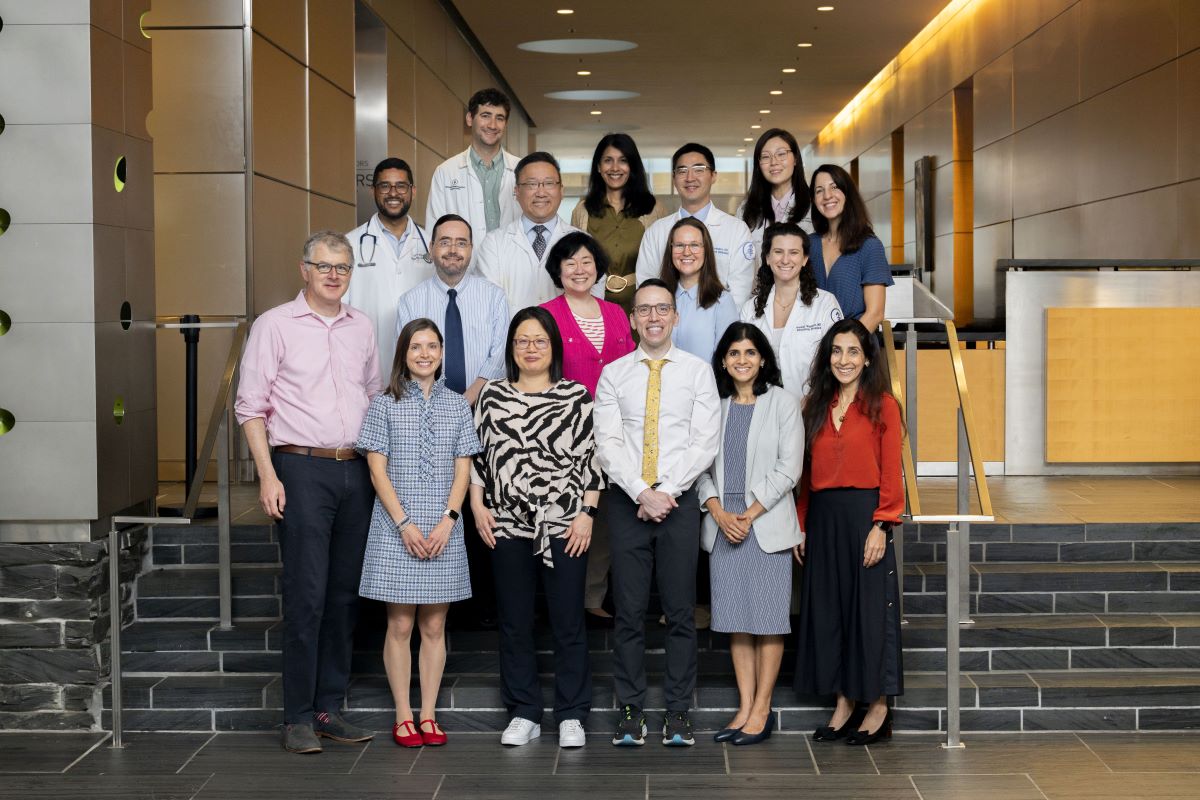
Meet our faculty and learn more about their expertise and academic interests. Click here.
Fellowship Curriculum
Fellows receive exceptional clinical training at MSK, with exposure to the full spectrum of infections in patients with cancer and other immuno-compromising conditions. Training is further broadened through rotations at Weill Cornell Medicine and Bellevue Hospital, with opportunities to pursue individualized electives across New York City.
Our educational curriculum combines case-based learning, multidisciplinary conferences, journal clubs, and focused didactics led by faculty at MSK and collaborating institutions. These conferences complement fellows’ clinical training and provide a strong foundation in both general and oncologic infectious diseases.
The Joint Infectious Diseases-Critical Care Medicine [ID-CCM] track offers a unique opportunity for physicians seeking expertise at the intersection of complex Infections and critical Illness. Fellows train across MSK’s highly specialized immunocompromised host population while developing broad expertise in both Infectious Diseases and Critical Care Medicine.
The combined 3-year-old track integrates rigorous clinical training, multidisciplinary critical care, and dedicated scholarly activity.
Learn more about the joint ID-CCM track, including program structure and training requirements.
Research and Scholarship
Research is central to the MSK Infectious Diseases Fellowship. Our faculty conduct laboratory and clinical research focused on infections in people with cancer, including host immune responses, bacterial and fungal pathogenesis, mycobacterial disease, infection prevention, and infections associated with transplantation and cancer therapies.
Fellows may participate in laboratory research at MSK and pursue collaborative opportunities at Weill Cornell Medicine and The Rockefeller University. Clinical research opportunities span epidemiologic studies, case series, clinical trials, and multidisciplinary projects with teams across MSK, including leukemia, lymphoma, transplantation, and clinical microbiology. Early in fellowship, each fellow meets individually with program leadership and faculty to identify areas of interest, potential projects, and research mentors.
The research laboratories of the Infectious Diseases Service at Memorial Sloan Kettering are focused on the immune response to infection by bacterial, fungal, and viral pathogens. The pathogenesis of mycobacterial infections is also actively investigated. Interested fellows are encouraged to work in the laboratory on research projects that characterize the interface between the mammalian immune system and pathogens in the setting of infectious disease.
Fellows are provided with on-site training in laboratory investigation and also have opportunities to participate in basic science course work. Fellows with interest in microbiology, cell biology, and other fields have a variety research options at MSK along with opportunities at The Rockefeller University and Weill Cornell Medical College.
- The Tobias Hohl Lab: Physician-scientist Tobias Hohl studies the molecular pathogenesis of human fungal pathogens and how the immune system responds to them.
- The Michael Glickman Lab: Physician-scientist Michael Glickman investigates the physiology and pathogenic mechanisms of mycobacteria, including the use of mycobacteria as bacterial cancer therapies.
Infectious Diseases fellows can become involved with, and may initiate, a broad range of clinical studies. Research projects may include clinical reports, case series, multiple clinical trials, and epidemiologic investigations. Faculty members within MSK or from The Rockefeller University or Weill Cornell Medical College who are associated with the MSK Infectious Diseases Service will supervise all research projects.
Though most clinical studies typically occur within the Infectious Diseases Service, they often cross borders into other disciplines. Thus, collaborative studies with other clinical services (including lymphoma, leukemia, and transplant) are commonplace and encouraged. The close relationship between the Clinical Microbiology Service and the Infectious Diseases Service also provides many opportunities for fellow-initiated research projects.
Our Fellows


Our fellowship is defined not only by exceptional clinical training, but by the people who make up our community. Get to know our current fellows, alumni, and what life is like as an MSK ID fellow in New York City.
How to Apply
We welcome applications to the ID fellowship via ERAS (ACGME ID: 1463521167). Applicants interested in the Joint ID-CCM track should apply to our fellowship program via ERAS to first facilitate the Infectious Disease match. Those interested in the joint track should also state this interest in their personal statement and note it in their communication with the program if they are selected to interview.
Cristina Esposito
Infectious Diseases Fellowship Program
1275 York Avenue, Box 9
New York, NY 10065
212-639-5809 (Phone)
929-321-7170 (Fax)
[email protected]