Throat Cancer Continued Care
Overview of throat cancer continued care
There have been many improvements in throat cancer treatments. MSK experts have seen these therapies reduce side effects and raise the chance of recovery.
Cancer treatment can still cause late side effects months or years after treatment. You’ll have a follow-up care plan from a team of MSK throat cancer experts. Our focus is making sure you have a full and healthy life during and after your care.
We have many options to continue your throat cancer recovery.
Our speech therapy, physical therapy, and dental experts work together to get you back to your usual activities.
We know you may have questions about what comes next. We’re ready to help you move forward. At MSK, we help you and your loved ones find the right kind of support.
MSK helps you live your best life after head and neck cancer treatment ends. Our advanced practice providers have special training to make a survivorship care plan for you. They’ll guide you to the right kind of support, such as speech therapy, nutritional counseling, or tobacco cessation.
Follow-up care after throat cancer treatment
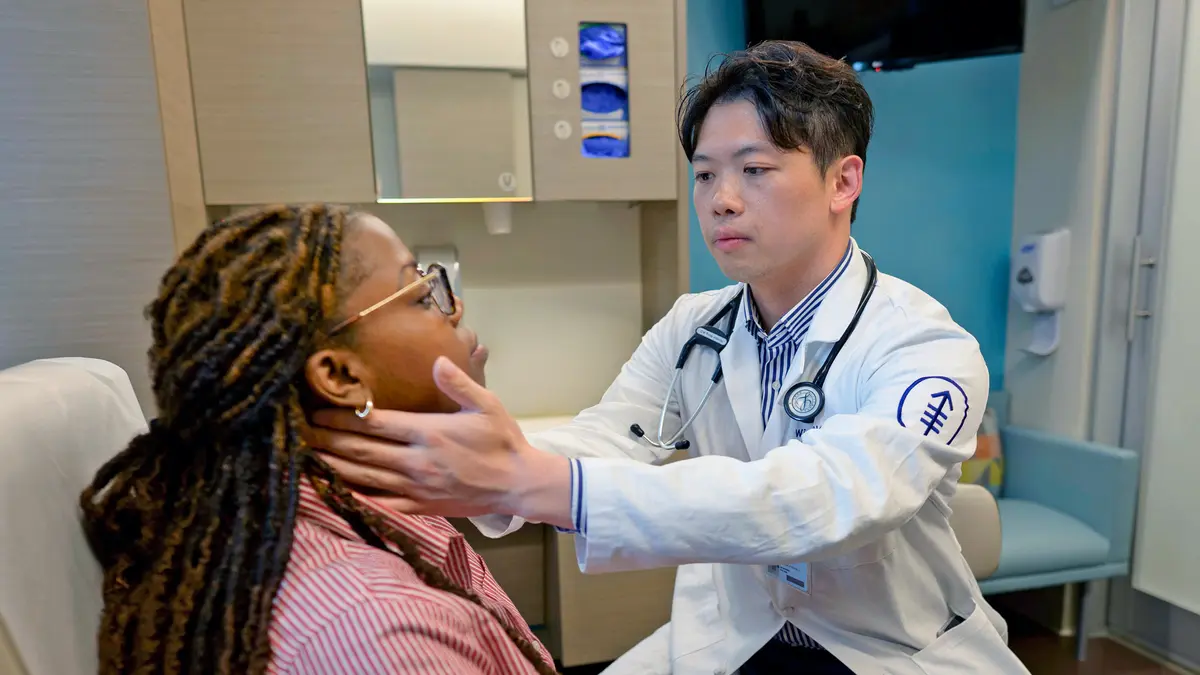
Medical oncologist Dr. Winston Wong treats people with head and neck cancer in Manhattan and Monmouth, NJ.
How does MSK monitor you after throat cancer treatment?
It’s normal to worry about throat cancer coming back after you finish treatment. At MSK, you’ll keep seeing your throat cancer care team 3 to 4 times a year for 2 years. We plan follow-up visits around your needs and treatment goals.
Your team will now include an advanced practice provider (APP). Your APP is a healthcare provider with special training in head and neck cancer and follow-up care. They work closely with the team that cared for you during treatment.
An example of an APP is a nurse practitioner (NP) or a physician assistant (PA).
When you meet with your APP, they’ll monitor (look for) any signs the cancer has come back.
Your APP will check carefully to prevent, find, and control any late effects of head and neck cancer treatment. They’ll make the best follow-up plan for you based on your test and imaging results.
- Barium (bar-EE-um) swallow test is an imaging test used to help diagnose swallowing problems.
- Flexible laryngoscopy (leh-ring-GAA-skuh-pee) is a procedure that checks the inside of your throat, larynx (voice box), and vocal cords. It uses a small camera.
- Flexible endoscopy (en-DOS-koh-pee) is a procedure to check the inside of your nose, mouth, and throat. It uses a small camera.
- Thyroid function tests are blood tests to see how well your thyroid is working after treatment.
- Ultrasound is an imaging test that checks the area where your voice box is. It’s used to check for early signs of throat cancer.
- Positron emission tomography (PET) scan is an imaging test that checks how your treatment is working. It’s most often done on the same day as a CT scan.
- Computed tomography (CT) scan take a fast series of X-ray pictures. The X-ray pictures are put together to create images of the inside of your mouth and throat.
- Magnetic resonance imaging (MRI) is an imaging test that uses strong magnets to take pictures inside your body.
At your follow-up visits and between appointments, your APP will:
- Check for signs of recurrence (the cancer has come back) and schedule imaging tests, if needed.
- Look for any side effects and put a plan in place to manage them.
- Talk with you about having good dental hygiene (health).
- Make an appointment with the MSK dental care team, if you need help caring for your teeth and gums.
- Schedule consultations with MSK’s continued care experts, if you need them.
- Make recommendations about healthy living, such as good nutrition, exercise, and quitting tobacco.
Dr. Ginger Gardner highlights the expert care people receive after they finish active cancer treatment and move into MSK's Adult Survivorship Program.
Welcome. You’ve reached an important milestone in your cancer journey.
I’m Dr. Ginger Gardner, a gynecologic surgeon here at Memorial Sloan Kettering.
Now that your cancer treatment is behind you, I’m excited to discuss what lies ahead as your care is transitioned to the Adult Survivorship Program at MSK. This is the next phase of your cancer journey — you’re moving from cancer-focused treatment to holistic, quality-of-life care. And that’s great news.
Our Survivorship providers are experts in dealing with your cancer and the challenges that survivors like you may experience as a result of prior treatment. That is what they do every day. They have expertise that general practitioners don’t necessarily have.
Your Survivorship Advanced Practice Provider, or APP, will continue to monitor you for cancer recurrence, but will also address other important aspects of your health including screening recommendations for other cancers, physical exams and testing, counseling on healthy living habits, and emotional resources, as well as referral to experts — whether they be within or outside of MSK.
Within Survivorship, all of your care will be completely integrated.
We know how much trust you have developed with your cancer provider and how hard it can be to start seeing someone new. We’re not removing you from your current MSK provider — rather, adding a new expert to your care team. And if you ever need your cancer doctor, they’re simply a phone call away.
Your primary MSK physician will guide you along this transition and put your mind at ease so you can start putting cancer behind you.
How does MSK care for people after reconstruction (plastic) surgery?
Reconstruction surgery may be part of your throat cancer treatment. You’ll also see your MSK plastic surgeon for follow-up visits. They’ll check how you’re healing.
Your surgeon and your throat cancer APP will talk with you about follow-up care after surgery. Together, you can choose the best way forward.
What other follow-up care is needed after throat cancer treatment?
You’ll have visits with your APP for as long as you need us. For most people, your follow-up schedule changes after 2 years. You may now see your APP every 6 months for 1 year.
At your visit, your APP will give you a physical exam. They’ll look for signs of the cancer coming back. Your APP will schedule follow-up tests if you need them.
Our care team of experts is here for you. They’ll make the best care plan for you, treat side effects, and support your overall recovery.

Common questions after throat cancer treatment
You may be in treatment now or nearing the end of your treatment. You probably have questions about what life will look like when it’s over. Our experts have the answers to your questions about life after treatment.
Yes, your MSK care plan will include safe exercises and activities you can do after throat cancer treatment.
Your APP will make a follow-up care plan just for you. They’ll recommend supportive therapies and safe exercises that help you move with less pain.
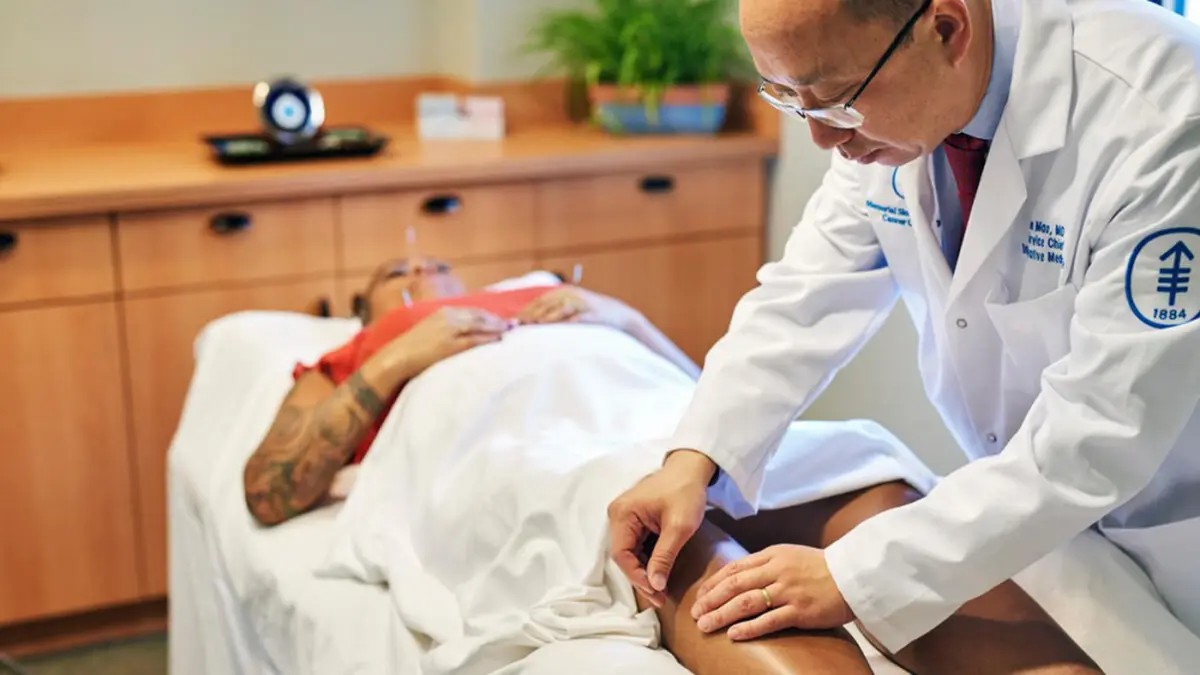
MSK’s Integrative Medicine and Wellness Service can also help. Integrative medicine adds natural treatments such as acupuncture, massage, and yoga to your care plan. All of our holistic health services and programs are based on the latest research.
Yes, it's normal to feel worried and sad during and after throat cancer treatment. You may think no one else understands what you’re going through. You may feel stressed, anxious, left out, or angry.
It can help to talk to someone with special training in cancer mental health. They can help you make sense of your experience before, during, and after cancer treatment.
MSK’s trained cancer mental health team can help you cope with emotional and social challenges. We offer individual and group counseling sessions, both in person and through telemedicine visits. We also have free, online support groups.
You should see your dentist every 3 to 6 months for cleanings. It’s important to tell your APP before you go to the dentist. They’ll help you talk with your dentist about your cancer care.
You may need special dental care after treatment. MSK's dental oncologists are doctors with special training in dental care for peope who had throat cancer. They treat side effects of cancer therapy in your mouth, including:
- Mucositis (myoo-kuh-SIGH-tuhss) or mouth sores
- Xerostomia (zero-STOW-me-ahh), also known as dry mouth.
- Tooth decay
Talk with your APP about your options if you have any side effects in your mouth.
Yes. Our experts in the Tobacco Treatment Program can help you quit using tobacco products (tobacco cessation).
Our team will make a plan just for you. Your plan may recommend using medicine. Our experts will suggest safe, proven strategies to help you stop using tobacco for good.
Quitting tobacco is important for your overall health. This is true even if you already have throat cancer. Quitting can:
- Lower your risk of problems during surgery.
- Improve your recovery time after surgery.
- Improve how well some treatments work.
- Lower your risk of throat cancer coming back.
- Lower your risk of getting other types of cancer.
Yes. MSK has nutrition experts who help people eat well during and after head and neck cancer treatment. They can help you if some foods and drinks taste or feel different after treatment.
Our team will make a plan just for you. You can meet with a nutrition expert in person or through a telemedicine visit.
Some treatments for head and neck cancer can change how you swallow food. Your APP will make appointments with speech therapists who can help you manage these changes if you need them.
Speech, language, and swallowing therapy after throat cancer treatment
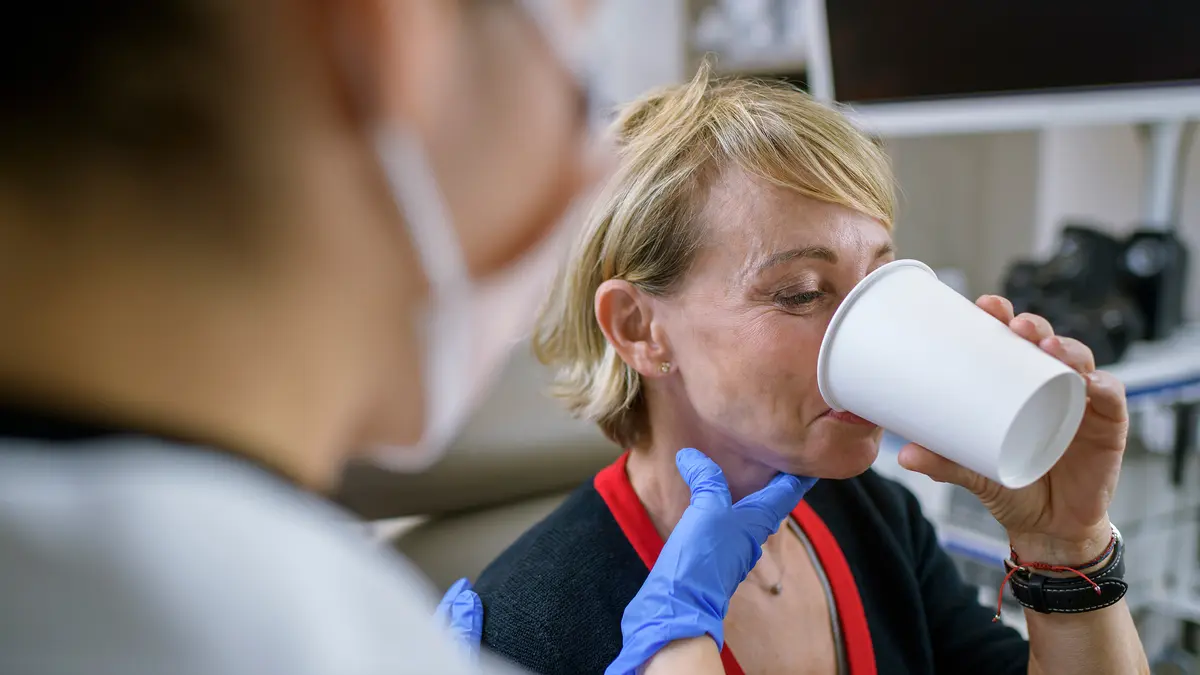
An MSK speech pathologist helps a person swallow after treatment for head and neck cancer.
Cancer treatment can affect how you talk, eat, drink, and swallow. Our speech and swallowing experts work closely with your care team to manage these side effects of throat cancer treatment.
You and your loved ones may meet with a MSK speech pathologist (puh-THAH-loh-jist) before you start throat cancer treatment. A speech pathologist has special training in treating speech, language, voice, and swallowing problems.
We’ll review how you talk and swallow. We’ll also check for changes inside your mouth and to your:
- Voice
- Jaw
- Tongue
Our experts will make a care plan just for you. We’ll help you to sound and feel your best.
Many people start speech and swallowing therapy while they’re in treatment. Others see changes after treatment. Your speech pathologist will help you meet your goals with a mix of therapies that’s right for you.
Some treatments for throat cancer can affect how you form words to talk. At MSK, a speech pathologist will be part of your care team.
Your speech pathologist will help care for you before, during, and after treatment. We’ll look and listen for changes to how you sound and form words.
An MSK speech and swallowing expert will make a plan just for you. It will include appointments, exercises and tools to help you. We offer many options to manage speech changes.
Surgery or radiation therapy can cause dysphagia (dis-FAY-jee-uh), or trouble swallowing. Dysphagia can make it hard for you to eat or drink.
Your MSK speech pathologist will teach you exercises to stretch your swallowing muscles and keep them strong. We may use different tests to check you for swallowing problems, including:
- Modified barium swallow (MBS) studies.
- Fiberoptic endoscopic evaluation of swallowing (FEES).
- Pharyngeal manometry (fuh-RIN-jee-ul muh-NOM-uh-tree).
Your results will help your MSK speech pathologist make a swallowing care plan just for you.
Some treatments for throat cancer may change how your voice sounds. Throat cancer treatments may make your voice may sound hoarse, like you have a cold, or very soft.
MSK speech pathologists are experts in voice therapy and will help if your voice changes during and after treatment. They’ll examine (look at) your vocal cords with an endoscope (a thin tube) to take pictures of them. This imaging test helps our team know what care you need.
Your MSK speech pathologist will make a care plan that may include exercises to improve your voice.
A total laryngectomy (la-ren-JECK-toe-MEE) is surgery to remove your whole larynx (your voice box). If your surgeon needs to remove the whole voice box, you must learn a new way to speak.
Our speech therapy experts help people from all over the world learn to speak after a laryngectomy. They’ll meet with you and your loved ones before surgery to go over your options. Together you will decide what treatment is right for you so you know what to expect.
Your speech pathologist will work with you closely after surgery as you recover.
Throat cancer survivorship care

Nurse practitioner Yingzhi Wu is an expert in caring for people with head and neck cancers.
Survivorship program details
At MSK, you’re a person with a life beyond cancer. We want to help you get back to it. That’s why we have many survivorship programs to support you.
Cancer treatment affects your body and emotions. The experience is not the same for everyone. You may not see or feel late effects for months or even years after treatment ends. We’ll continue your care for as long as you need us.
Your MSK throat cancer team will now include a survivorship nurse practitioner (NP). An NP is a healthcare provider with advanced training in nursing, head and neck cancer, and survivorship care. They work closely with your treatment care team.
You can always ask your survivorship NP for advice about life after treatment. You’ll meet with your survivorship NP once a year, or according to your needs. We’re here to support your recovery.
Your NP will make the best survivorship plan for you
At your follow-up visits and between appointments, your NP will:
- Check for signs of recurrence (the cancer has come back).
- Talk about screening tests for other cancers you may need depending on your age and or family history.
- Look for any side effects and put a plan in place to manage them.
- Make suggestions about healthy living, such as good nutrition, exercise, and quitting tobacco.
- Talk about dental care and good dental health.
- Make a follow-up care plan for you.
- Schedule consultations with MSK experts, if you need them.
Your NP works closely with your MSK follow-up care team. After each visit, your NP will update any MSK experts you see about your progress. Your NP can share your survivorship care plan with your primary healthcare providers.
What other survivorship care services could I need?
Your survivorship NP may also recommend treatments to care for you, such as:
- Lymphedema treatment: If you had surgery or radiation to your head or neck, you may get lymphedema. This is swelling that can cause pain, swelling, and stiffness. Lymphedema therapy often includes massage and exercise.
- Dry mouth treatment: If you had radiation therapy, your mouth may not make saliva (spit) as it used to. This side effect is called xerostomia (zero-STOW-ME-ahh), or dry mouth. MSK experts can treat dry mouth and recommend therapies to help you, backed by research.
- Dental care: Our experienced dental team can reconstruct (rebuild) the shape and look of your mouth after treatment. They’re known around the world for their skill in making and fitting all types of dental implants.
- Physical and occupational therapy: Our cancer rehabilitation experts include physical and occupational therapists. They can help you improve your range of motion (how freely you can move) after head and neck surgery.
It’s normal to feel nervous before follow-up visits. In the days before your appointment, schedule activities that can help distract you from worrying. Try going for walks, doing a calming exercise like yoga, or listening to a soothing meditation. It can really help.
What late side effects can my survivorship care team support me with?
Throat cancer treatments can cause late side effects. Your MSK survivorship NP can help you understand how to care for these new challenges. They’ll recommend therapies to help you, backed by research.
Our survivorship experts will monitor (look for) you for different late side effects, including:
- Hypothyroidism (your thyroid is not making enough thyroid hormone).
- Changes in taste.
- Trismus (jaw stiffness).
- Xerostomia (dry mouth).
- Mucositis (myoo-koh-SY-tis), or mouth sores.
- Trouble swallowing.
- Radiation fibrosis (fyBROH-sis), or tissue scarring.
- Dysphonia (changes to how your voice sounds).
- Dental and jaw issues, like tooth decay.
- Speech therapy (changes in how you can talk).
You can always ask your NP for advice about life after treatment. They work with you to meet your goals.
How we support you after treatment
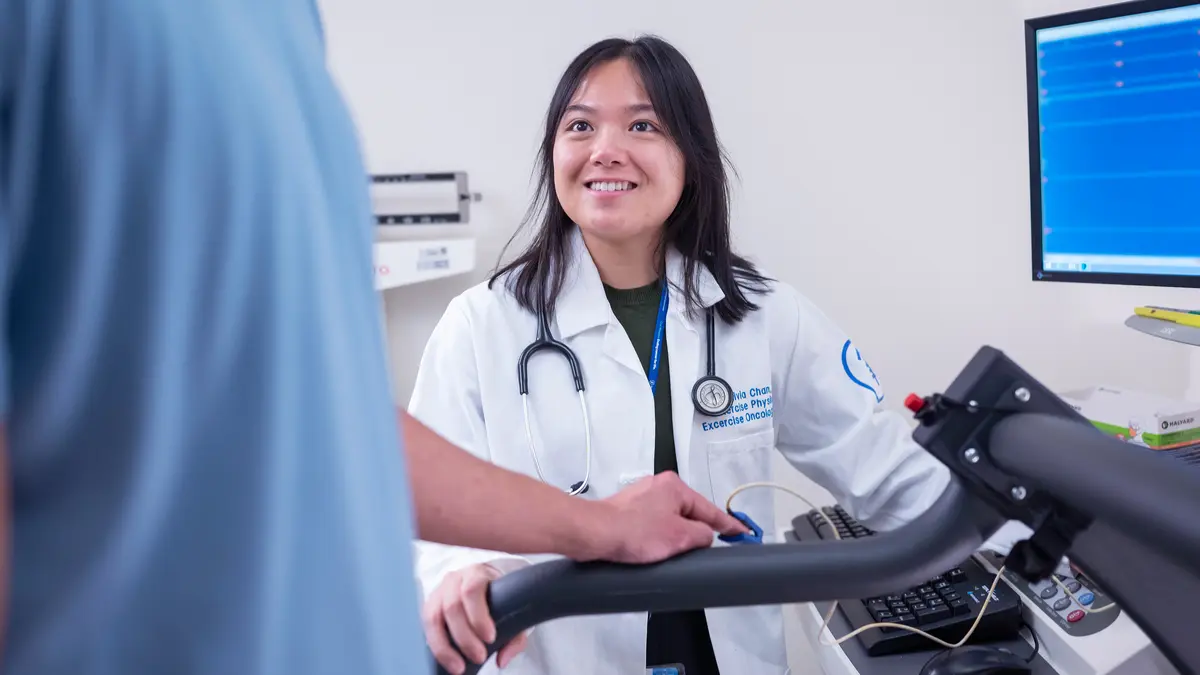
MSK experts in rehabilitation and physical therapy can help you get your strength back.
What support services does MSK offer after your treatment ends?
At MSK, our cancer experts are here to help you live a full and healthy life after cancer treatment. We focus on all aspects of your life, such as nutrition, emotional support, and dealing with side effects of treatment.
We’ll help you and your loved ones get the resources and care you need as you adjust to this new phase.
DR. NEAL RAKESH
At Memorial Sloan Kettering, there’s a lot of different options of things that we can do. So, there are the simple options, like physical therapy, acupuncture, medical marijuana, topical creams and ointments, and even medications. And oftentimes, these are very effective at treating pain. For the more severe pains, what we do is injections, so steroid injections or nerve blocks are very, very helpful. For the really, really bad pain, what we do is we work with our surgical colleagues to do implantable things, like spinal cord stimulators or pain pumps. At MSK, we’re here to help with all your cancer-related pain.
Research shows exercise can help with recovery from cancer and lower the long-term effects of some treatments. If you had surgery, exercise can also improve your breathing and how well your lungs work.
MSK is a leader in research on the benefits of staying active during and after cancer. Our exercise specialists will make a plan just for your needs.
Our rehabilitation experts can help you feel better as you get back to your life after treatment.
Supportive care is an important part of how we improve your quality of life during and after treatment. These therapies can help with side effects that happen months or years later.
Supportive care can also improve your emotional and spiritual health. MSK’s supportive care experts work with all members of your care team. They make a personal plan for you based on your goals and values. Supportive care can help you with:
- Pain
- Fatigue (feeling more tired or weak than usual)
- Insomnia (trouble falling and staying asleep)
- Nausea (feeling like throwing up)
- Anxiety
Managing pain from cancer and its treatment is an important part of cancer care. MSK was the first cancer center in the country to have a program just for treating pain in people with cancer.
Our pain experts will help relieve or manage pain after surgery. They can help while you’re still in the hospital, and after you’re home.
We have experts who manage the symptoms and side effects of cancer treatment.
Head and neck cancer treatment can affect your digestion (how your body breaks down food). It can change your taste, how you can eat, and how hungry you are.
Our clinical dietitian nutritionists can answer your questions about what you can and should eat. You can meet with them in-person or by telemedicine. They can help with:
- Planning healthy meals at home.
- Advice about special diets.
- Working around food allergies.
- Advice to prepare meals easy to chew and swallow.
- Managing weight loss or weight gain.
- Managing loss of appetite.
- Lowering your risk for other health problems after treatment.
Our Integrative Medicine and Wellness Service offers complementary, natural, and holistic treatments. They include acupuncture, meditation, massage therapy, yoga, and exercise.
Cancer therapies can cause side effects. You may want support to cope with:
- Pain.
- Fatigue (feeling very tired).
- Nerve problems.
- Nausea (feeling like throwing up).
- Insomnia (trouble with sleeping).
- Dry mouth.
Without using prescription drugs, integrative therapies can help improve side effects of treatment.
Integrative medicine is available in New York City, New Jersey, Westchester, and on Long Island.
MSK was the first U.S. cancer center to start an integrative medicine program. To reduce side effects, our experts use holistic and natural therapies such as meditation, exercise, and acupuncture. They’re backed by research, safe, and can help people with cancer.
Innovations at MSK
We’re always looking at new ways to improve life after cancer treatment. Explore throat cancer news from MSK.
Learn about the latest research on acupuncture from MSK and how our investigators are studying the benefits of acupuncture for relieving the side effects of cancer and its therapies.