Atención continua para el cáncer de garganta
Reseña sobre la atención continua para el cáncer de garganta
Ha habido muchos avances en los tratamientos para el cáncer de garganta. Los expertos de MSK han observado que estas terapias reducen los efectos secundarios y aumentan las posibilidades de recuperación.
El tratamiento contra el cáncer puede seguir causando efectos secundarios tardíos meses o años después del tratamiento. Usted contará con un plan de seguimiento médico a cargo de un equipo de expertos en cáncer de garganta de MSK. Nuestro objetivo es asegurarnos de que tenga una vida plena y saludable durante su tratamiento y después de este.
Contamos con muchas opciones para que siga recuperándose del cáncer de garganta.
Nuestros terapeutas del habla, fisioterapeutas y especialistas en odontología trabajan en colaboración para ayudarle a volver a sus actividades habituales.
Sabemos que es probable que tenga preguntas sobre los próximos pasos. Estamos listos para ayudarle a seguir adelante. En MSK, les ayudamos a usted y a sus seres queridos a encontrar el tipo correcto de apoyo.
MSK le ayuda a vivir su mejor vida después de finalizar el tratamiento contra el cáncer de cabeza y cuello. Nuestros proveedores de práctica avanzada tienen una formación especial para elaborar un plan de atención de sobrevivencia para usted. Le guiarán para que consiga el tipo correcto de apoyo, como terapia del habla, orientación nutricional o ayuda para dejar de fumar.
Seguimiento médico después del tratamiento contra el cáncer de garganta
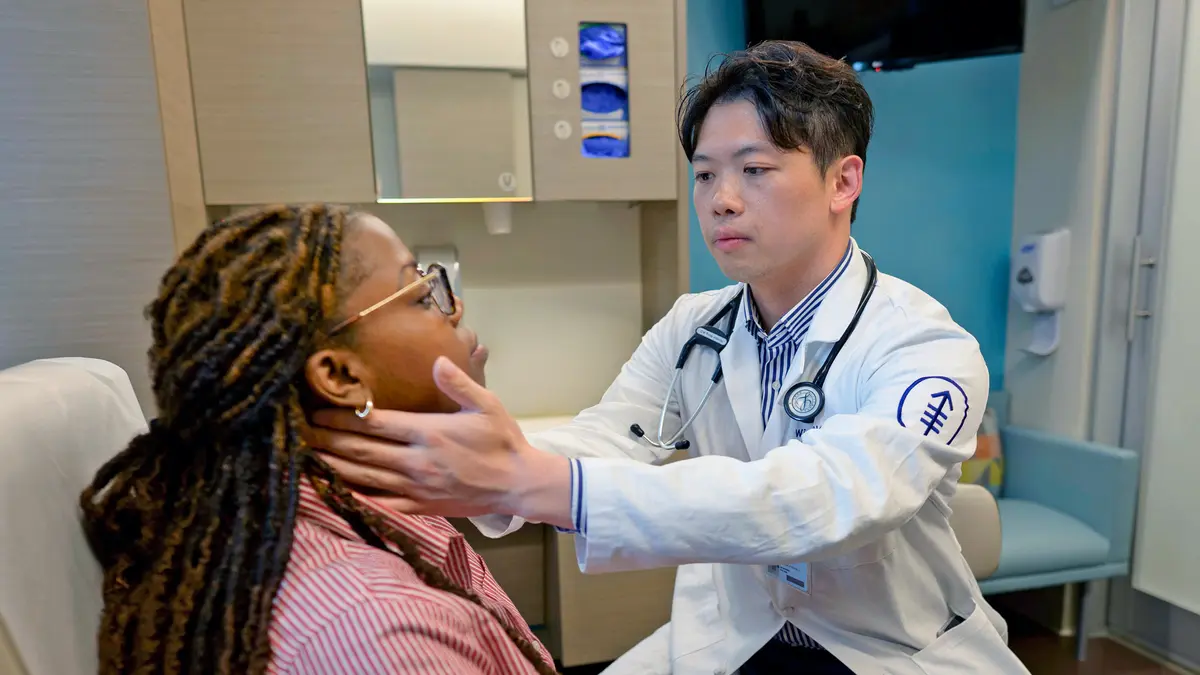
Medical oncologist Dr. Winston Wong treats people with head and neck cancer in Manhattan and Monmouth, NJ.
¿Cómo realiza MSK el seguimiento después del tratamiento contra el cáncer de garganta?
Es normal preocuparse por la posibilidad de que el cáncer de garganta regrese después de finalizar el tratamiento. En MSK, su equipo especializado en cáncer de garganta le seguirá atendiendo entre 3 y 4 veces al año durante 2 años. Planificamos las visitas de seguimiento según sus necesidades y los objetivos del tratamiento.
Su equipo ahora incluirá a un proveedor de práctica avanzada (APP). El APP es un proveedor de cuidados de la salud con formación especializada en cáncer de cabeza y cuello y seguimiento médico. Trabaja en estrecha colaboración con el equipo que le atendió durante el tratamiento.
Un ejemplo de APP es un enfermero practicante (NP) o un médico asistente (PA).
Cuando se reúna con su proveedor de práctica avanzada, este monitoreará (buscará) cualquier señal de que el cáncer haya regresado.
Su APP le controlará cuidadosamente para prevenir, detectar y controlar cualquier efecto tardío del tratamiento contra el cáncer de cabeza y cuello. Le prepararán el mejor plan de seguimiento según los resultados de sus análisis y de las pruebas de imagenología.
- El estudio de deglución con bario es una prueba de imagenología utilizada para diagnosticar problemas con la deglución.
- La laringoscopia flexible es un procedimiento que revisa el interior de la garganta, la laringe (caja de la voz) y las cuerdas vocales. Se utiliza una cámara pequeña.
- La endoscopia flexible es un procedimiento que permite examinar el interior de la nariz, la boca y la garganta. Se utiliza una cámara pequeña.
- Los exámenes de la función tiroidea son análisis de sangre que se hacen para comprobar el funcionamiento de las tiroides después del tratamiento.
- El ultrasonido es un estudio de imagenología que examina la zona donde está la laringe. Se utiliza para buscar signos tempranos del cáncer de garganta.
- La tomografía por emisión de positrones (TEP) es un estudio de imagenología que controla si el tratamiento está funcionando. Normalmente, se realiza el mismo día que la tomografía computarizada.
- La tomografía computarizada (CT) es una prueba en la que se toma una serie rápida de radiografías. Las radiografías se combinan para crear imágenes del interior de la boca y la garganta.
- Una imagen por resonancia magnética (IRM) es una prueba de imagenología que utiliza imanes fuertes para obtener imágenes del interior del cuerpo.
En sus visitas de seguimiento y entre las citas, su proveedor de práctica avanzada hará lo siguiente:
- Controlará los signos de recurrencia (cuando el cáncer regresa) y programará las pruebas de imagenología, si es necesario.
- Buscará cualquier efecto secundario y establecerá un plan para controlarlo.
- Hablará con usted sobre cómo mantener una buena higiene dental (salud de la boca).
- Pedirá una cita con el equipo de atención dental de MSK si necesita ayuda para cuidar los dientes y las encías.
- Programará consultas con expertos en atención continua de MSK, si las necesita.
- Hará recomendaciones sobre vida sana, como una buena alimentación, ejercicio y dejar de fumar.
Dr. Ginger Gardner highlights the expert care people receive after they finish active cancer treatment and move into MSK's Adult Survivorship Program.
Welcome. You’ve reached an important milestone in your cancer journey.
I’m Dr. Ginger Gardner, a gynecologic surgeon here at Memorial Sloan Kettering.
Now that your cancer treatment is behind you, I’m excited to discuss what lies ahead as your care is transitioned to the Adult Survivorship Program at MSK. This is the next phase of your cancer journey — you’re moving from cancer-focused treatment to holistic, quality-of-life care. And that’s great news.
Our Survivorship providers are experts in dealing with your cancer and the challenges that survivors like you may experience as a result of prior treatment. That is what they do every day. They have expertise that general practitioners don’t necessarily have.
Your Survivorship Advanced Practice Provider, or APP, will continue to monitor you for cancer recurrence, but will also address other important aspects of your health including screening recommendations for other cancers, physical exams and testing, counseling on healthy living habits, and emotional resources, as well as referral to experts — whether they be within or outside of MSK.
Within Survivorship, all of your care will be completely integrated.
We know how much trust you have developed with your cancer provider and how hard it can be to start seeing someone new. We’re not removing you from your current MSK provider — rather, adding a new expert to your care team. And if you ever need your cancer doctor, they’re simply a phone call away.
Your primary MSK physician will guide you along this transition and put your mind at ease so you can start putting cancer behind you.
¿Cómo atiende MSK a los pacientes después de una cirugía reconstructiva (plástica)?
Una cirugía reconstructiva puede ser parte de su tratamiento contra el cáncer de garganta. También irá a las visitas de seguimiento con su cirujano plástico de MSK. Controlará el estado de su recuperación.
Su cirujano y su proveedor de práctica avanzada especialista en cáncer de garganta le informarán sobre el seguimiento médico después de la cirugía. Juntos pueden elegir la mejor opción para seguir adelante.
¿Qué otro seguimiento médico se necesita después del tratamiento contra el cáncer de garganta?
Tendrá visitas con su proveedor de práctica avanzada durante el tiempo que lo necesite. Para la mayoría de las personas, el calendario de seguimiento cambia después de dos años. A partir de ahora, podrá atenderse con su proveedor de práctica avanzada cada seis meses durante un año.
Durante su visita, su proveedor de práctica avanzada le realizará un examen físico. Comprobará si hay indicios de que el cáncer está regresando. Su proveedor de práctica avanzada le programará las pruebas de seguimiento, si las necesita.
Nuestro equipo de expertos está aquí para usted. Ellos crearán el mejor plan de atención para usted, tratarán los efectos secundarios y apoyarán su recuperación general.

Preguntas comunes después del tratamiento contra el cáncer de garganta
Es posible que esté en tratamiento ahora o a punto de finalizarlo. Probablemente, tenga preguntas sobre cómo será la vida cuando termine. Nuestros expertos tienen las respuestas a sus preguntas sobre la vida después del tratamiento.
Yes, your MSK care plan will include safe exercises and activities you can do after throat cancer treatment.
Your APP will make a follow-up care plan just for you. They’ll recommend supportive therapies and safe exercises that help you move with less pain.
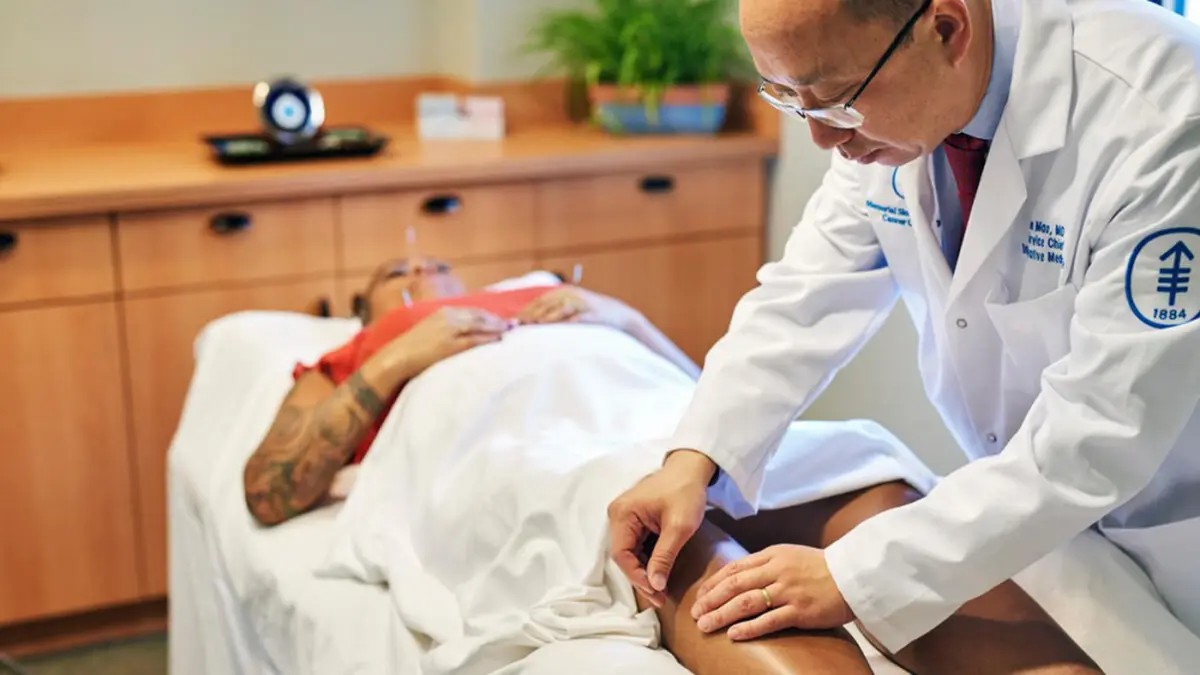
MSK’s Integrative Medicine and Wellness Service can also help. Integrative medicine adds natural treatments such as acupuncture, massage, and yoga to your care plan. All of our holistic health services and programs are based on the latest research.
Yes, it's normal to feel worried and sad during and after throat cancer treatment. You may think no one else understands what you’re going through. You may feel stressed, anxious, left out, or angry.
It can help to talk to someone with special training in cancer mental health. They can help you make sense of your experience before, during, and after cancer treatment.
MSK’s trained cancer mental health team can help you cope with emotional and social challenges. We offer individual and group counseling sessions, both in person and through telemedicine visits. We also have free, online support groups.
You should see your dentist every 3 to 6 months for cleanings. It’s important to tell your APP before you go to the dentist. They’ll help you talk with your dentist about your cancer care.
You may need special dental care after treatment. MSK's dental oncologists are doctors with special training in dental care for peope who had throat cancer. They treat side effects of cancer therapy in your mouth, including:
- Mucositis (myoo-kuh-SIGH-tuhss) or mouth sores
- Xerostomia (zero-STOW-me-ahh), also known as dry mouth.
- Tooth decay
Talk with your APP about your options if you have any side effects in your mouth.
Yes. Our experts in the Tobacco Treatment Program can help you quit using tobacco products (tobacco cessation).
Our team will make a plan just for you. Your plan may recommend using medicine. Our experts will suggest safe, proven strategies to help you stop using tobacco for good.
Quitting tobacco is important for your overall health. This is true even if you already have throat cancer. Quitting can:
- Lower your risk of problems during surgery.
- Improve your recovery time after surgery.
- Improve how well some treatments work.
- Lower your risk of throat cancer coming back.
- Lower your risk of getting other types of cancer.
Yes. MSK has nutrition experts who help people eat well during and after head and neck cancer treatment. They can help you if some foods and drinks taste or feel different after treatment.
Our team will make a plan just for you. You can meet with a nutrition expert in person or through a telemedicine visit.
Some treatments for head and neck cancer can change how you swallow food. Your APP will make appointments with speech therapists who can help you manage these changes if you need them.
Terapia del habla, del lenguaje y de la deglución después del tratamiento contra el cáncer de garganta
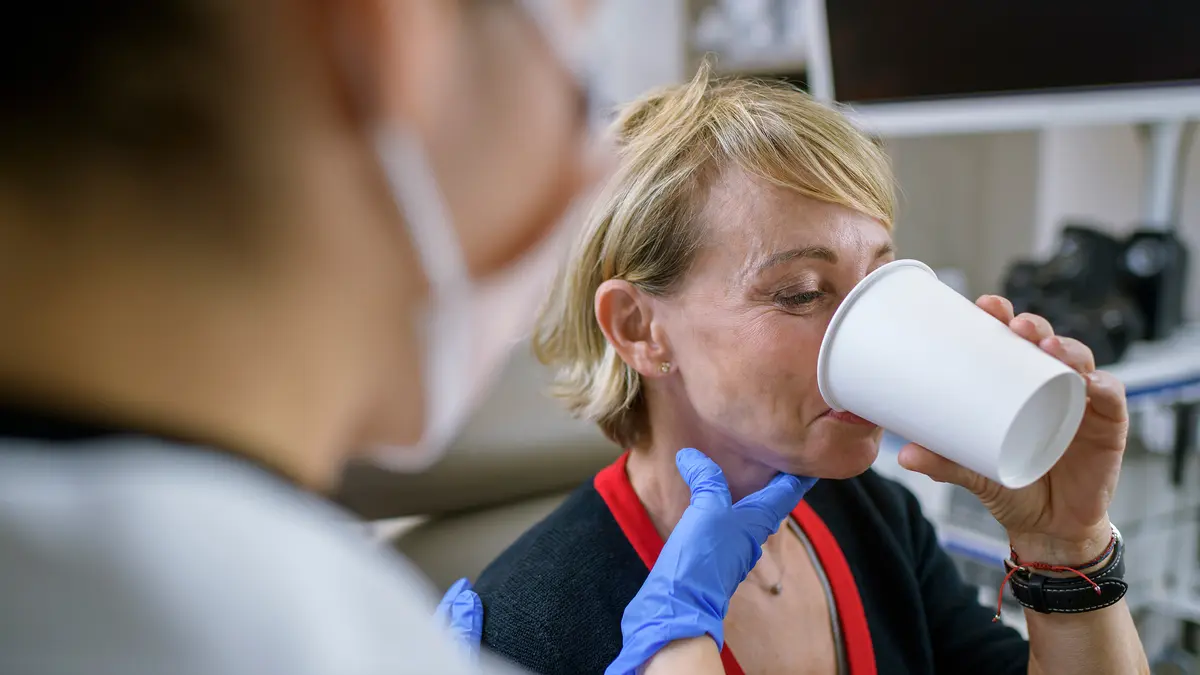
An MSK speech pathologist helps a person swallow after treatment for head and neck cancer.
El tratamiento contra el cáncer puede afectar su forma de hablar, comer, beber y tragar. Nuestros expertos en habla y deglución colaboran estrechamente con su equipo médico para controlar estos efectos secundarios del tratamiento contra el cáncer de garganta.
Es posible que usted y sus seres queridos tengan una cita con un patólogo del habla de MSK antes de comenzar el tratamiento contra el cáncer de garganta. Un patólogo del habla cuenta con formación específica para tratar problemas del habla, del lenguaje, de la voz y de la deglución.
Analizaremos cómo habla y cómo traga. También comprobaremos si hay cambios en el interior de la boca y en:
- La voz
- La mandíbula
- La lengua
Nuestros especialistas elaborarán un plan de atención exclusivo para usted. Le ayudaremos a sentirse y a sonar lo mejor posible.
Muchas personas comienzan una terapia del habla y la deglución mientras están en tratamiento. Otros notan cambios después del tratamiento. Su patólogo del habla le ayudará a alcanzar sus objetivos con la mezcla de terapias más adecuadas para usted.
Some treatments for throat cancer can affect how you form words to talk. At MSK, a speech pathologist will be part of your care team.
Your speech pathologist will help care for you before, during, and after treatment. We’ll look and listen for changes to how you sound and form words.
An MSK speech and swallowing expert will make a plan just for you. It will include appointments, exercises and tools to help you. We offer many options to manage speech changes.
Surgery or radiation therapy can cause dysphagia (dis-FAY-jee-uh), or trouble swallowing. Dysphagia can make it hard for you to eat or drink.
Your MSK speech pathologist will teach you exercises to stretch your swallowing muscles and keep them strong. We may use different tests to check you for swallowing problems, including:
- Modified barium swallow (MBS) studies.
- Fiberoptic endoscopic evaluation of swallowing (FEES).
- Pharyngeal manometry (fuh-RIN-jee-ul muh-NOM-uh-tree).
Your results will help your MSK speech pathologist make a swallowing care plan just for you.
Some treatments for throat cancer may change how your voice sounds. Throat cancer treatments may make your voice may sound hoarse, like you have a cold, or very soft.
MSK speech pathologists are experts in voice therapy and will help if your voice changes during and after treatment. They’ll examine (look at) your vocal cords with an endoscope (a thin tube) to take pictures of them. This imaging test helps our team know what care you need.
Your MSK speech pathologist will make a care plan that may include exercises to improve your voice.
A total laryngectomy (la-ren-JECK-toe-MEE) is surgery to remove your whole larynx (your voice box). If your surgeon needs to remove the whole voice box, you must learn a new way to speak.
Our speech therapy experts help people from all over the world learn to speak after a laryngectomy. They’ll meet with you and your loved ones before surgery to go over your options. Together you will decide what treatment is right for you so you know what to expect.
Your speech pathologist will work with you closely after surgery as you recover.
Atención de sobrevivencia para el cáncer de garganta

Nurse practitioner Yingzhi Wu is an expert in caring for people with head and neck cancers.
Detalles del programa de sobrevivencia
En MSK, usted es una persona con una vida más allá del cáncer. Queremos ayudarle a volver a esa vida. Por eso contamos con muchos programas de sobrevivencia que le brindan apoyo.
El tratamiento contra el cáncer afecta tanto el cuerpo como las emociones. La experiencia no es la misma para todas las personas. Es posible que no note los efectos tardíos hasta meses o incluso años después de que finalice el tratamiento. Seguiremos cuidando de usted todo el tiempo que nos necesite.
A partir de ahora, el equipo de MSK especializado en cáncer de garganta contará con un enfermero practicante (NP) especializado en sobrevivencia. Un enfermero practicante es un proveedor de cuidados de la salud con formación avanzada en enfermería, cáncer de cabeza y cuello y atención de la sobrevivencia. Colabora estrechamente con su equipo médico.
Siempre puede pedirle consejo a su enfermero practicante especializado en sobrevivencia sobre la vida después del tratamiento. Se reunirá con su enfermero practicante especializado en sobrevivencia una vez al año, o según sus necesidades. Estamos aquí para brindar apoyo para su recuperación.
Su enfermero practicante elaborará el mejor plan de sobrevivencia para usted
En sus visitas de seguimiento y entre citas, su NP hará lo siguiente:
- Controlará los signos de recurrencia (cuando el cáncer regresa).
- Hablará de las pruebas de detección de otros tipos de cáncer que podría necesitar en función de su edad o de sus antecedentes familiares.
- Buscará cualquier efecto secundario y establecerá un plan para controlarlo.
- Hará sugerencias sobre vida sana, como una buena alimentación, ejercicio y dejar de fumar.
- Hablará del cuidado dental y de una buena salud dental.
- Creará un plan de seguimiento médico para usted.
- Programará consultas con expertos de MSK, si las necesita.
Su enfermero practicante colabora estrechamente con su equipo de seguimiento médico de MSK. Después de cada visita, su enfermero practicante informará a los especialistas de MSK que le atiendan sobre su evolución. Su enfermero practicante puede compartir su plan de sobrevivencia con sus proveedores de cuidados de la salud.
¿Qué otros servicios de atención de sobrevivencia podría necesitar?
Su enfermero practicante especialista en sobrevivencia también puede recomendarle tratamientos para su cuidado, tales como:
- Tratamiento del linfedema: si ha tenido una cirugía o ha recibido radioterapia en la cabeza o el cuello, es posible que tenga linfedema. El linfedema es una hinchazón que puede causar dolor, inflamación y rigidez. El tratamiento del linfedema muchas veces incluye masajes y ejercicio.
- Tratamiento de la sequedad bucal: si se ha sometido a radioterapia, es posible que la boca no produzca tanta saliva como antes. Este efecto secundario se llama xerostomía, o boca seca. Los expertos de MSK pueden tratar la boca seca y recomendar terapias basadas en investigaciones para ayudarle.
- Cuidado dental: nuestro experimentado equipo dental puede reconstruir (volver a crear) la forma y la apariencia de su boca después del tratamiento. Son reconocidos en todo el mundo por su habilidad para hacer y colocar todo tipo de implantes dentales.
- Terapia física y ocupacional: nuestros expertos en rehabilitación oncológica incluyen terapeutas físicos y ocupacionales. Pueden ayudarle a mejorar su amplitud de movimiento (qué tan libremente puede moverse) después de una cirugía de cabeza y cuello.
Es normal que sienta nervios antes de sus visitas de seguimiento. En los días previos a su cita, programe actividades que puedan ayudar a distraerle de las preocupaciones. Intente hacer caminatas, hacer ejercicios para relajarse como el yoga o escuchar una meditación para calmarse. Estas actividades realmente le pueden ayudar.
¿Con qué efectos secundarios tardíos puede ayudarme mi equipo de atención de sobrevivencia?
Los tratamientos contra el cáncer de garganta pueden causar efectos secundarios tardíos. Su enfermero practicante especializado en sobrevivencia de MSK puede ayudarle a entender cómo cuidarse de estos nuevos desafíos. Le recomendará terapias para ayudarle basadas en investigaciones.
Nuestros expertos en sobrevivencia le controlarán (vigilarán) para detectar diferentes efectos secundarios tardíos, entre ellos:
- Hipotiroidismo (cuando la tiroides no produce suficiente hormona tiroidea).
- Cambios en el sabor.
- Trismo (rigidez de la mandíbula).
- Xerostomía (boca seca).
- Mucositis o úlceras en la boca.
- Dificultad en la deglución.
- Fibrosis por radiación, o cicatrización del tejido.
- Disfonía (cambios en el sonido de su voz).
- Problemas dentales y de la mandíbula, como caries.
- Terapia del habla (cambios en cómo puede hablar).
Siempre puede pedirle consejos a su enfermero practicante sobre la vida después del tratamiento. Colaborará con usted para que cumpla sus objetivos.
Cómo le brindamos ayuda después del tratamiento
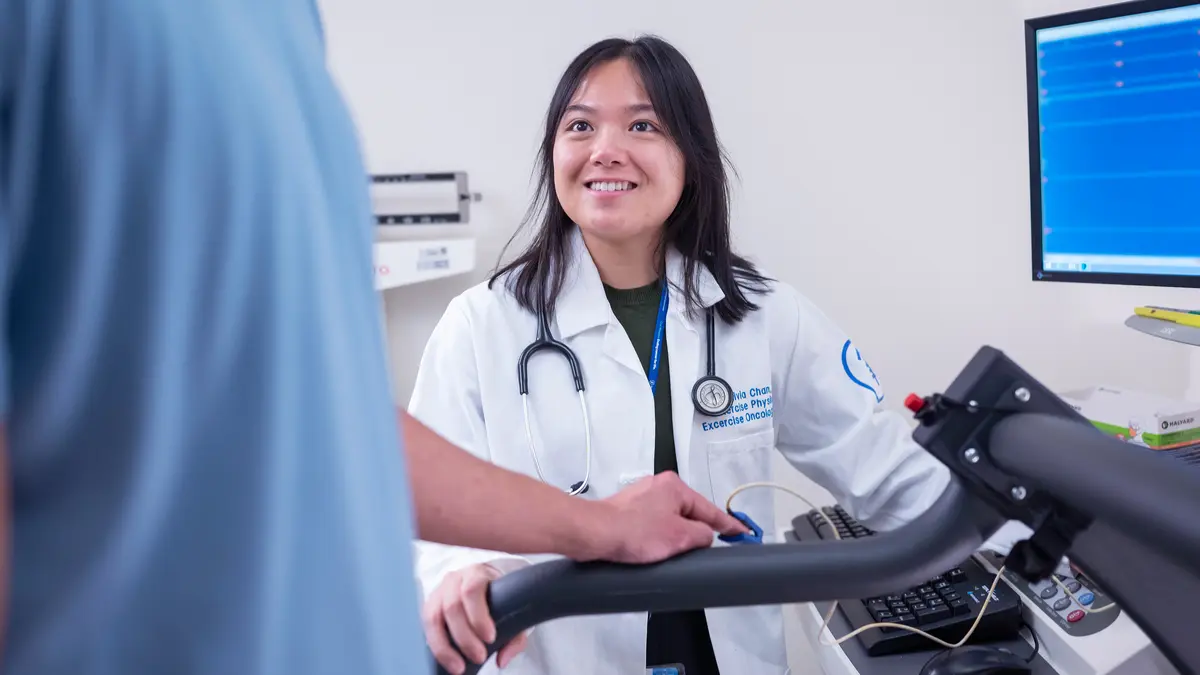
MSK experts in rehabilitation and physical therapy can help you get your strength back.
¿Qué servicios de apoyo ofrece MSK después de su tratamiento?
En MSK, nuestros expertos en cáncer están aquí para ayudarle a llevar una vida plena y saludable después del tratamiento contra el cáncer. Nos concentramos en todos los aspectos de su vida, como la nutrición, el apoyo emocional y en cómo hacer frente a los efectos secundarios del tratamiento.
Les ayudaremos a usted y a sus seres queridos a obtener los recursos y la atención que necesitan mientras se adaptan a esta nueva etapa.
DR. NEAL RAKESH
At Memorial Sloan Kettering, there’s a lot of different options of things that we can do. So, there are the simple options, like physical therapy, acupuncture, medical marijuana, topical creams and ointments, and even medications. And oftentimes, these are very effective at treating pain. For the more severe pains, what we do is injections, so steroid injections or nerve blocks are very, very helpful. For the really, really bad pain, what we do is we work with our surgical colleagues to do implantable things, like spinal cord stimulators or pain pumps. At MSK, we’re here to help with all your cancer-related pain.
Research shows exercise can help with recovery from cancer and lower the long-term effects of some treatments. If you had surgery, exercise can also improve your breathing and how well your lungs work.
MSK is a leader in research on the benefits of staying active during and after cancer. Our exercise specialists will make a plan just for your needs.
Our rehabilitation experts can help you feel better as you get back to your life after treatment.
Supportive care is an important part of how we improve your quality of life during and after treatment. These therapies can help with side effects that happen months or years later.
Supportive care can also improve your emotional and spiritual health. MSK’s supportive care experts work with all members of your care team. They make a personal plan for you based on your goals and values. Supportive care can help you with:
- Pain
- Fatigue (feeling more tired or weak than usual)
- Insomnia (trouble falling and staying asleep)
- Nausea (feeling like throwing up)
- Anxiety
Managing pain from cancer and its treatment is an important part of cancer care. MSK was the first cancer center in the country to have a program just for treating pain in people with cancer.
Our pain experts will help relieve or manage pain after surgery. They can help while you’re still in the hospital, and after you’re home.
We have experts who manage the symptoms and side effects of cancer treatment.
Head and neck cancer treatment can affect your digestion (how your body breaks down food). It can change your taste, how you can eat, and how hungry you are.
Our clinical dietitian nutritionists can answer your questions about what you can and should eat. You can meet with them in-person or by telemedicine. They can help with:
- Planning healthy meals at home.
- Advice about special diets.
- Working around food allergies.
- Advice to prepare meals easy to chew and swallow.
- Managing weight loss or weight gain.
- Managing loss of appetite.
- Lowering your risk for other health problems after treatment.
Our Integrative Medicine and Wellness Service offers complementary, natural, and holistic treatments. They include acupuncture, meditation, massage therapy, yoga, and exercise.
Cancer therapies can cause side effects. You may want support to cope with:
- Pain.
- Fatigue (feeling very tired).
- Nerve problems.
- Nausea (feeling like throwing up).
- Insomnia (trouble with sleeping).
- Dry mouth.
Without using prescription drugs, integrative therapies can help improve side effects of treatment.
Integrative medicine is available in New York City, New Jersey, Westchester, and on Long Island.
MSK fue el primer centro oncológico de EE. UU. en comenzar un programa de medicina integral. Para reducir los efectos secundarios, nuestros expertos usan terapias holísticas y naturales, como la meditación, el ejercicio y la acupuntura. Son seguras, están respaldadas por la investigación y pueden ayudar a las personas que tienen cáncer.
Innovaciones en MSK
Siempre estamos buscando nuevas formas de mejorar la vida después del tratamiento contra el cáncer. Explore las novedades sobre el cáncer de garganta en MSK.
Conozca las últimas investigaciones sobre la acupuntura en MSK y cómo nuestros investigadores están estudiando los beneficios de la acupuntura para aliviar los efectos secundarios del cáncer y sus terapias.